
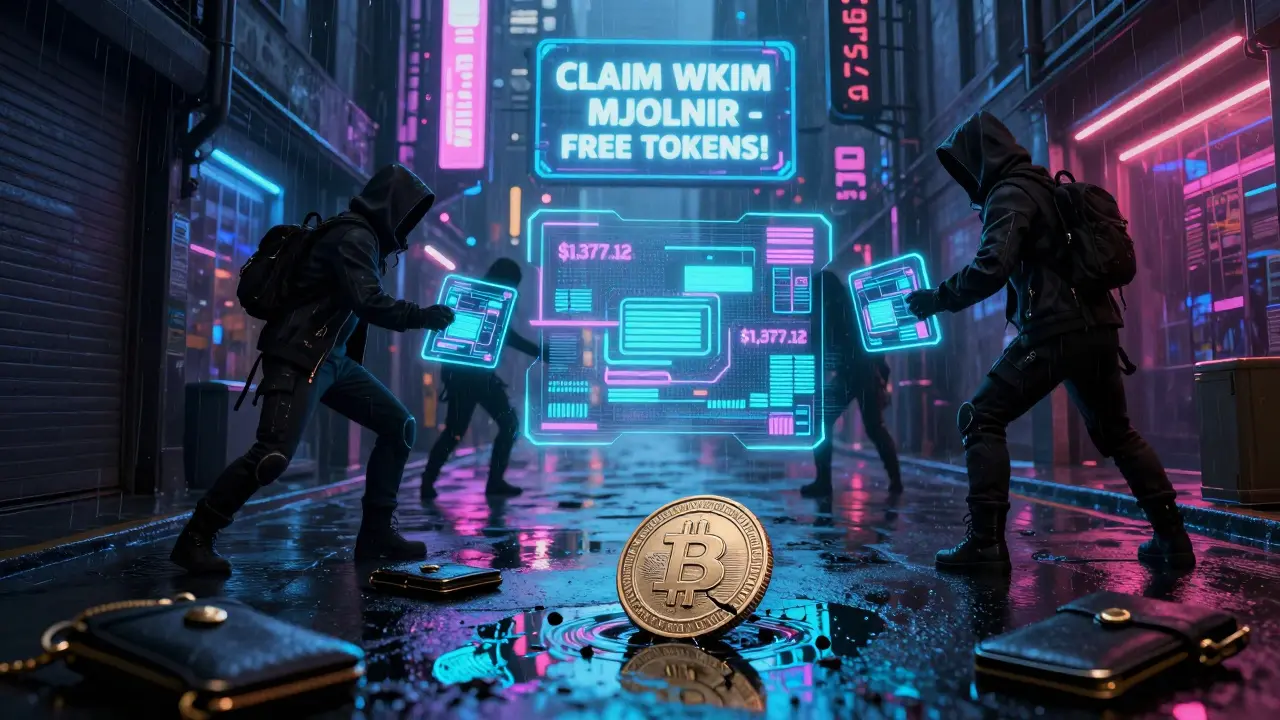
There is no WKIM Mjolnir airdrop from KingMoney. Any claims of free KIM tokens are scams. Learn what KingMoney actually is, why the airdrop doesn't exist, and how to avoid losing your crypto.
KingMoney Airdrop: What It Is, Why It’s Suspicious, and How to Avoid Fake Crypto Airdrops
When you hear about a KingMoney airdrop, a free token distribution tied to an unverified cryptocurrency project, you’re probably seeing a scam. There is no official KingMoney token, no team, no whitepaper, and no blockchain project behind it. Yet, fake websites, Telegram groups, and YouTube videos are pushing it hard—promising free tokens if you connect your wallet or pay a small gas fee. This isn’t a giveaway. It’s a trap.
These crypto airdrop scams, fraudulent claims of free tokens designed to steal private keys or funds are everywhere. They copy names from real projects, use fake logos, and even create fake Twitter accounts pretending to be from CoinMarketCap or Binance. The goal? Get you to sign a malicious transaction that drains your wallet. Real airdrops don’t ask for your private key. They don’t charge fees. And they never rush you—scammers do.
Look at the pattern: fake token claims, promises of high returns from unknown digital assets with no utility or team like KingMoney, SCIX, LEOS, or POLO are all the same. No development. No exchange listings. No community. Just hype. The same people running these scams also pushed NUUM, Genshiro, and TopGoal airdrops that collapsed within weeks. If a token has no real use, no team, and no track record, it’s not an investment—it’s a lottery ticket with 99% odds of losing.
And here’s the worst part: these scams target people who are new to crypto. They use FOMO—fear of missing out—to make you act fast. But in crypto, the fastest way to lose money is to move before you understand what you’re doing. Real opportunities don’t need loud ads. They don’t need influencers shouting "JOIN NOW!" They build quietly, over time, with transparent code and real users.
So if you see "KingMoney airdrop" pop up, close the tab. Don’t click. Don’t connect your wallet. Don’t even read the article. Check CoinMarketCap or CoinGecko. If the token isn’t listed, it doesn’t exist. If it’s listed but has zero volume and no team, it’s dead. And if someone asks you to send crypto to claim free tokens? That’s not a giveaway—it’s a robbery.
Below, you’ll find real breakdowns of other airdrops that looked promising but turned out empty—or worse, dangerous. You’ll see how scams work, what to look for, and how to protect your funds. No fluff. No hype. Just facts.