

So, you've heard about Coinlim and are wondering if it's worth your time. Maybe you're tired of paying high fees on bigger exchanges, or perhaps you're an experienced trader looking for specific tools like arbitrage bots. Either way, choosing the right platform is tricky. There are hundreds of options, and most seem to shout the same promises: low fees, high security, easy access.
But here’s the catch with Coinlim: it’s not for everyone. It’s a niche player that does some things really well but fails hard at others. If you’re a beginner hoping to link your bank account and buy Bitcoin with a credit card, you might hit a wall immediately. This review cuts through the marketing noise to tell you exactly what Coinlim offers, where it falls short, and who should actually sign up in 2026.
What Exactly Is Coinlim?
Coinlim is a centralized cryptocurrency exchange founded in 2018 and headquartered in Singapore. Unlike massive global giants that try to be everything to everyone, Coinlim positions itself as an "all-in-one" trading hub. It’s designed primarily for users who already hold cryptocurrency and want advanced tools to manage their portfolios. Think of it less as a place to buy your first Bitcoin and more as a workshop for active traders.
The platform supports a range of cryptocurrencies, including Bitcoin, Ethereum, and various altcoins. Its core appeal lies in its feature set, which includes portfolio management, arbitrage tools, trading signals, and automated trading bots. These features suggest that Coinlim targets intermediate to advanced users who understand market mechanics and don’t need hand-holding. The interface is available in English and Simplified Chinese, reflecting its strong focus on Asian markets and international crypto-native users.
The Fee Structure: A Major Selling Point
If there’s one reason people look at Coinlim, it’s the fees. In an industry where many exchanges charge upwards of 0.25% per trade, Coinlim’s flat rate is refreshing. They charge a flat trading fee of 0.10% for both makers (those who add liquidity) and takers (those who remove liquidity). This puts them in a competitive bracket alongside established names like Kraken and Binance US, though they still trail behind zero-fee models offered by brokers like Robinhood.
But trading fees aren't the whole story. Withdrawal fees can eat into your profits, especially for small transactions. Coinlim shines here too. They do not impose additional withdrawal fees beyond the standard blockchain network fees. For context, the global industry average for withdrawing Bitcoin can sometimes hover around 0.0008 BTC depending on congestion and platform policies. By sticking strictly to network costs, Coinlim keeps more money in your pocket. Cryptowisser, a reputable source in crypto reviews, has noted this model as "very consumer friendly," which is high praise in a sector notorious for hidden charges.
The Big Hurdle: No Fiat On-Ramps
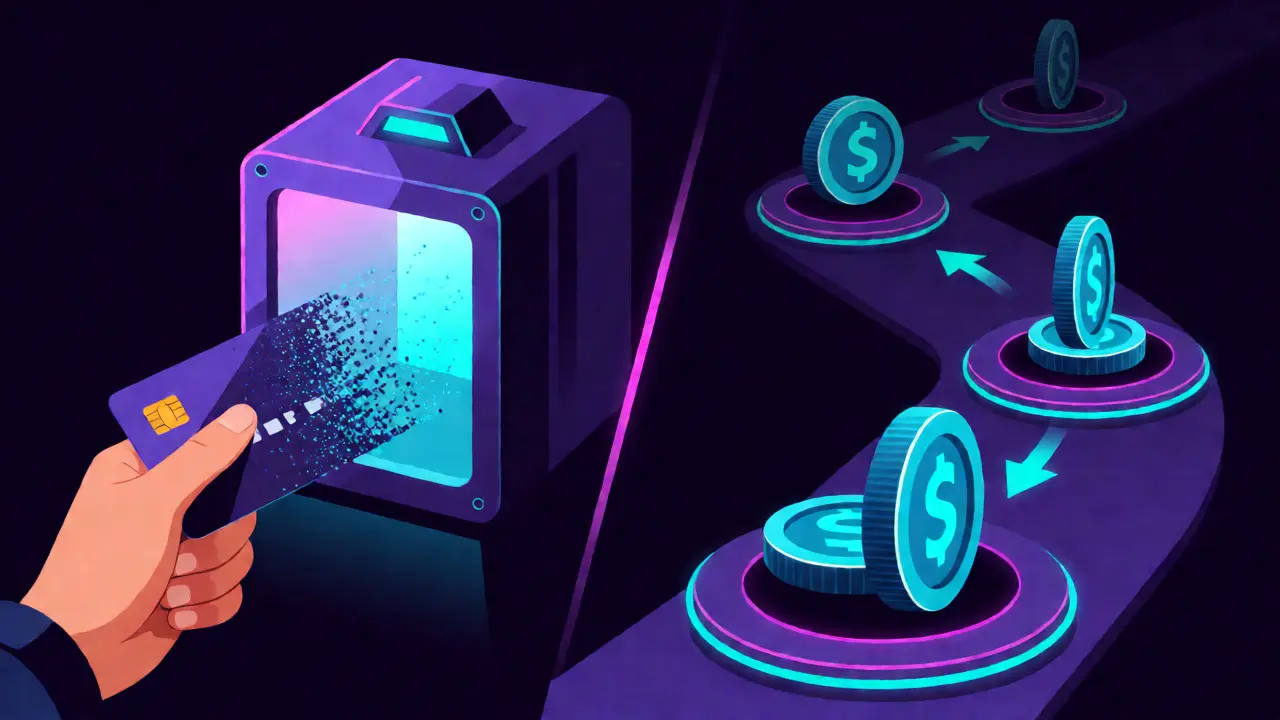
Here is the dealbreaker for many potential users: Coinlim only accepts cryptocurrency deposits. That’s it. You cannot wire money from your bank, swipe your Visa card, or use PayPal to fund your account directly. This means if you have $1,000 in cash and want to start trading on Coinlim, you first need to go to another exchange-like Coinbase or Kraken-buy your crypto there, pay those fees, wait for the transfer, and then send it to Coinlim.
This two-step process adds friction. For a seasoned trader moving assets between wallets, this is trivial. But for someone new to crypto, it’s a significant barrier. It extends the onboarding timeline by several days and introduces extra costs and complexity. If you are starting from scratch with fiat currency, Coinlim is likely not your first stop. It’s a destination for funds you’ve already converted to digital assets.
Features and Tools for Active Traders
Since Coinlim isn’t trying to capture the beginner market, it doubles down on tools for those who know what they’re doing. The platform integrates several features aimed at optimizing trades:
- Arbitrage Tools: These help identify price differences across markets, allowing savvy traders to profit from inefficiencies.
- Trading Signals: Automated alerts based on technical analysis indicators, helping users make timely decisions without staring at charts all day.
- Automated Bots: Pre-set algorithms that execute trades based on your strategy, useful for removing emotional bias from trading.
- Demo Accounts: A practice mode that lets you test strategies with virtual funds before risking real capital.
These tools are valuable, but their effectiveness depends on execution quality. While the feature list looks impressive on paper, user feedback suggests mixed results regarding reliability. Some users report that while the bots work, the customer support response times can lag when issues arise. Since the platform is smaller than Tier-1 exchanges, you don’t get the same level of institutional-grade infrastructure redundancy.
User Experience and Mobile Access
Coinlim offers mobile applications for both iOS and Android, which is essential for modern traders who need to monitor positions on the go. The apps generally receive positive marks for functionality, allowing users to track portfolios and execute trades efficiently. However, the overall user rating hovers around 3.9 out of 5 based on aggregated reviews. This is decent but not exceptional.
Compare this to competitors like Changelly, which boasts a 4.4 rating despite having fewer reviews. The lower score for Coinlim often points to specific pain points: occasional glitches in the app, limited language support (only English and Simplified Chinese), and frustration over the lack of fiat deposits. If you speak neither English nor Chinese, the platform is essentially inaccessible. Even for English speakers, the documentation and support resources aren’t as robust as those found on larger platforms.
| Feature | Coinlim | Binance US | Kraken | Coinbase |
|---|---|---|---|---|
| Trading Fee | 0.10% Flat | 0.10% - 0.60% | 0.00% - 0.40% | Varies (Spread + Fee) |
| Fiat Deposit | No (Crypto Only) | Yes (Bank/Card) | Yes (Bank/Card) | Yes (Bank/Card/PayPal) |
| Withdrawal Fee | Network Cost Only | Variable | Variable | Variable |
| Languages | English, Chinese | Multi-language | Multi-language | Multi-language |
| User Rating | ~3.9 / 5 | High | High | Very High |

Security and Trustworthiness
Security is always a concern with centralized exchanges. Coinlim, being based in Singapore, operates under different regulatory frameworks than US-based entities. Singapore has been relatively proactive in regulating digital payment tokens, which offers some layer of compliance assurance. However, Coinlim doesn’t publish extensive details about its cold storage percentages or insurance coverage in the same transparent manner as larger rivals.
Founded in 2018, it has survived the volatile cycles of the crypto market, which counts for something. Many smaller exchanges launched during the 2017 bull run vanished during the subsequent bear market. Coinlim’s longevity suggests a degree of operational stability. Yet, because it lacks the massive volume of leaders like Binance or Coinbase, it attracts less scrutiny and fewer third-party audits. Always assume that keeping large amounts of crypto on any exchange carries risk. The golden rule remains: not your keys, not your coins.
Who Should Use Coinlim?
Coinlim is a specialized tool, not a universal solution. Here is how to decide if it fits your profile:
You should consider Coinlim if:
- You are an existing crypto holder looking to reduce trading fees.
- You utilize arbitrage strategies or automated bots and want integrated tools.
- You are comfortable transferring crypto from other exchanges and don’t need fiat on-ramps.
- You prefer a streamlined interface without the clutter of social features or staking rewards found on mega-exchanges.
You should skip Coinlim if:
- You are a beginner buying your first Bitcoin with a debit card.
- You require multi-currency support beyond English and Chinese.
- You need robust customer support with guaranteed response times.
- You want to participate in community-driven projects or launchpads that require fiat integration.
The Verdict
Coinlim occupies a specific niche in the crowded crypto exchange landscape. Its strongest asset is its fee structure-low, predictable, and free of hidden withdrawal surcharges. For traders who move frequently and care about every basis point, this is attractive. The inclusion of arbitrage tools and bots adds value for those who actively manage their positions.
However, the lack of fiat on-ramps is a significant limitation that restricts its audience to crypto-natives. Combined with moderate user ratings and limited language support, it’s clear that Coinlim prioritizes functionality for a specific segment over mass-market accessibility. It won’t replace Coinbase or Kraken for most people, but for the right user-a cost-conscious, experienced trader-it serves as a efficient secondary venue for executing trades.
Can I buy Bitcoin directly on Coinlim using my bank account?
No, Coinlim does not support fiat currency deposits. You must deposit cryptocurrency from another wallet or exchange. To get started, you would typically buy Bitcoin on a platform that accepts bank transfers or cards, such as Coinbase or Kraken, and then transfer those coins to your Coinlim address.
Are Coinlim's trading fees really 0.10%?
Yes, Coinlim applies a flat trading fee of 0.10% for both maker and taker orders. This is significantly lower than the historical industry average of 0.25% and is competitive with major exchanges like Binance US and Kraken. Additionally, they do not charge extra fees for withdrawals, only passing on the standard blockchain network costs.
Is Coinlim safe to use?
Coinlim has been operating since 2018 and is headquartered in Singapore, a jurisdiction with evolving but structured crypto regulations. While it has maintained operations through various market cycles, it is a smaller exchange compared to industry giants. Users should employ standard security practices, such as enabling two-factor authentication and withdrawing long-term holdings to hardware wallets.
Does Coinlim have a mobile app?
Yes, Coinlim offers mobile applications for both iOS and Android devices. The apps allow users to monitor portfolios, execute trades, and access basic trading tools on the go. User feedback indicates the apps are functional, though some users note that the experience may not be as polished as those provided by larger, better-funded competitors.
What languages does Coinlim support?
Currently, Coinlim supports two main languages: English and Simplified Chinese. This reflects its primary target markets in Asia and among international English-speaking traders. If you require support in other languages such as Spanish, French, or German, you may find the platform challenging to navigate compared to more globally oriented exchanges.