

Bitcoin and other cryptocurrencies aren’t banned in Nigeria, but mining crypto in Nigeria isn’t as simple as turning on a machine and waiting for rewards. The rules have changed dramatically since 2025, and if you’re running a mining rig or thinking about starting one, you need to know exactly where you stand - or risk heavy fines, frozen assets, or worse.
Is Crypto Mining Legal in Nigeria?
No law says mining cryptocurrency is illegal. But that doesn’t mean it’s free to operate. The real issue isn’t mining itself - it’s what you do with the coins afterward. If you’re just running a single rig in your home and selling coins on peer-to-peer platforms like Paxful or LocalBitcoins, you’re likely not breaking any law. But if you’re operating as a business - even a small one - you’re now under strict government oversight.
The key turning point came in 2025 with the Investments and Securities Act (ISA 2025) a Nigerian federal law that classifies virtual assets as securities and places them under the authority of the Securities and Exchange Commission (SEC). Under this law, any activity that involves selling, trading, or offering crypto services to Nigerian users - including mining-as-a-service - must be licensed by the SEC. This means if you’re renting out your mining hardware to others, or running a pool that collects fees, you’re now a regulated financial business. No license? You’re operating illegally.
How the SEC Controls Crypto Mining
The SEC doesn’t care if you mine Bitcoin in your garage. But if you turn that mining into a service - even if you’re just paying miners in Naira - you fall under their jurisdiction. The SEC now requires all Virtual Asset Service Providers (VASPs) businesses that facilitate trading, custody, or mining services involving digital assets to register. That includes mining farms that sell hash power, exchanges that pay out mining rewards, or even wallets that handle crypto payouts to Nigerian miners.
To get licensed, you need:
- A registered Nigerian company
- A minimum paid-up capital of ₦500 million ($335,000)
- A fidelity bond (insurance) covering potential losses
- A physical office and local management team
- Full AML/KYC compliance
Only two companies - Quidax and Busha - received provisional licenses in late 2024. Over 30 other firms are still waiting. The process is slow, expensive, and demanding. For most small-scale miners, this isn’t an option.
Banking Restrictions Still Apply
Even if you’re licensed, you’ll still struggle to bank your profits. In 2021, the Central Bank of Nigeria (CBN) Nigeria’s central monetary authority responsible for issuing currency and regulating financial institutions banned banks from handling crypto transactions. That ban was lifted in late 2023 - but only for licensed VASPs. If you’re not licensed, banks still refuse to open accounts for you. Even if you’re a legitimate miner with a license, you’ll need to jump through hoops just to move money.
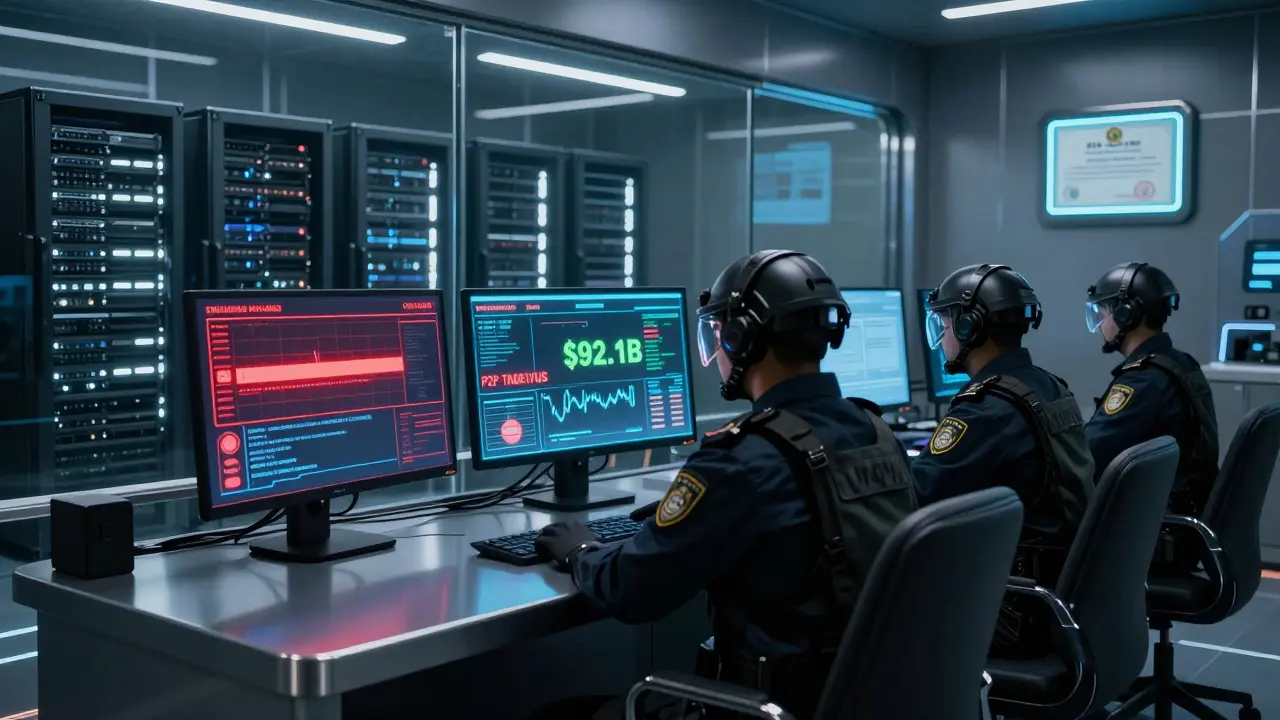
Most unlicensed miners rely on peer-to-peer (P2P) platforms. Between July 2024 and June 2025, Nigerians traded $92.1 billion in crypto through P2P channels - more than any other country in Africa. But these platforms aren’t protected by law. If a buyer disappears or a transaction gets flagged, you have no legal recourse. And if the CBN decides to crack down again, your entire income stream could vanish overnight.
Taxation: The Hidden Trap
The Nigeria Tax Administration Act (NTAA) 2025 a new law that imposes strict tax obligations on all virtual asset service providers came into effect in January 2026. This law targets every business dealing with crypto - including miners. If you earn crypto from mining, you must declare it as income. The tax rate? Up to 30% on profits, depending on your business structure.
But here’s the catch: the NTAA 2025 doesn’t just tax - it punishes. If you fail to register or file:
- First month of non-compliance: ₦10 million ($6,693) fine
- Each additional month: ₦1 million ($669) extra
That’s not a warning. That’s a financial death sentence for small operators. A single mining rig producing $500/month in Bitcoin won’t cover a fine for even two months of non-compliance. The SEC and the Nigerian Financial Intelligence Unit (NFIU) now have access to telecom records and bank transaction data to track suspicious activity. They’re not guessing - they’re monitoring.
Infrastructure Makes Mining Harder
Even if you follow every rule, Nigeria’s power grid makes large-scale mining nearly impossible. The average electricity cost is ₦40-₦80 per kWh - far higher than in Kazakhstan ($0.03/kWh) or Canada ($0.05/kWh). And power outages? They happen daily. Many miners use diesel generators just to keep their rigs running, which adds another ₦15-₦25 per kWh in fuel costs.
That means your profit margin shrinks fast. A top-tier ASIC miner like the Antminer S21 might cost $4,000. At Nigeria’s electricity rates, it could take over 18 months just to break even - if you never have a blackout, never have a price drop, and never get taxed. Most miners who try to scale up end up shutting down within a year.

Who’s Still Mining in Nigeria?
Right now, three types of miners are still active:
- Individual hobbyists - running one or two rigs at home, selling coins on P2P, not declaring income. They’re not breaking the law - yet - but they’re playing Russian roulette with taxes and banking.
- Unlicensed small farms - 10 to 50 rigs in warehouses, using solar or generator power. They avoid banks, use crypto wallets, and hope regulators don’t notice. Many are already being flagged.
- Licensed entities - only a handful. These are mostly fintech startups that use mining as a side business to support their exchange platforms. They have lawyers, auditors, and compliance teams.
There’s no such thing as a “legal large-scale mining farm” in Nigeria yet. The cost, complexity, and risk make it unviable. That’s why many Nigerian miners have moved operations to Ghana, Kenya, or even Georgia - places with clearer rules and cheaper power.
What Happens If You Get Caught?
The Economic and Financial Crimes Commission (EFCC) has started investigating crypto-related income. If you’re mining without a license and your wallet shows $100,000 in Bitcoin over six months, you’re on their radar. They don’t arrest people for mining - but they freeze bank accounts, seize equipment, and demand tax payments retroactively.
One case in Lagos in late 2025 involved a miner who ran 30 ASICs. He didn’t declare income. The EFCC traced his transactions through a P2P platform, froze his account, and demanded ₦4.2 million in back taxes and penalties. He lost his equipment, his money, and his business. No jail time - but no recovery either.
The Future: Licensed or Leave
Nigeria isn’t banning crypto. It’s trying to control it. The ISA 2025 and NTAA 2025 show the government wants to tax, track, and regulate - not eliminate. But the system is designed for big players, not individuals.
If you want to mine legally in Nigeria in 2026:
- Register as a business with CAC (Corporate Affairs Commission)
- Apply for an SEC VASP license - expect 6-12 months and over ₦1 billion in costs
- Set up a local office with Nigerian staff
- Use only licensed exchanges for cashouts
- File monthly tax returns
If you can’t do that? You’re still mining - but you’re operating outside the law. And in Nigeria’s new crypto environment, that’s a dangerous place to be.
Is it illegal to mine Bitcoin at home in Nigeria?
No, mining Bitcoin at home isn’t explicitly illegal. But if you sell the coins, earn income from it, or operate it as a business, you must comply with SEC licensing and tax laws. If you’re just mining for personal use and not selling, you’re not breaking any law - but you’re still at risk if authorities trace your crypto transactions.
Can Nigerian banks handle crypto mining payments?
Only if you’re a licensed Virtual Asset Service Provider (VASP). Banks are still prohibited from servicing unlicensed crypto businesses. Most miners use P2P platforms or crypto-to-Naira wallets like Paxful, Binance P2P, or local exchanges. But these aren’t protected by law - and can be shut down at any time.
How much does it cost to get a crypto mining license in Nigeria?
There’s no fixed fee, but to qualify for an SEC license, you need at least ₦500 million ($335,000) in paid-up capital, plus a fidelity bond, legal fees, office setup, and compliance costs. Total startup costs typically exceed ₦1 billion ($670,000). This makes licensing impossible for individuals or small operations.
Are there tax breaks for crypto miners in Nigeria?
No. The NTAA 2025 treats crypto mining income as regular business income, taxed up to 30%. There are no exemptions or incentives for miners. You must declare all crypto earnings, and failure to do so triggers fines of ₦10 million in the first month, plus ₦1 million per month after.
Why do most Nigerian miners use P2P platforms?
Because banks won’t work with unlicensed crypto users. P2P platforms like Paxful and Binance allow miners to sell Bitcoin directly for Naira without needing a bank account. Over $92 billion in crypto was traded this way between mid-2024 and mid-2025. But these platforms carry high risk - no legal protection, no dispute resolution, and they can be blocked by regulators at any time.
Can I get in trouble for mining if I don’t declare income?
Yes. The EFCC and NFIU now monitor crypto wallets linked to Nigerian phone numbers and bank accounts. If you mine and earn over ₦500,000 annually without declaring it, you’re at risk of asset seizure, fines, and forced tax audits. The government is actively tracking large crypto flows - not to ban mining, but to tax it.
Is solar-powered mining a legal workaround in Nigeria?
Using solar power reduces costs but doesn’t change your legal status. If you’re mining for profit and not licensed, you’re still subject to SEC and tax laws. Solar just makes your operation more sustainable - it doesn’t make it legal. The law cares about income, not energy source.
What’s the difference between mining and trading crypto in Nigeria?
Mining is creating new coins using hardware. Trading is buying and selling existing coins. Both are regulated under the same laws if done as a business. The SEC requires licenses for both. The CBN restricts banking for both. The NTAA taxes both. The difference is in the activity - not the legal treatment.
Robert Conmy
February 24, 2026 AT 16:31Let me get this straight - you’re telling me a guy in Lagos is mining Bitcoin with a diesel generator while the SEC watches like a hawk? This isn’t freedom, this is capitalism with a chokehold. The government didn’t ban crypto - they just made it so expensive and bureaucratic that only hedge funds can play. Meanwhile, the average Nigerian is stuck using P2P like it’s 2014. If this is regulation, it’s just exclusion dressed up in legal jargon.
Michael Rozputniy
February 26, 2026 AT 11:33Did you know the EFCC is using AI to track crypto wallet addresses linked to Nigerian phone numbers? I read a leaked memo - they’re cross-referencing telecom data with blockchain analytics. This isn’t about taxes… it’s about control. They’re building a digital surveillance state under the guise of financial regulation. They’ll freeze your account for buying coffee with Bitcoin tomorrow. Mark my words.
Megan Lavery
February 26, 2026 AT 17:46It’s wild how much resilience these Nigerian miners have. Even with power outages, high costs, and zero legal protection, they’re still grinding. I think we romanticize crypto too much in the US - we forget that for a lot of people, this isn’t a gamble, it’s survival. Kudos to them for keeping it alive. Hope they get better options soon 💪
Mae Young
February 28, 2026 AT 10:51Oh, so mining is 'legal'... unless you're making money, or using a bank, or having a phone number, or breathing oxygen near a power grid? How delightfully Orwellian. 'The law doesn't ban mining - it bans success.' The SEC isn't regulating - it's performing a slow-motion execution of grassroots innovation. Bravo, Nigeria. You've turned innovation into a crime scene.
Trenton White
February 28, 2026 AT 18:10As someone who’s worked in emerging markets, I’ve seen this pattern before. Governments don’t fear technology - they fear losing control over money. Nigeria’s approach mirrors what happened in Argentina and Venezuela: first, ignore it; then, tax it; then, criminalize it. The real tragedy? The people who built this ecosystem are now being pushed out - not by market forces, but by policy.
Cheryl Fenner Brown
February 28, 2026 AT 18:31so like... if u mine 1 btc and sell it on p2p for 500k naira... u gotta pay 30% tax?? but u cant even open a bank account?? like... how do u even pay taxes?? 😭 send cash to the tax office?? send it in a usb drive?? 🤦♀️ this is the most chaotic system ive ever heard of
Cory Derby
March 2, 2026 AT 15:29It’s important to understand that regulation isn’t inherently bad. The goal here is to prevent fraud, money laundering, and exploitation. The problem is that the system was built for corporations, not individuals. What’s needed isn’t more rules - it’s a tiered licensing system. Small miners should have a simplified, low-cost registration path. Right now, the system punishes the very people it claims to protect.
Colin Lethem
March 4, 2026 AT 13:14bro the real story here is that 92 billion in p2p trades happened in a year - that’s more than most African countries’ entire stock markets. People aren’t dumb. They’re using tech to bypass broken systems. The government’s not fighting crypto - they’re fighting poverty. And they’re losing. The miners win because they’re smarter than the bureaucrats.
lori sims
March 4, 2026 AT 20:14I love how this whole thing feels like a dystopian improv show. Solar panels? Cool. Diesel generators? Even cooler. But if you don’t have a ₦1 billion balance and a team of lawyers? You’re a criminal. Meanwhile, the people who actually keep the lights on - the miners, the P2P traders, the weekend hobbyists - they’re the real backbone. The system wants to cage them… but they’ve already built their own cage out of code, electricity, and sheer grit.
Reggie Fifty
March 5, 2026 AT 06:14Let’s be clear - Nigeria’s problem isn’t crypto. It’s that they can’t control their own people. This isn’t regulation. This is a power grab disguised as financial reform. The U.S. and Europe have crypto regulations too - but they don’t demand half a million dollars just to turn on a rig. This is third-world governance. If you want to mine, move to Georgia. Stop trying to make a third-world country into a financial hub.
Kristi Emens
March 5, 2026 AT 09:16It’s heartbreaking to see innovation stifled by bureaucracy. The Nigerian government could have created a sandbox for small miners - low-cost registration, tax incentives for renewable energy, partnerships with telecoms. Instead, they chose enforcement over empowerment. The result? Brain drain. Miners are leaving. Talent is leaving. And the only ones left are the ones who have no choice but to stay.
Deborah Robinson
March 6, 2026 AT 00:27I just want to say - to every Nigerian miner reading this: you’re not alone. I know it feels like the whole world is against you. But your hustle, your creativity, your refusal to give up - that’s what changes systems. One day, this won’t be a fight for survival. It’ll be a story of how regular people outsmarted the system. Keep going. We see you.