

Imagine waking up to find your favorite global trading app suddenly doesn't load. For thousands of traders in Thailand, this became a reality in 2025. The Thai government decided to stop playing nice with unlicensed foreign platforms, launching a massive crackdown that shifted the country from a crypto wild west to one of the most tightly regulated digital asset hubs in Southeast Asia. If you're trading in the region, you've likely felt the ripple effects of these foreign P2P crypto platform ban measures.
The core of the problem was simple: too many global players were operating in the shadows, dodging taxes, and leaving Thai users vulnerable to scams. To fix this, the Thai Securities and Exchange Commission (or SEC) stepped in with a clear mandate. They aren't banning crypto itself-it's still legal-but they are banning the "uninvited guests." If a platform wants to serve Thai users, it now needs a local license. No license, no access. Period.
The Legal Hammer: Why the Ban Happened
The crackdown wasn't just a random decision; it was a coordinated legal strike. In April 2025, the Thai Cabinet pushed through amendments to fight tech-based fraud, followed by two heavy-hitting Royal Decrees. One of these, the Royal Decree on the Operation of Digital Asset Businesses (No. 2), B.E. 2568, basically told foreign platforms: "Get a license or get out."
At the same time, the government gave the Ministry of Digital Economy and Society (MDES) a "kill switch." They can now block access to unlicensed platforms without waiting for a court order. This is a huge shift in power. It means the government can react in real-time to platforms they deem risky, rather than spending months in legal battles while users lose money to scams.
Why the aggression? The SEC, led by Secretary-General Pornanong Budsaratragoon, pointed directly at money laundering and online crime. By forcing platforms into the light (and under the Digital Asset Business Act), the government can track the flow of money and hold operators accountable.
Who Got Hit? The Blocklist
The ban wasn't a vague warning; it had specific targets. On June 28, 2025, the hammer dropped on five major global players. If you were using these, you probably noticed the blackout:
- Bybit
- OKX
- CoinEx
- XT.COM
- 1000X
These platforms were flagged for operating as digital asset exchanges without the proper Thai paperwork. The SEC gave users a one-month window from late May to move their funds, but for many, that wasn't enough time to figure out where to move large holdings without triggering new tax alerts or facing high withdrawal fees.
| Violation | Maximum Prison Term | Maximum Fine | Enforcement Agency |
|---|---|---|---|
| Operating without SEC License | 3 Years | 300,000 Baht (~$8,700 USD) | Thai SEC / MDES |

The Ripple Effect on Cross-Border Business
It's not just individual traders who are feeling the pinch. Businesses using P2P (peer-to-peer) rails for international payments are hitting a brick wall. For example, a company in India trying to settle a bill with a Thai supplier can no longer simply send crypto to a foreign P2P wallet. Every transaction now has to touch a locally licensed intermediary.
This has created a massive compliance headache. Companies now have to navigate two sets of AML (Anti-Money Laundering) and KYC (Know Your Customer) rules-one for the global platform and one for the Thai licensed exchange. The result? Payments are slower, fees are higher, and the risk of a transaction being frozen by a bank is much higher.
Interestingly, the government is also putting pressure on the "pipes" of the internet. Commercial banks, telecom providers, and even social media apps are now legally liable if they are found to be facilitating scams without implementing proper preventions. If a scammer uses a specific messaging app to trick a Thai citizen and the app didn't have safety measures, the app company could be on the hook for damages.
Is Thailand Anti-Crypto? Not Exactly
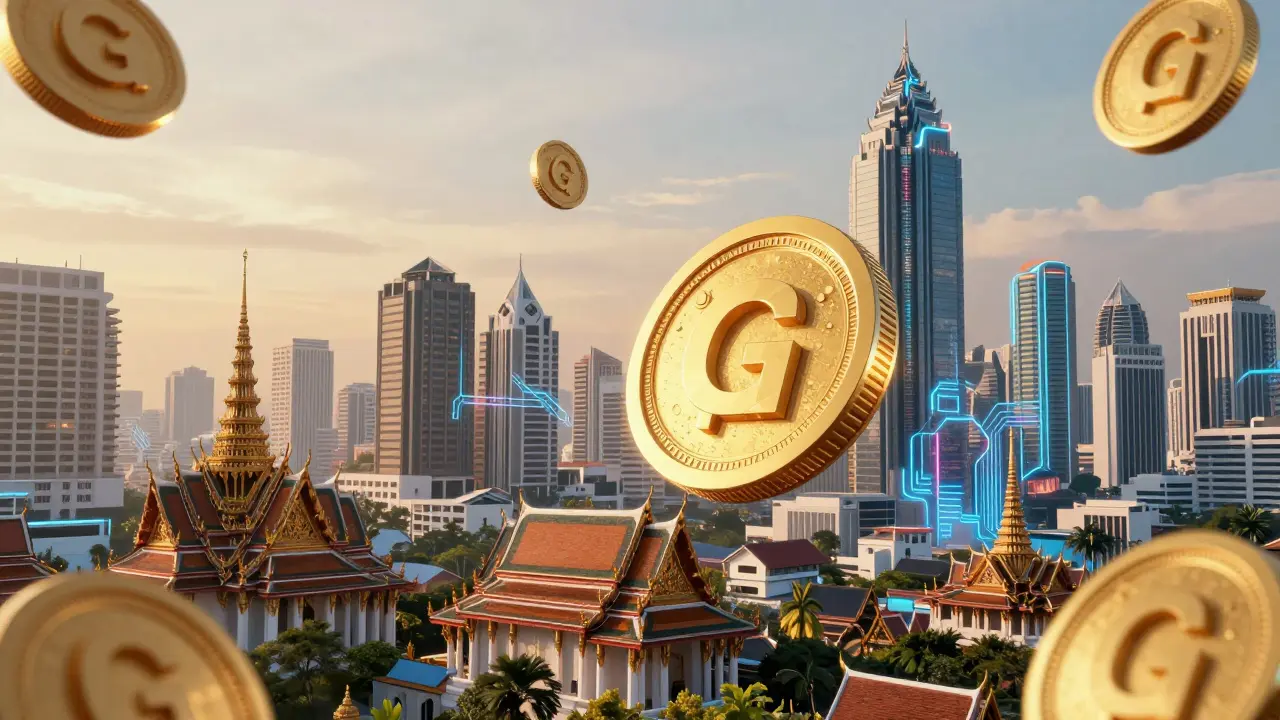
Here is where it gets interesting. While the government is banning foreign platforms, they are actually doubling down on their own blockchain ambitions. They are essentially clearing the field of foreign competitors to make room for homegrown, regulated innovation.
The state is moving toward a hybrid model. They've explored blockchain-based trading for securities firms and are looking into a stablecoin backed by government bonds. In May 2025, the government announced the issuance of G Tokens-digital asset tokens worth about 5 billion baht ($150 million) to help manage public debt.
So, the strategy is clear: ban the unregulated foreign entities, protect the citizens from volatility and fraud, and build a state-sanctioned digital economy from the ground up.
What This Means for You Now
If you're still operating in the Thai market, you need to accept that the "offshore" era is over. Trading is only permitted through locally licensed exchanges. If you find a "workaround" or a mirror site for a banned platform, be careful-you're operating in a legal gray zone where the government has the power to block your access instantly.
The current environment is one of high control. Crypto is treated as a "digital asset," not as legal tender. This means you can trade it and hold it, but you can't go into a shop and pay for coffee with Bitcoin without the merchant using a licensed payment processor that converts the asset to Baht.
Are all foreign crypto exchanges banned in Thailand?
Not all, but any platform that targets Thai users without a license from the Thai SEC is illegal. Major platforms like Bybit and OKX were specifically blocked in June 2025 because they operated without these required licenses.
Can I still hold crypto in Thailand?
Yes, cryptocurrency remains legal in Thailand. However, it is classified as a "digital asset" and not legal tender. You can own it, but trading must happen on licensed platforms.
What happens if I use a banned P2P platform?
The MDES can block your access to the platform without a court order. Furthermore, using unlicensed platforms exposes you to higher risks of scams with no legal recourse through the Thai SEC.
What are G Tokens?
G Tokens are government-issued digital asset tokens used as part of Thailand's public debt management plan, representing a shift toward state-backed blockchain utility.
How much time did users have to withdraw funds from banned sites?
The SEC announced the move on May 29, 2025, and the actual blocking occurred on June 28, 2025. This gave users exactly one month to secure their assets.
Next Steps and Troubleshooting
If you still have assets on a blocked platform, your first priority is to find a way to move them to a non-custodial wallet (like a hardware wallet) or a licensed Thai exchange. Avoid using unofficial "agents" who claim they can move your money for a fee; these are often scams taking advantage of the ban.
For businesses, start auditing your payment rails. If you rely on P2P transfers for cross-border trade, look into integrating with licensed Thai digital asset providers to avoid payment delays or frozen bank accounts. The era of "invisible" crypto transfers in Thailand is gone; transparency and licensing are now the only way to stay compliant.