
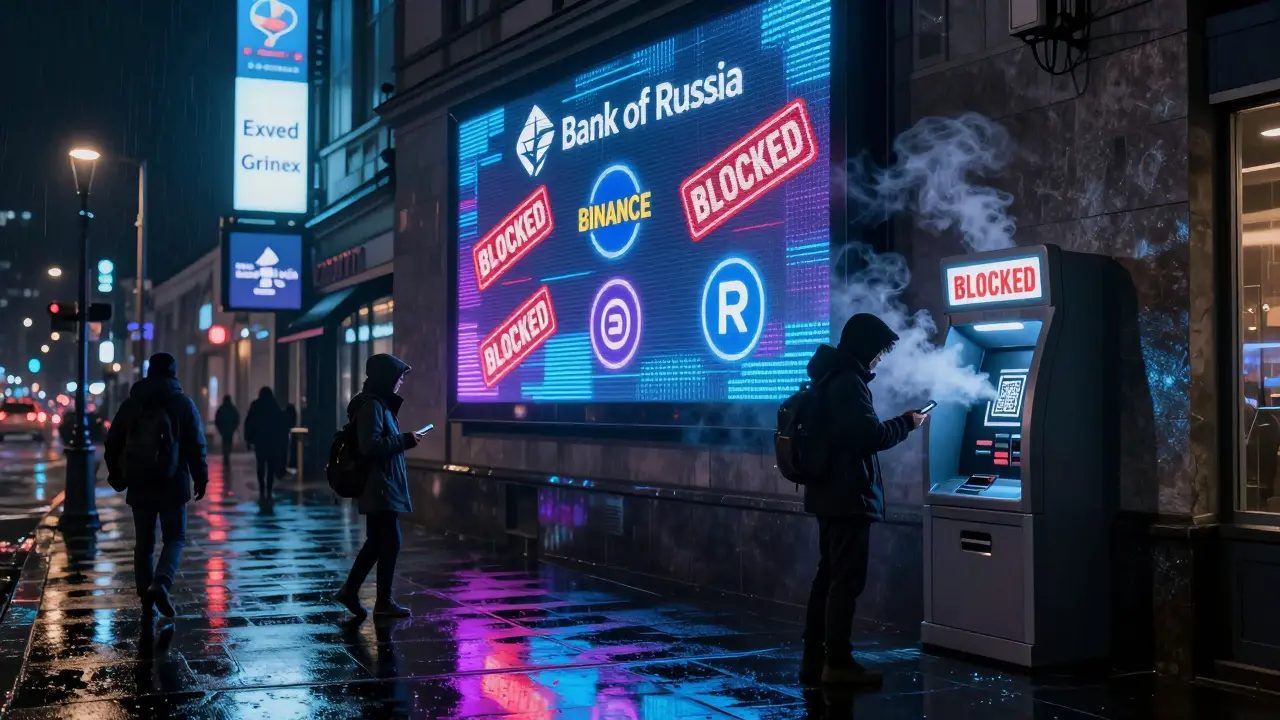
When you hear that Russia has banned crypto exchanges, it sounds simple - like a wall went up and everything stopped. But the truth is messier. Russia didn’t shut down all crypto. It didn’t even ban every exchange. Instead, it picked winners and losers based on who plays by its rules - and who doesn’t.
It’s Not a Ban. It’s a Filter.
Russia doesn’t have a blanket ban on cryptocurrency exchanges. There’s no law that says, “All crypto platforms are illegal.” What it does have is a system designed to force exchanges to choose sides: comply with Moscow’s demands, or get blocked. The Bank of Russia and Roskomnadzor - the country’s internet censorship agency - work together to identify platforms that pose a risk. Not because they’re crypto. But because they might help users bypass Western sanctions. That’s the real trigger. If an exchange lets Russians trade rubles for dollars via P2P without knowing who they are? That’s a red flag. If it doesn’t report suspicious transactions? That’s a death sentence. Take BestChange. It was blocked in 2023. For a while, Russians couldn’t access it. But by 2025, after removing ruble-based foreign exchange data and cutting off links to Kazakhstani tenge and other sanctioned payment systems, it was unblocked. Why? Because it changed. It didn’t fight the system. It adapted. That’s the pattern: compliance = survival.Garantex: The Exchange That Became a Ghost
Garantex is the most famous name when people ask about banned exchanges. It wasn’t just blocked - it was dismantled. In March 2025, the U.S. Secret Service, working with German and Finnish authorities, seized its domain and froze over $26 million in crypto. Its founders were indicted. One was arrested in India. The other, Aleksandr Mira Serda, is still on the run. The U.S. government is offering up to $5 million for info leading to his capture. But Garantex didn’t disappear. It split. Its infrastructure was repurposed. Sergey Mendeleev, the man who built Garantex’s backend, launched a new company called Exved. It’s registered in Moscow’s International Business Center. It calls itself “the first exchange for importers and exporters.” Translation: it’s still moving crypto, but now under a legal shell, serving Russian businesses that need to pay overseas suppliers without using Western banks. Exved isn’t listed on any Russian exchange registry. It doesn’t need to. It operates in the gray. And it’s not alone.Grinex: The Successor
Right after Garantex was taken down, a new platform popped up: Grinex. Same team. Same tech. Same customers. The U.S. Treasury’s Office of Foreign Assets Control (OFAC) slapped sanctions on Grinex in April 2025 - calling it a direct continuation of Garantex’s sanctions-evasion operations. Grinex didn’t just take over Garantex’s user base. It inherited its wallet addresses, its transaction patterns, and its reputation as a go-to for Russian traders trying to avoid banking restrictions. The Department of Justice confirmed in court filings that Grinex was created specifically to evade enforcement. And it worked - for a while. Today, Grinex is offline. Its website is gone. But its users? They’re still trading. Through Telegram bots. Through shell companies in the UAE and Thailand. Through peer-to-peer networks that don’t require a website at all.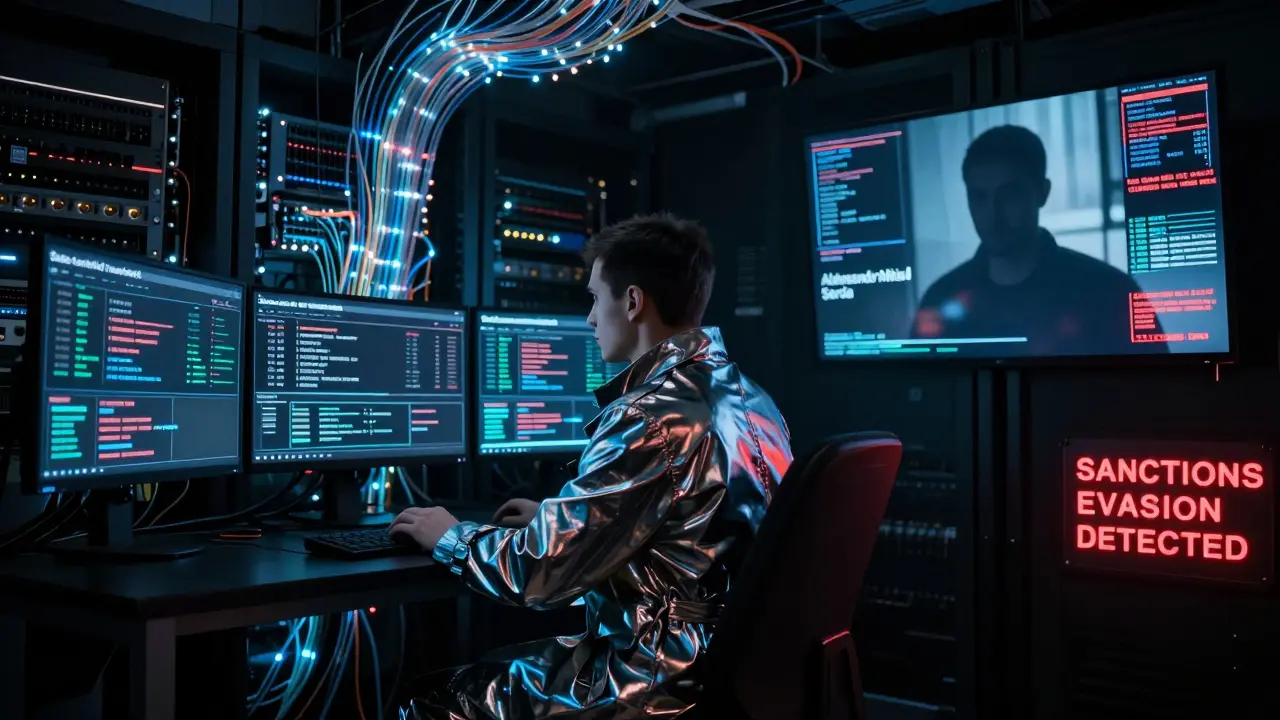
Why Binance, Coinbase, and Kraken Aren’t Officially Banned - But Still Can’t Operate
You’ll see headlines saying “Binance banned in Russia.” That’s misleading. Russia never issued an official ban on Binance, Coinbase, or Kraken. Instead, these platforms are blocked by default - not by law, but by infrastructure. Russian banks can’t process payments to or from them. Visa and Mastercard don’t work with them inside Russia. The Bank of Russia has told all financial institutions: don’t touch crypto transactions linked to these platforms. So even if you could log in, you couldn’t deposit rubles. You couldn’t withdraw rubles. You couldn’t link your bank account. It’s not a firewall. It’s a chokehold. For most Russians, using Binance or Coinbase isn’t illegal. But it’s practically impossible without a VPN, a foreign bank account, and a willingness to risk being flagged by Roskomnadzor’s monitoring tools.What’s Allowed? The State’s Own Crypto System
While Western exchanges get squeezed, Russia is quietly building its own. In October 2025, Deputy Finance Minister Ivan Chebeskov announced a new experimental framework - a state-controlled digital asset infrastructure being developed with the Bank of Russia. Think of it like China’s digital yuan, but for crypto. It won’t be open to everyone. Only “especially qualified” investors - people with over 50 million rubles ($550,000) in assets - will be allowed to trade. This isn’t about freedom. It’s about control. The government wants to track every transaction. Tax every profit. Block every dollar that flows out without permission. And it’s already working: Russian exchanges that comply with KYC, AML, and transaction reporting rules are being given licenses to operate - as long as they don’t touch Western currencies or payment systems.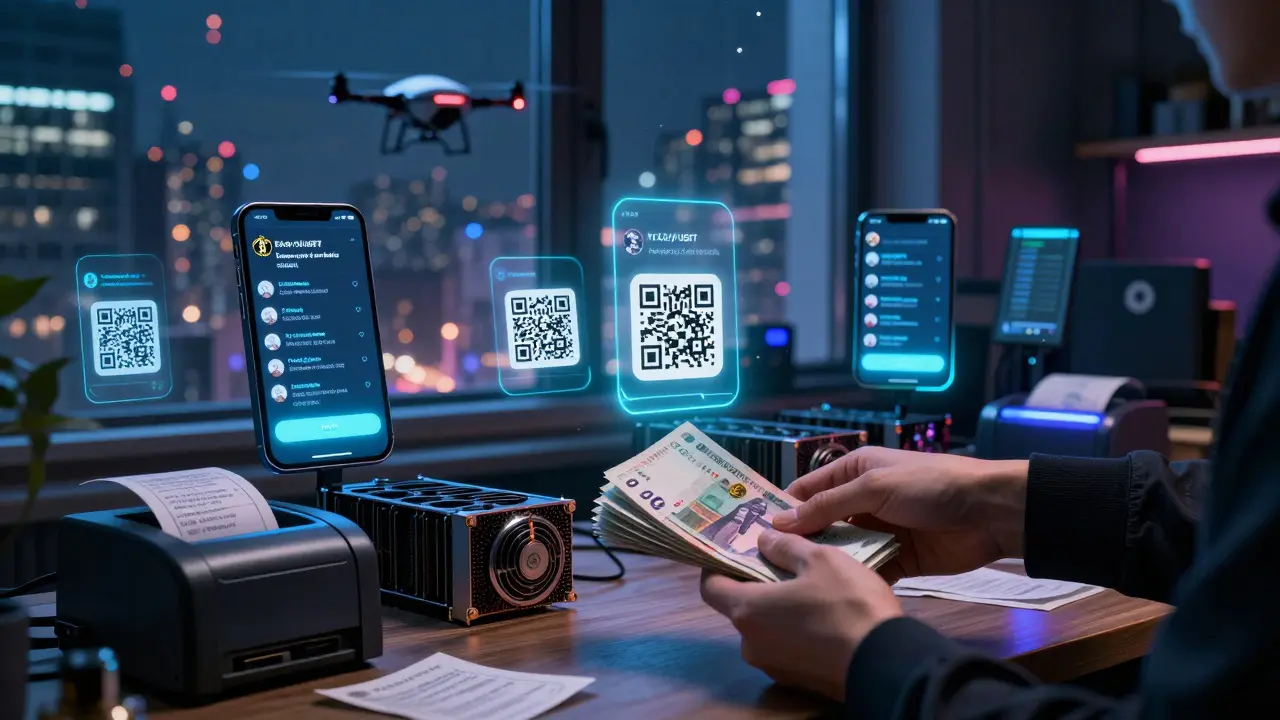
How Russians Still Trade Crypto - Even When Exchanges Are Blocked
If you’re in Russia and you want crypto, you don’t need an exchange. You need a friend. Peer-to-peer trading is booming. Telegram groups are full of ads: “BTC for Sberbank transfer,” “USDT for Tinkoff card.” No registration. No KYC. No website. Just QR codes and cash meetups. Some use crypto ATMs - rare, but growing. Others use foreign exchanges via VPNs and shell companies. A few even trade directly through mining pools, converting hash power into rubles. The Russian government knows this is happening. That’s why it’s pushing stricter AML rules. Banks are now required to flag any transaction over 100,000 rubles ($1,100) that shows crypto-like patterns - even if it’s just a transfer from one person to another.What’s Next? The State Will Control the Flow
Russia’s goal isn’t to kill crypto. It’s to own it. The experimental infrastructure being built now will likely become the only legal way to trade crypto within Russia. Foreign exchanges? They’ll stay blocked. Domestic ones? They’ll be forced to join the state system or disappear. This isn’t unique. China did the same. Iran is doing it. Even the EU is moving toward tighter control. Russia is just ahead of the curve - because it had to be. Crypto isn’t banned in Russia. It’s being reshaped. And the only winners will be those who play by Moscow’s rules.Is Binance banned in Russia?
Binance isn’t officially banned by Russian law, but it can’t operate inside Russia. Russian banks can’t process payments to or from Binance, and Visa/Mastercard don’t support it. The Bank of Russia has instructed all financial institutions to block transactions linked to foreign exchanges like Binance. So while you might access the site via VPN, you can’t deposit or withdraw rubles legally.
Was Garantex shut down?
Yes. Garantex was formally shut down in March 2025 after a joint operation by the U.S. Secret Service, German, and Finnish authorities seized its domain and froze over $26 million in crypto. Its founders were indicted, and one was arrested. But its infrastructure was reused. The same team launched Exved, a new payment service operating from Moscow, which continues handling crypto flows under a different name.
Can I still use crypto in Russia?
Yes - but not how you might expect. You can’t use crypto to pay for goods in stores. But you can trade it privately via P2P platforms, Telegram groups, or crypto ATMs. The government allows crypto for international trade and for qualified investors under its new experimental framework. The key is avoiding foreign payment systems and staying under the radar of bank monitoring tools.
What’s the difference between Garantex and Grinex?
Grinex was created by former Garantex employees after Garantex was taken down in March 2025. It wasn’t a new company - it was a rebrand. The same team, same users, same tech. The U.S. Treasury labeled Grinex as a sanctions evasion tool and sanctioned it in April 2025. Both platforms were designed to help Russians bypass financial restrictions. Grinex is now offline, but its network lives on through decentralized channels.
Is Kraken allowed in Russia?
No, Kraken isn’t allowed to operate in Russia. Like Binance and Coinbase, it’s blocked by Russia’s financial infrastructure. Russian banks can’t connect to Kraken, and the Bank of Russia prohibits transactions with foreign exchanges. While Kraken hasn’t been officially banned by name, it’s effectively unusable for Russian residents who want to use rubles or local banking services.
What happens if I use a banned exchange?
Using a banned exchange won’t land you in jail - but it could get you flagged. Russian banks monitor transactions for crypto-like patterns. If you send large sums to unknown addresses or use a VPN to access blocked platforms, your account could be frozen or reported to Roskomnadzor. The government isn’t going after individual traders - yet. But it’s watching.
Are there any legal crypto exchanges in Russia?
Yes - but only a few. Exchanges that comply with Russia’s strict KYC and AML rules, avoid foreign currencies, and report all transactions to the Bank of Russia are being licensed. BestChange is one example - after it changed its operations in 2025, it was unblocked. The government is also building its own state-controlled platform, which will be the only legal way to trade crypto for most Russians in the near future.
Can I mine crypto in Russia?
Yes. Mining is legal in Russia and even encouraged in some regions with cheap electricity. Many miners sell their crypto through P2P networks or convert hash power into rubles. The government doesn’t regulate mining directly, but it does track large-scale operations that move crypto out of the country. If you’re mining at home, you’re unlikely to be targeted - unless your income looks suspicious to tax authorities.
Gavin Francis
January 28, 2026 AT 09:53if you play by their rules you win, if you don't you get ghosted
josh gander
January 30, 2026 AT 05:00And the P2P Telegram networks? That’s the underground economy thriving in the cracks. People don’t need exchanges when they’ve got friends with Sberbank accounts and QR codes. It’s decentralized by necessity, not ideology. Kinda beautiful, in a dystopian way.
Crystal Underwood
January 30, 2026 AT 07:35Raymond Pute
January 31, 2026 AT 19:10Wayne mutunga
February 2, 2026 AT 18:41mary irons
February 4, 2026 AT 10:15Dylan Morrison
February 4, 2026 AT 22:31Gareth Fitzjohn
February 6, 2026 AT 20:35Mark Ganim
February 7, 2026 AT 09:50Jack Petty
February 7, 2026 AT 12:48Gustavo Gonzalez
February 7, 2026 AT 21:03Brandon Vaidyanathan
February 8, 2026 AT 21:39