
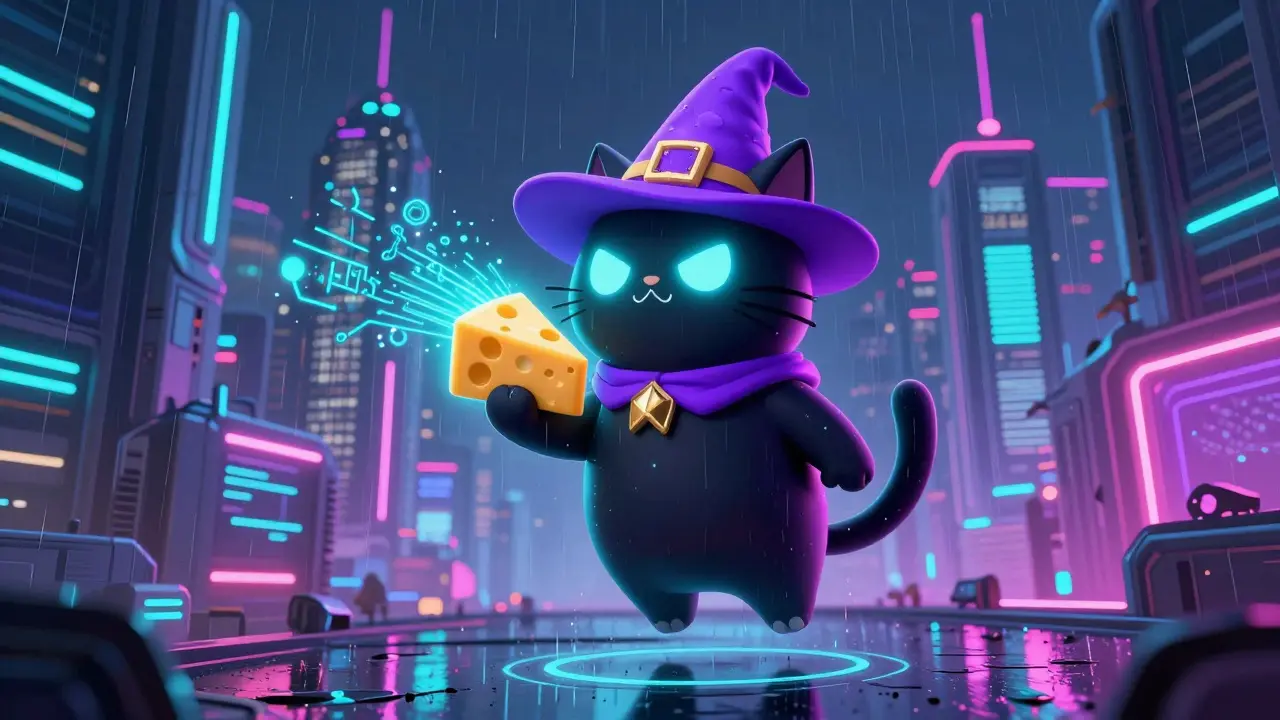
Have you ever scrolled through a crypto feed and seen a name that sounds more like a snack than an investment? That’s exactly what happens with Cheeseball (CB), a Solana-based meme cryptocurrency token driven by humor, community engagement, and gamified participation. It features a mascot described as a "fat cat wizard" and promises daily games, lotteries, and raffles. But behind the whimsical branding lies a highly speculative asset with a micro-cap valuation and significant risks.
If you are wondering whether this token is worth your attention or just another fleeting internet joke, you need to look past the cute graphics. This guide breaks down what Cheeseball actually is, how it works on the Solana blockchain, where you can trade it, and why most experts treat it with extreme caution.
Understanding the Cheeseball (CB) Ecosystem
Cheeseball is not a utility token designed for complex financial infrastructure. It is a classic meme coin, which means its value is derived primarily from community sentiment, viral marketing, and cultural relevance rather than underlying technological innovation or revenue-generating business models.
The project operates entirely on the Solana blockchain, a high-performance network known for fast transaction speeds and low fees compared to Ethereum. By choosing Solana, the developers ensured that buying, selling, and participating in the token's ecosystem costs fractions of a cent per transaction. This makes it accessible for small-scale traders who want to engage in high-frequency activities like daily raffles without being priced out by gas fees.
The narrative around Cheeseball centers on fun. The official descriptions highlight a "fat cat wizard" mascot and emphasize humor. However, unlike some meme coins that rely solely on price speculation, Cheeseball attempts to add layers of engagement through:
- Daily Interactive Content: Games and contests run by the community or moderators.
- Staking Opportunities: Holding CB tokens to potentially earn rewards (though specific APR rates are not publicly documented).
- Lotteries and Raffles: Daily draws where holders might win prizes.
- NFT Integration: Connections to non-fungible tokens, though details on supply and standards remain vague.
While these features sound appealing, there is a critical gap in transparency. None of the major data aggregators provide concrete numbers for staking returns, lottery odds, or NFT minting schedules. This lack of quantitative data means users are often operating on hope rather than verified mechanics.
Key Metrics: Supply, Price, and Market Cap
To understand the risk profile of Cheeseball, you need to look at the hard numbers. As of mid-2026, the token exhibits characteristics typical of deep-micro-cap assets.
| Metric | Value / Status |
|---|---|
| Circulating Supply | ~1,000,000,000 CB (1 Billion) |
| Blockchain | Solana (SPL Token) |
| Contract Address | 3BeJ9zCgQhaqKMu2HgKJ79yQBChD1Pf3hPwRX44fpump |
| Market Cap Range | $350,000 - $400,000 USD |
| All-Time High (ATH) | $0.0165 - $0.0208 |
| Current Price Trend | Highly Volatile; ~98% below ATH |
| Team Identity | Anonymous / Undisclosed |
The circulating supply is fixed near one billion tokens. While this number seems large, the actual market capitalization tells a different story. With prices hovering between $0.00002 and $0.00035 depending on the exchange, the total value locked in the project is less than half a million dollars. For context, this places Cheeseball outside the top 7,000 cryptocurrencies globally, according to rankings from platforms like CoinMarketCap.
The price history is stark. Data from Coinbase and LiveCoinWatch shows that the token has fallen over 97% from its all-time high. This dramatic drawdown is common for meme coins that experience a initial hype cycle followed by a long period of low liquidity and declining interest. If you are looking at current charts, you are seeing an asset that has already lost most of its peak value.
Where and How to Trade Cheeseball
You cannot buy Cheeseball on major centralized exchanges like Coinbase, Binance, or Kraken. Despite appearing on price-tracking pages on these platforms for informational purposes, none of them offer direct trading pairs for CB. This is a crucial distinction: seeing a price on Coinbase does not mean you can buy it there.
Instead, Cheeseball trades exclusively on decentralized exchanges (DEXs) within the Solana ecosystem. The primary venue for liquidity is Raydium, a leading automated market maker (AMM) and liquidity provider on Solana. Specifically, the CB/SOL trading pair is the most active channel for swapping SOL for Cheeseball tokens.
Here is what you need to do to interact with this token:
- Set Up a Solana Wallet: You will need a self-custody wallet like Phantom, Solflare, or Backpack. These wallets allow you to store SOL and SPL tokens securely.
- Fund Your Wallet: Buy SOL from a centralized exchange and transfer it to your wallet address. You will need SOL to pay for transaction fees and to swap for CB.
- Connect to Raydium: Visit the Raydium interface and connect your wallet. Ensure you are on the correct network (Solana Mainnet).
- Verify the Contract Address: This is the most important step. Paste the official contract address (`3BeJ9zCgQhaqKMu2HgKJ79yQBChD1Pf3hPwRX44fpump`) into the search bar. Never click links from social media posts, as scammers often create fake tokens with similar names.
- Execute the Swap: Set your slippage tolerance appropriately (often higher for volatile tokens) and confirm the transaction.
Because liquidity is thin, you may encounter high slippage. This means if you try to buy a large amount of CB, the price might jump significantly during the transaction, giving you fewer tokens than expected. Always check the pool depth before committing funds.
Risks and Red Flags
Meme coins are inherently risky, but Cheeseball presents several specific concerns that every potential holder should weigh carefully.
Anonymity of the Team: There is no public information about the founders, developers, or core team behind Cheeseball. No whitepaper, GitHub repository, or audit report is linked by major aggregators. In the crypto world, anonymity removes accountability. If the team decides to abandon the project or manipulate the token supply, there is no one to hold responsible.
Lack of Audits: Smart contract audits are standard practice for legitimate DeFi projects to ensure security and fairness. Cheeseball has zero documented security audits. This increases the risk of hidden vulnerabilities, such as functions that could allow the creators to drain liquidity or freeze user balances.
Low Liquidity: With 24-hour trading volumes often ranging from under $10 to a few thousand dollars across various platforms, exiting a position can be difficult. If you decide to sell, you might not find enough buyers at your desired price, forcing you to accept a much lower rate or wait indefinitely.
Vague Utility: While the project mentions staking and lotteries, the lack of transparent rules regarding payouts and odds makes it impossible to calculate expected returns. Are the raffles fair? Is the staking yield sustainable? Without published code or third-party verification, these remain unanswered questions.
Cheeseball vs. Established Meme Coins
How does Cheeseball stack up against other players in the meme coin space? Let’s compare it briefly with two well-known categories: established giants like Dogecoin (DOGE) and newer Solana memes like Bonk (BONK).
| Feature | Cheeseball (CB) | Bonk (BONK) | Dogecoin (DOGE) |
|---|---|---|---|
| Market Cap | Micro (~$350k) | Large ($1B+) | Massive ($10B+) |
| Liquidity | Very Low | High | Extremely High |
| Exchange Support | DEX Only (Raydium) | Major CEXs & DEXs | Major CEXs & DEXs |
| Team Transparency | Anonymous | Community/Dev Group | Open Source/Community |
| Risk Level | Extreme | High | Medium-High |
Bonk and Dogecoin have survived multiple market cycles, built massive communities, and secured listings on top-tier exchanges. They still carry volatility, but they have proven resilience. Cheeseball, by contrast, exists in the "long tail" of crypto assets-thousands of tokens that launch with hype but fade into obscurity due to lack of adoption, liquidity, or trust. Investing in CB is closer to gambling than investing in a currency with staying power.
Final Thoughts on Cheeseball
Cheeseball (CB) is a niche experiment in the Solana ecosystem. It offers a playful interface with games and raffles, wrapped in the low-cost efficiency of Solana transactions. However, the absence of a known team, security audits, and clear economic mechanics makes it a hazardous proposition for any capital you cannot afford to lose completely.
If you are drawn to the idea of participating in daily contests or supporting a humorous community project, you can allocate a tiny fraction of your portfolio to CB via Raydium. Just remember to verify the contract address yourself and never invest based on social media hype alone. In the world of meme coins, the house doesn't always win, but the odds are rarely in your favor when the foundation is built on anonymity and speculation.
Is Cheeseball (CB) a safe investment?
No, Cheeseball is considered extremely high-risk. It is a micro-cap meme coin with an anonymous team, no security audits, and very low liquidity. The price has dropped over 97% from its all-time high, indicating significant volatility and potential loss of principal.
Can I buy Cheeseball on Coinbase or Binance?
No. While Coinbase lists the price for informational purposes, it explicitly states that Cheeseball is not tradable on their platform. You must use a decentralized exchange like Raydium on the Solana network to buy or sell CB tokens.
What is the contract address for Cheeseball?
The official Solana contract address for Cheeseball (CB) is 3BeJ9zCgQhaqKMu2HgKJ79yQBChD1Pf3hPwRX44fpump. Always verify this address manually on trusted aggregators like CoinGecko or CoinMarketCap before connecting your wallet to avoid scams.
Does Cheeseball have any real utility?
Cheeseball claims to offer utility through staking, lotteries, daily raffles, and NFT integration. However, specific details such as staking yields, lottery odds, and NFT supply are not publicly documented or audited, making the actual utility difficult to verify.
Who created the Cheeseball token?
The creators of Cheeseball are anonymous. No public records, whitepapers, or team profiles are available on major crypto data platforms. This lack of transparency is a common trait among meme coins but adds to the investment risk.
Why is the price of Cheeseball so low?
The low price reflects its micro-cap status and limited demand. With a market cap under $400,000 and low trading volume, the token lacks the institutional interest and widespread adoption needed to support a higher valuation. Additionally, it has experienced a massive drawdown from its previous highs.
How do I participate in Cheeseball raffles?
Participation details are not clearly defined in public documentation. Typically, holding CB tokens in a compatible Solana wallet may qualify you for daily raffles or lotteries promoted by the community. Check the project's official social media channels for current instructions, but be cautious of unofficial links.
Is Cheeseball listed on CoinGecko?
Yes, Cheeseball is listed on CoinGecko as a Solana-based meme coin. The listing provides price data, market cap, and links to trading venues like Raydium, but it does not endorse the project or guarantee its safety.