

Most meme coins are just jokes with a price tag. You buy them hoping someone else pays more later. SHARBI is a community-owned, DAO-controlled meme cryptocurrency that positions itself as the 'Queen of Memes' by paying holders passive rewards in stablecoins and other tokens simply for holding the asset. It operates across Arbitrum, Ethereum, Shibarium, and Solana. This isn't your standard "buy low, sell high" gamble. It promises a "paid-to-hold" model where you earn USDC, ETH, or BONE just by keeping the token in your wallet.
But does this reward system actually work? And is it safe? As of August 2026, SHARBI remains a small-cap, high-risk speculative asset. If you are looking at this coin, you need to understand exactly how the money flows, where the supply lives, and what happens when the hype fades.
Key Takeaways
- Reward Model: SHARBI distributes passive income in USDC, ETH, and BONE to holders via transaction taxes.
- Multichain Presence: The token exists on Arbitrum, Ethereum, Shibarium, and Solana, with different supply allocations per chain.
- High Risk: With a market cap under $150,000 and an 87% drop from its all-time high, it is a volatile micro-cap asset.
- DAO Governance: No single founder controls the project; decisions are made by the community through decentralized governance.
- Educational Angle: The project supports "Shibarium University," offering free crypto education to its community.
Origins and Identity: The "Queen of Memes"
SHARBI launched in late January 2023. While many projects start with a whitepaper and a named CEO, SHARBI took a different path. It was born as a decentralized autonomous organization (DAO). This means there is no boss. The community owns the token and decides its direction. The project branding calls itself the "Queen of Memes," aiming to sit alongside major players like Shiba Inu but with a focus on utility-specifically, rewarding holders.
The initial launch happened on Ethereum as an ERC-20 token. Shortly after, the team expanded to Arbitrum, a Layer-2 scaling solution for Ethereum. This move was strategic. Arbitrum offers lower gas fees, making frequent transactions and reward distributions cheaper for users. By early 2024 and into 2025, SHARBI expanded further to Shibarium (the Layer-2 network for Shiba Inu) and Solana, creating a true multichain presence.
This identity as a "community-owned" asset is central to its appeal. For many investors tired of rug pulls led by anonymous founders who vanish with the money, a DAO structure offers a sense of security. However, it also means accountability is diffuse. If things go wrong, there is no specific person to sue.
How the Reward System Works
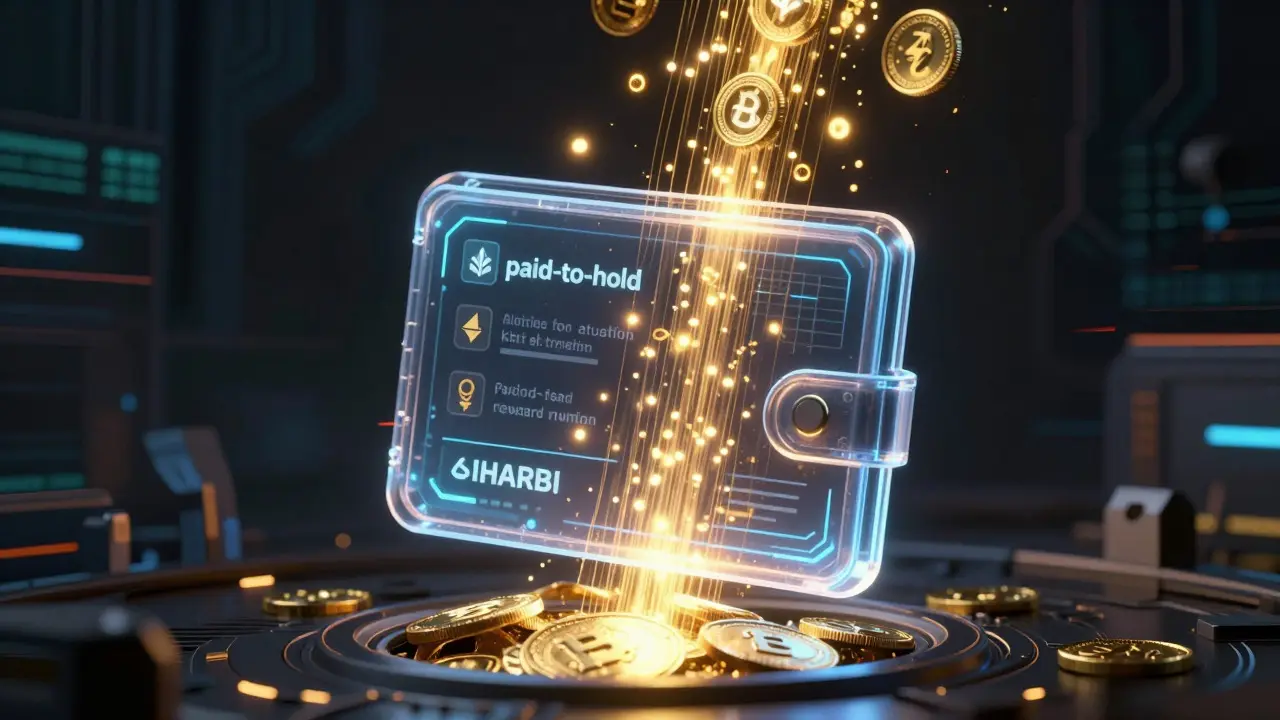
The core value proposition of SHARBI is its passive income mechanism. Here is how it functions in practice:
- Transaction Tax: Every time you buy, sell, or transfer SHARBI, a small percentage of the transaction is taxed.
- Reward Pool: This tax goes into a pool. Depending on the chain and current configuration, this pool contains stablecoins like USDC, or ecosystem tokens like ETH and BONE.
- Distribution: These rewards are distributed to existing holders. You do not need to stake or lock your tokens. Simply holding SHARBI in an eligible wallet qualifies you.
This "paid-to-hold" (P2H) model is designed to encourage long-term holding. Instead of selling immediately after a price spike, holders might keep their tokens to accumulate USDC rewards. CoinMarketCap notes that the system is also deflationary, meaning a portion of the transaction tax is burned (permanently removed from circulation), which theoretically reduces supply over time and could support price growth if demand remains steady.
However, the reward mix varies. On Arbitrum, rewards are primarily USDC. On Ethereum and Shibarium, you might see ETH and BONE. This fragmentation can be confusing for new users tracking their earnings across multiple wallets.
Tokenomics and Supply Complexity
Understanding SHARBI's supply is tricky because it is split across chains. This is a common issue with multichain tokens, but it requires careful attention to avoid mistakes.
| Network | Total Supply | Circulating Supply (Approx.) | Notes |
|---|---|---|---|
| Arbitrum | 1,000,000,000,000 (1 Trillion) | 1,000,000,000,000 | Original deployment; full supply circulating. |
| Ethereum | 1,000,000,000,000 (Max) | ~75 Billion | ERC-20 version; only a fraction of max supply is active. |
| Solana / Shibarium | 75,000,000,000 (Per Chain) | ~75 Billion | Later deployments (2024-2025) with fixed 75B supply each. |
Data aggregators often struggle with this setup. CoinGecko and CoinMarketCap might report a circulating supply of ~75 billion because they are tracking the Ethereum or Solana contract, while Arbiscan shows the full trillion on Arbitrum. This discrepancy leads to wildly different market cap calculations. One source might show a $68,000 market cap, while another shows $539,000. Always check which chain's data you are looking at before making investment decisions.
Market Performance and Volatility
Let's look at the hard numbers. As of August 2026, SHARBI is a micro-cap asset. Its price hovers around $0.000002 USD. To put that in perspective, you would need millions of tokens to equal a single dollar.
The volatility is extreme. The all-time high was approximately $0.0000073 USD. Currently, the price is down about 87% from that peak. This is typical for meme coins, which ride waves of social media hype. When the hype dies, the price crashes. Daily trading volumes are thin, often ranging between $1,400 and $13,000 depending on the day and the exchange.
Low volume is a double-edged sword. It means less manipulation by large whales compared to bigger coins, but it also means liquidity risk. If you try to sell a large amount of SHARBI at once, you could slip the price significantly, getting a much worse rate than expected. Slippage is real here.
How to Buy and Hold SHARBI
You won't find SHARBI on most major centralized exchanges like Binance or Coinbase Pro for direct spot trading. Instead, you interact with it through decentralized exchanges (DEXs). Here is the process:
- For Arbitrum/Ethereum/Shibarium: Use a Web3 wallet like MetaMask. Connect to SushiSwap or Uniswap. Swap ETH or USDC for SHARBI. Be aware of gas fees; Arbitrum is cheap, Ethereum mainnet is expensive.
- For Solana: Use a Solana wallet like Phantom. Connect to Raydium. Swap SOL for SHARBI.
Because the reward system relies on smart contracts, ensure your wallet address is correctly formatted for the specific chain. Sending Arbitrum SHARBI to a Solana wallet will likely result in lost funds. Double-check the contract addresses on official trackers like Arbiscan or Etherscan before swapping.
The project also promotes "Shibarium University," a free educational initiative. If you are new to crypto, these resources can help you understand wallets, gas fees, and DeFi basics, reducing the barrier to entry.
Risks and Considerations
Before buying, consider these risks:
- Liquidity Risk: Low daily volume means it can be hard to exit large positions quickly.
- Smart Contract Risk: While the code is public, has it been audited by a top-tier firm? Most meme coins lack formal audits. A bug could drain the reward pool.
- Community Dependence: Without a strong marketing team or institutional backing, the project's survival depends entirely on community engagement. If interest drops, rewards may stop.
- Regulatory Uncertainty: Meme coins and unregistered securities face increasing scrutiny globally. Changes in regulation could impact DEX accessibility.
SHARBI is not an investment vehicle for retirement savings. It is a speculative play on meme culture and DeFi innovation. Treat it as entertainment spending, not financial planning.
Frequently Asked Questions
Is SHARBI a good investment?
SHARBI is a high-risk, speculative asset. It has dropped 87% from its all-time high and has a very low market cap. It may offer short-term gains if the community grows, but it should not be considered a stable or safe investment. Only invest what you can afford to lose.
How do I get SHARBI rewards?
You receive rewards automatically by holding SHARBI in a compatible wallet. A portion of every transaction fee is distributed to holders in the form of USDC, ETH, or BONE, depending on the blockchain network you are using.
Which blockchain is SHARBI on?
SHARBI is a multichain token. It exists on Arbitrum, Ethereum, Shibarium, and Solana. Each chain has its own token contract and potentially different supply metrics, so ensure you are interacting with the correct version for your wallet.
Who created SHARBI?
SHARBI is a DAO (Decentralized Autonomous Organization). There is no single named founder or CEO. The project is owned and governed by its community members, who vote on key decisions.
Why is the market cap different on different websites?
Different data aggregators track different chains. Some track the 1 trillion supply on Arbitrum, while others track the ~75 billion supply on Ethereum or Solana. This leads to varying market capitalization figures. Always verify which chain's data is being displayed.