

Peso Inflation Calculator
See how hyperinflation affects your savings and how stablecoins can protect your purchasing power. Based on Argentina's 2023-2024 crisis with 200%+ inflation and 1,475 ARS/USD black market exchange rates.
When your savings lose half their value in a single year, you don’t wait for the government to fix it. You find another way. In Argentina, that way is cryptocurrency.
Why the Peso Can’t Be Trusted
The Argentine peso has been collapsing for years, but 2023 and 2024 turned it into a full-blown crisis. Inflation hit over 200% in 2023. By late 2024, the official exchange rate was around 948 pesos to the dollar - but the black market rate, where most people actually trade, hovered near 1,475. That’s a 56% gap between what the government says the peso is worth and what people know it’s worth. The Central Bank of Argentina has spent over $1.1 billion trying to prop up the peso. It hasn’t worked. People used to save in pesos because they had no choice. Now, they save in crypto because they have to.Stablecoins Are the Real Currency Now
Argentines aren’t buying Bitcoin because they think it’ll make them rich. They’re buying it because it’s the only thing that holds its value. Eighty-nine percent of all crypto transactions on Argentine exchanges are for stablecoins - USDT, USDC, and DAI. These aren’t speculative assets. They’re digital dollars. Each one is supposed to equal exactly $1, no matter what happens to the peso. Banks limit Argentines to buying just $200 in U.S. dollars per month. That’s not enough to cover rent, groceries, or medical bills. So people turn to crypto platforms like Lemon. On September 14, 2024, Lemon saw its highest daily volume of stablecoin purchases ever. Why? Because the election was coming. People knew the peso would drop again. DAI stands out because its collateral is publicly visible on the Ethereum blockchain. You can check exactly what assets back it. No bank in Argentina offers that kind of transparency.Bitcoin Is the Long-Term Bet
While stablecoins are used for daily survival, Bitcoin is the long-term play. Lemon reports that more Argentines now hold Bitcoin than stablecoins on their platform. That’s a big shift. It means people aren’t just using crypto to avoid inflation - they’re using it to build wealth. Bitcoin doesn’t pay interest. It doesn’t earn dividends. But it doesn’t lose 80% of its value in two years, either. For many, it’s the first real savings tool they’ve ever had.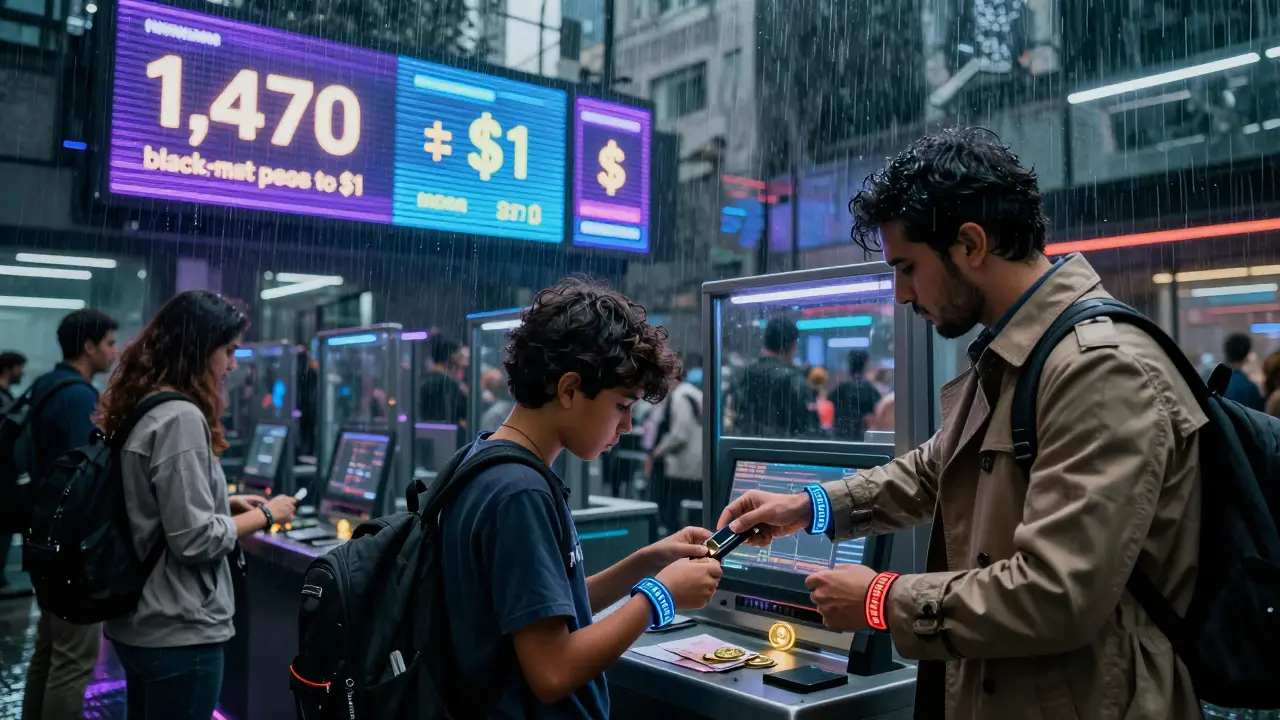
How It Works in Practice
You don’t need to be a tech expert to use crypto in Argentina. Here’s how most people do it:- Sign up for a local exchange like Lemon or Binance Argentina
- Deposit pesos via bank transfer or cash deposit at a local agent
- Buy USDT or DAI instantly
- Use it to pay for imports, send money to family abroad, or hold until the peso recovers (it won’t)
Why This Isn’t Just a Trend - It’s Infrastructure
In the U.S., crypto is a side hustle. In Argentina, it’s the backup system. When the lights go out, you use a flashlight. When the peso crashes, you use stablecoins. The government still doesn’t officially recognize crypto as legal tender. But it doesn’t need to. People have already built a parallel economy. Chainalysis found that crypto adoption in Argentina is driven by households and businesses hedging against inflation and capital controls. The Milken Institute calls it a "practical wealth-preservation tool." And it’s working. People who switched to crypto in 2022 can still buy the same amount of food today. Those who kept pesos? They can’t.
Regulation Is Catching Up - Slowly
The Argentine government isn’t fighting crypto anymore. It’s trying to control it. In 2024, it launched a regulatory sandbox for virtual asset service providers (VASPs). That means exchanges can now get official licenses. It’s not perfect - but it’s a step toward legitimacy. Tokens backed by real assets like real estate or gold are now legally recognized. That opens the door for new financial products built on crypto. Buenos Aires hosts international events like Devconnect and the Ethereum World Fair. It’s becoming a tech hub - not because of subsidies, but because people need it.What This Means for the Rest of the World
Argentina isn’t an outlier. It’s a warning. Countries with high inflation, weak currencies, and strict capital controls - Venezuela, Nigeria, Turkey, Lebanon - are watching closely. Argentina’s solution isn’t perfect. There are hacks, scams, and regulatory risks. But it’s real. It works. And it’s growing every day. Brazil leads Latin America in crypto volume, but Argentina leads in urgency. Mexico uses crypto for remittances. Argentina uses it to survive. The lesson? When trust in money breaks down, people don’t wait for permission. They build their own.What’s Next?
The peso won’t stabilize unless the government stops printing money and cuts spending. That hasn’t happened yet. And it probably won’t. So crypto adoption will keep rising. More businesses will accept it. More banks will partner with exchanges. More people will hold Bitcoin as their primary savings account. This isn’t about speculation. It’s about survival.Why are Argentines using stablecoins instead of Bitcoin?
Stablecoins like USDT and DAI are used for daily transactions because they’re pegged to the U.S. dollar and don’t swing in value. Bitcoin is held as a long-term store of value - like gold - because it’s not tied to any government. People use stablecoins to pay bills and buy food. They use Bitcoin to save for the future.
Can you really buy dollars with crypto in Argentina?
Yes. Many Argentines buy stablecoins on local exchanges, then send them to international platforms like Coinbase or Kraken. From there, they can convert them to U.S. dollars and withdraw to a foreign bank account. This bypasses the $200 monthly limit imposed by Argentine banks.
Is crypto legal in Argentina?
Crypto isn’t legal tender, but it’s not illegal either. The government now licenses crypto exchanges as Virtual Asset Service Providers (VASPs). This gives users legal protection and makes it safer to use platforms like Lemon or Binance Argentina.
How much crypto do Argentines trade each year?
In 2024, Argentina recorded $93.9 billion in cryptocurrency transaction volume - the second-highest in Latin America after Brazil. That’s more than Mexico, Venezuela, and Colombia combined, despite having only one-fifth of Brazil’s population.
Do Argentines use crypto for remittances?
Yes. Many Argentines living abroad send money home in stablecoins. Recipients convert them to pesos or use them directly. This cuts fees from 10-15% down to under 2%, and the transfer takes minutes instead of days.
Is crypto safer than keeping cash in pesos?
It’s not risk-free - exchanges can be hacked, and scams exist. But holding pesos is riskier. The peso loses 50-70% of its value every few years. Crypto doesn’t guarantee safety, but it offers a real chance to preserve purchasing power - something pesos haven’t done in over a decade.
Brooke Schmalbach
December 9, 2025 AT 22:31Let’s be real - this isn’t crypto adoption, it’s economic surrender. Argentina didn’t innovate, they just gave up on sovereignty. Stablecoins as currency? That’s not progress, that’s a digital colonialism where your savings are now tethered to the Fed’s balance sheet. And don’t get me started on DAI - ‘decentralized’ collateral? Please. It’s just Ethereum-backed IOUs with a fancy whitepaper. You’re not free, you’re just renting stability from Silicon Valley.
Josh Rivera
December 11, 2025 AT 16:41Oh wow, so now we’re supposed to applaud Argentina for becoming a crypto colony? Brilliant. The government prints pesos, the people flee to USDT, and the real winners are the American exchanges taking fees on every transaction. This isn’t freedom - it’s financial serfdom with a blockchain logo. Meanwhile, in the U.S., we’re debating whether to let crypto be taxed as property. You’re not building a future, you’re just surviving someone else’s collapse.
Isha Kaur
December 12, 2025 AT 00:03I find this entire situation incredibly fascinating from a global economic perspective, especially because in India we have our own currency volatility issues, but the difference is that here people still trust the rupee more than crypto because of cultural familiarity and the lack of reliable internet infrastructure in rural areas - whereas in Argentina, the collapse was so sudden and so deep that people had no choice but to leap into something digital, even if it was risky, because the peso had already lost all credibility, and I think this is actually a powerful example of how economic desperation can accelerate technological adoption faster than any policy or subsidy ever could, even though I’m not sure if this model is replicable in countries with higher digital literacy barriers or less centralized financial systems.
Neal Schechter
December 13, 2025 AT 19:41People keep saying crypto is a band-aid, but honestly? It’s the only thing keeping families fed. I know Argentines who used to buy groceries in pesos and now buy them in USDT - same amount of food, same prices, same dignity. The government didn’t fix inflation, but the people fixed their lives. That’s not a failure - that’s resilience. And yes, it’s messy. But when your savings vanish every year, you don’t wait for permission to survive. You just do it.
Elizabeth Miranda
December 15, 2025 AT 05:04There’s something quietly revolutionary about how this evolved. No central bank, no protest, no decree - just millions of individuals making micro-decisions every day to preserve their dignity. The fact that a dentist in Mendoza accepts USDT isn’t about tech enthusiasm - it’s about trust. People trust the blockchain ledger more than their own central bank. That’s not a trend. That’s a cultural shift. And it’s happening because the system failed them, not because crypto was marketed to them.
Billye Nipper
December 15, 2025 AT 19:24This is the most beautiful thing I’ve seen all year… People didn’t wait for a hero… They didn’t beg for help… They just… built their own system… quietly… persistently… and now it’s working… And no one can take it away… Not the banks… Not the politicians… Not even the peso…
Jon Visotzky
December 17, 2025 AT 00:05So if Bitcoin is the long term play and stablecoins are daily bread… then why does Lemon report more people hold Bitcoin than stablecoins? That seems counterintuitive… Like if you’re using it to buy coffee, wouldn’t you want the stable one? Or is it because people are hoarding BTC as a hedge against stablecoin depegging? Or maybe it’s just a reporting artifact? Curious
Scott Sơn
December 18, 2025 AT 09:48Argentina didn’t adopt crypto - they outsmarted the entire global financial system. While the rest of the world argues about CBDCs and interest rates, Argentines are already living in the future. You think your 401(k) is safe? Try holding pesos for five years and then come back. Crypto isn’t the problem - it’s the only thing keeping people from starving while the elite keep printing money like it’s Monopoly.
Stanley Wong
December 19, 2025 AT 04:54I’ve read a lot about this and I think the real story here isn’t the tech or the coins it’s the human will to survive against a system that was designed to fail them. The fact that people are using DAI because they can audit the collateral? That’s not a feature - that’s a demand for transparency that no bank ever offered. And the businesses accepting crypto? They’re not tech nerds - they’re parents, shopkeepers, doctors - just trying to keep their families from losing everything. This isn’t a crypto story. It’s a human story.
rita linda
December 19, 2025 AT 21:40Let me be blunt: this is what happens when you let a country’s economy rot for decades and then act shocked when people escape. You call it innovation. I call it a bailout by Silicon Valley. The U.S. doesn’t care about Argentina’s people - they care about their exchange volumes and their fee revenue. This isn’t liberation - it’s extraction dressed up in blockchain glitter. And don’t pretend stablecoins are neutral. They’re dollar proxies, and the dollar is still the weapon of global hegemony.
Tisha Berg
December 21, 2025 AT 02:47It’s simple. When your money disappears, you find something that doesn’t. No judgment. No politics. Just survival. And if crypto helps a mom in Buenos Aires feed her kids, who are we to say she’s wrong?
Chloe Hayslett
December 22, 2025 AT 07:25Wow. So Argentina’s solution to hyperinflation is… using American money? Brilliant. Just like we didn’t need to fix our own economy - we just exported our dollar and called it innovation. Next up: Venezuela’s official currency will be the USDT. Congrats, you turned a sovereign nation into a crypto ATM for Wall Street.