
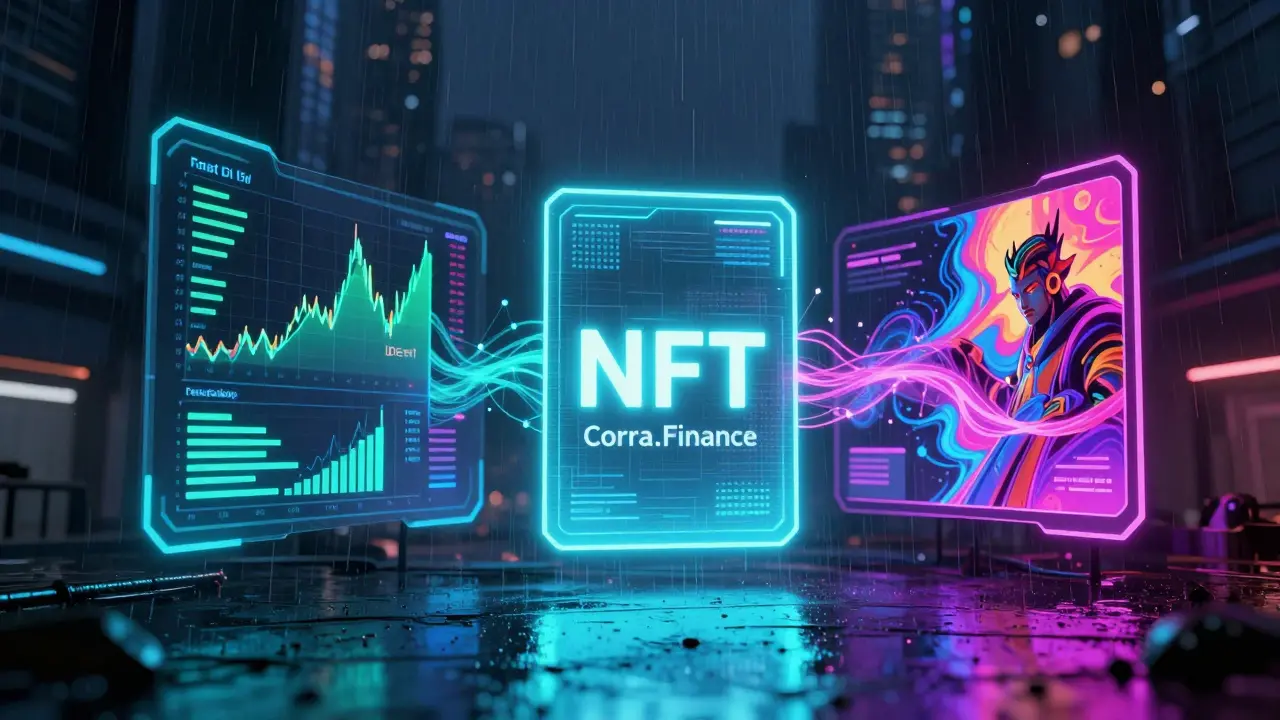
You’ve probably seen the buzz around CORA airdrop campaigns and wondered if there’s still time to claim free tokens or if you missed the boat. The short answer is that the major initial distribution phases for Corra.Finance, a plug-and-play platform designed to gamify DeFi through exclusive NFT products, are largely in the past. However, understanding how those distributions worked, where the token stands today, and what the project actually does is crucial for anyone looking to invest in or use the CORA ecosystem now.
This guide breaks down the history of the CORA token distribution, explains the unique utility of the Corra.Finance platform, and clarifies whether there are any active opportunities left for new users. We’ll look at the data from the MEXC Kickstarters, the CoinMarketCap campaign, and the current state of the token on exchanges like Binance.
What Is Corra.Finance and Why Does It Matter?
Before diving into the airdrop mechanics, it helps to understand what you’re actually getting involved with. Corra.Finance isn’t just another generic NFT marketplace. It positions itself as a bridge between traditional decentralized finance (DeFi) and non-fungible tokens (NFTs). The core idea is simple but powerful: use NFTs to enhance yield and user experience in existing DeFi products.
Most people think of NFTs as digital art or gaming assets. Corra.Finance expands this definition into four distinct categories:
- DeFi Applications: NFTs that unlock specific financial benefits or yield boosts.
- Digital Content: Photos, ideas, and words monetized directly by creators.
- Social Media: Tools for influencers to sell content to fans rather than just chasing likes.
- Non-Profit: Blockchain-based fundraising and transparency tools.
The platform’s business model is creator-friendly. Unlike many competitors that charge upfront gas fees for minting, Corra.Finance allows users to create and list products for free. Fees are only charged when an auction succeeds. This removes the risk for creators who might otherwise lose money on gas costs if their item doesn’t sell.
The History of the CORA Airdrop Campaigns
The CORA token had a total supply of 10 million tokens. During its early growth phase, the team relied heavily on community-driven distribution methods to build liquidity and awareness. Here are the two most significant airdrop mechanisms used.
MEXC Exchange Kickstarters
The most notable distribution event was the partnership with MEXC Exchange, a cryptocurrency trading platform known for listing early-stage altcoins. MEXC ran several "Kickstarter" sessions for CORA. This wasn’t a traditional "click here to get free tokens" airdrop. Instead, it was a voting mechanism.
In the 4th Kickstarter session specifically documented for CORA, users contributed USDT to vote for the token’s listing on the exchange. The community poured in over 87 million USDT (specifically 87,166,693.39739248 USDT) to support the listing. In return, participants received CORA tokens as rewards proportional to their contribution. Trading was estimated to begin on September 16, 2021, at 14:00 UTC following these sessions. This model ensured that the token holders were already engaged investors rather than random addresses claiming dust.
CoinMarketCap Community Airdrop
To broaden its reach beyond crypto-native traders, Corra.Finance partnered with CoinMarketCap, one of the industry's leading data aggregators. They hosted a structured airdrop campaign offering 600 CORA tokens distributed among 2,000 winners. While the amount per winner was small, this strategy helped onboard thousands of new users who trust CoinMarketCap for market data. It served as a marketing tool to establish a baseline holder base across diverse demographics.
Is There Still an Active CORA Airdrop in 2026?
If you are searching for a live, clickable link to claim free CORA tokens today, you will likely find nothing official. The primary distribution windows closed years ago. The circulating supply reported in earlier data was approximately 36,180 CORA, which is a tiny fraction of the 10 million total supply. This suggests that while some tokens remain in reserves for development or future incentives, the mass-market airdrop era for this project is over.
Be cautious of third-party websites claiming to offer "late" CORA airdrops. These are often scams designed to steal your wallet credentials. Always verify information through official channels or reputable data aggregators like CoinMarketCap or CryptoRank.

How to Buy CORA Tokens Today
Since the airdrop phase has ended, the only way to acquire CORA is through purchase on supported exchanges. As of our latest check, CORA is listed on major platforms including Binance and MEXC, as well as smaller venues like WEEX.
| Exchange | Type | Accessibility |
|---|---|---|
| Binance | Centralized (CEX) | High (Global user base) |
| MEXC | Centralized (CEX) | Medium-High (Altcoin focused) |
| WEEX | Centralized (CEX) | Medium |
Buying on Binance, for example, typically involves setting up a Trust Wallet, buying ETH as a base currency, and transferring it to facilitate the trade if direct fiat pairs aren't available. Note that recent market data shows minimal price movement, sometimes displaying $0 due to low volume or delisting risks on certain pairs. Always check the current order book depth before trading.
Tokenomics and Market Reality
Understanding the numbers behind CORA is essential for managing expectations. With a total supply of 10 million tokens, the scarcity is moderate compared to meme coins with quadrillion supplies, but high enough to allow for wide distribution.
The self-reported circulating supply of ~36,000 tokens in earlier reports indicates that the vast majority of tokens were either locked, held by the team, or reserved for future ecosystem incentives. This structure is common in projects that plan long-term development. However, it also means that selling pressure could be significant if large unlocks occur without corresponding demand.
The price action has been volatile. Early listings saw hype-driven spikes, followed by the typical correction phase. If you are considering entering now, you are betting on the utility of the platform-specifically its ability to attract creators to its fee-free NFT marketplace and integrate with DeFi protocols-rather than just speculative airdrop farming.
Risks and Considerations for New Users
Before allocating funds to CORA, consider these factors:
- Liquidity Risk: Low trading volume can make it difficult to exit large positions without slippage.
- Utility Adoption: The success of Corra.Finance depends on developers and creators actually using the platform to mint NFTs. Check their social media and GitHub activity for signs of ongoing development.
- Competition: The NFT space is crowded. Corra.Finance must differentiate itself clearly from giants like OpenSea or specialized DeFi-NFT hybrids like Uniswap v3 NFT positions.
Conclusion: What Should You Do Now?
The CORA airdrop chapter is closed. The opportunity to get free tokens via MEXC Kickstarters or CoinMarketCap campaigns passed in 2021-2022. Today, CORA is a tradable asset tied to the performance of the Corra.Finance platform. If you believe in the vision of gamifying DeFi and empowering creators with zero-upfront-cost NFT tools, you can buy the token on Binance or MEXC. If you were hoping for free money, it’s time to look elsewhere-but always do your own research before trusting any new "airdrop" alerts you see online.
Can I still claim the CORA airdrop in 2026?
No, the major airdrop campaigns via MEXC and CoinMarketCap concluded years ago. Any website claiming to offer free CORA tokens now is likely a scam. The only way to get CORA currently is to buy it on exchanges like Binance or MEXC.
What is the total supply of CORA tokens?
The total supply of CORA tokens is fixed at 10 million. Early data suggested a circulating supply of around 36,180 tokens, indicating that most tokens were reserved or locked at that time.
How does Corra.Finance differ from other NFT platforms?
Corra.Finance focuses on integrating NFTs with DeFi yields and offers four categories: DeFi, digital content, social media, and non-profit. Crucially, it charges no upfront gas fees for creating or listing NFTs; fees are only taken from successful sales.
Which exchanges list the CORA token?
CORA has been listed on major exchanges including Binance and MEXC, as well as smaller platforms like WEEX. Always check the current status on CoinMarketCap or CoinGecko as listings can change.
What was the MEXC Kickstarter for CORA?
It was a community voting campaign where users contributed USDT to vote for CORA’s listing on MEXC exchange. Participants received CORA tokens as rewards. The 4th session alone saw over 87 million USDT contributed.
Jay Sharma
June 30, 2026 AT 11:15Wake up sheeple. The whole 'airdrop' narrative is just a sophisticated honeypot designed to harvest your private keys and feed data to the surveillance state. They claim it's over, but that's exactly what they want you to think so you lower your guard and click on some phishing link disguised as an official channel. I've been tracking these DeFi schemes since 2017 and every single one ends with rug pulls and vanished founders. Don't be a pawn in their game.
Scott Miller
July 1, 2026 AT 15:59Look, stop being such a downer! This project actually has potential if you look past the noise. The integration of NFTs with DeFi yields is a solid concept, even if the execution has been slow. You gotta believe in the vision, man. If we all stay positive and support the ecosystem, the price will pump eventually. Let's keep the faith and build this community together!
Melissa L
July 2, 2026 AT 08:15i mean its kinda cool how they dont charge gas fees upfront? thats nice for people who arent rich. but like why is the circ supply so low? seems sus tbh
Ryan Peters
July 2, 2026 AT 14:10Another crypto casino run by offshore entities trying to bleed dry American retail investors. Typical. While real innovation happens in regulated US markets, these guys are playing with digital monopoly money and calling it 'DeFi'. It’s pathetic that people still fall for this nonsense instead of investing in actual productive assets here at home. Get a grip.
ross harris
July 2, 2026 AT 17:48The very notion of 'value' in this context is a linguistic construct, a fragile bubble of collective delusion masquerading as economic reality. When you strip away the jargon-laden facade of 'yield farming' and 'NFT utility', what remains is a hollow shell echoing in the void of speculative madness. We are not trading tokens; we are trading our own sanity for pixels. A tragic ballet of greed performed on the stage of blockchain absurdity.
Carl Belgrave
July 3, 2026 AT 12:22Listen up, folks. This is exactly why America needs stricter regulations on these foreign-backed crypto scams. They come in, dump worthless tokens on unsuspecting citizens, and vanish when the heat gets turned up. Support domestic industries and stay away from this globalist financial experimentation. It’s time to take back control of our wallets and our economy.
Carl Hanzel
July 4, 2026 AT 05:32You’re all missing the point entirely because you’re too busy chasing imaginary gains. The platform is dead weight. The team is ghosting. And yet here you are, defending a corpse. How depressing. I suppose it’s better than admitting you wasted years on a failed experiment. Keep telling yourself it’s about 'utility' while the charts bleed red.
Daniel J. Cox
July 5, 2026 AT 01:03I’ve seen similar models work in Southeast Asia where the community really drives the adoption. It’s interesting to see how different cultures approach decentralized finance. Some places embrace the risk more readily than others. Just observe and learn, no need to get so worked up. 🌏
Emma Rémond
July 6, 2026 AT 23:45How utterly quaint. Discussing 'airdrops' as if they represent genuine value creation rather than mere marketing fluff for illiterate speculators. The tokenomics are fundamentally flawed, relying on artificial scarcity and hype cycles that any competent economist would dismiss instantly. Please educate yourselves before polluting the discourse with your naive optimism.
ELNORA JEFFERSON
July 8, 2026 AT 00:08Boring. Another coin that promised the moon and delivered dust. I’m done reading these guides. Waste of my time.