
Living in Hobart, Australia, I often look at how different parts of the world handle digital assets. Nowhere is the situation more complex-and more critical-than in Iran. If you are wondering whether it is legal to buy Bitcoin or run a mining rig there, the short answer is yes, but with heavy strings attached. The landscape has shifted dramatically since early 2025. What was once a gray area of unlicensed operations and grid-straining chaos has turned into a tightly controlled regulatory environment.
The Iranian government doesn't want to ban crypto; it wants to control it. For ordinary citizens, this means using digital assets as a shield against inflation is still possible, but every transaction is watched. For miners, it means you can operate legally only if you pay premium electricity rates and sell your output to the state. Let’s break down exactly how these rules work today, who enforces them, and what pitfalls you need to avoid.
Who Controls the Crypto Market in Iran?
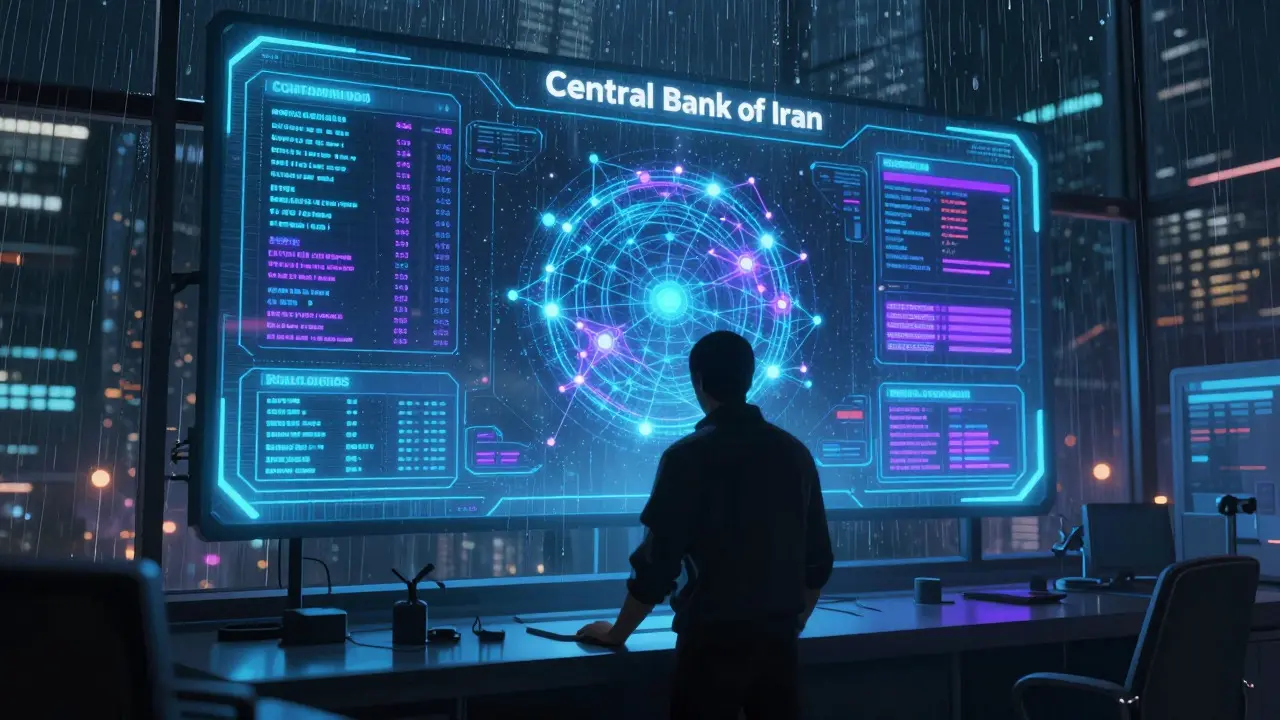
The Central Bank of Iran (CBI) is the sole authority responsible for regulating the cryptocurrency market, overseeing licensing, and managing rial transactions. This wasn't always clear. In the past, multiple agencies had overlapping jurisdiction, creating confusion. But in January 2025, President Masoud Pezeshkian issued a directive that changed everything. He designated the CBI as the single point of contact for all things crypto.
This move consolidated power. Before this, miners dealt with the Ministry of Energy for power issues, while traders navigated vague guidelines from financial oversight bodies. Now, the CBI holds the keys. Under Executive Order 2025-01, the central bank has direct, unrestricted access to all data, statistics, and records related to cryptocurrency activities. This means if you are trading on an approved platform, the government knows exactly what you hold, when you bought it, and when you sold it.
The goal here is transparency. The government fears money laundering and sanctions evasion. By funneling all legitimate activity through CBI-approved channels, they aim to separate everyday Iranians using crypto to save their savings from entities trying to bypass international restrictions. However, this also means privacy is virtually non-existent for legal participants.
Mining Regulations: License or Lose It
Cryptocurrency mining in Iran is legal, but it is one of the most strictly regulated industries in the country. The turning point came in 2019 when the government legalized mining to bring underground operations into the light. Why? Because illegal miners were draining the national power grid, causing blackouts in residential areas. Since then, the rules have tightened significantly.
To mine legally, you must obtain a license from the Ministry of Industry, Mine and Trade is the government body responsible for issuing licenses to cryptocurrency mining operations. You cannot just plug in a few ASICs in your basement. You need approval. Furthermore, you must use only government-approved hardware. This prevents the importation of unauthorized devices that might be used for illicit purposes or inefficient energy consumption.
Here is the catch: electricity costs. Legal miners do not get subsidized domestic rates. Instead, they pay tariffs pegged to export prices. This is significantly higher than what regular households pay. The logic is simple: if you are running an industrial operation, you should pay industrial rates. This protects the national grid and ensures that mining contributes to state revenue rather than draining public resources.
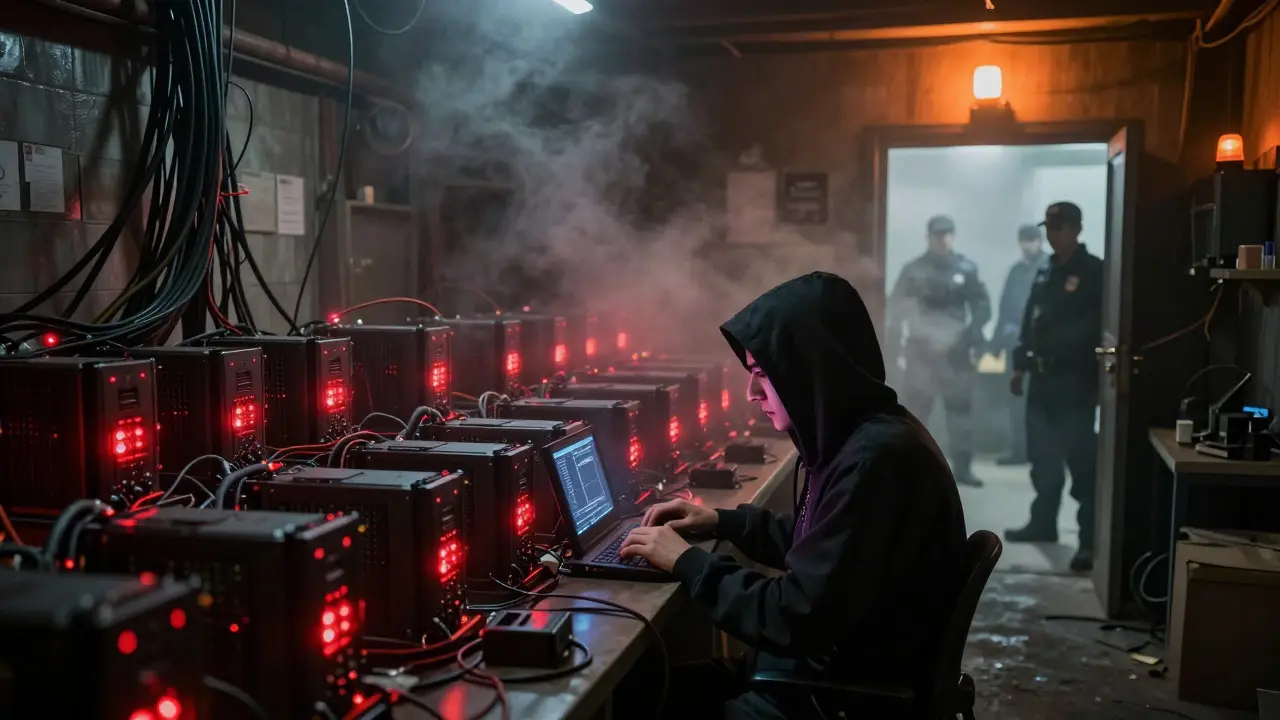
Despite these rules, enforcement remains a challenge. As of August 2025, experts estimate that around 95% of mining activities in Iran still operate illegally. The government has dismantled approximately 100 unauthorized mining farms and seized over 250,000 devices. Yet, the sheer volume of unlicensed rigs persists. The Ministry of Energy has implemented strict consumption limits to safeguard the grid, and legal miners face penalties if they exceed their allocated power quota.
| Feature | Legal Mining | Illegal Mining |
|---|---|---|
| Licensing | Required from Ministry of Industry | None |
| Electricity Rate | Pegged to export prices (high) | Subsidized domestic rates (low) |
| Hardware | Government-approved only | Any imported device |
| Sales Channel | Mandatory sale via NIMA system | Private exchanges or P2P |
| Risk | Regulatory compliance burden | Seizure of equipment, fines |
Trading Rules: The NIMA System and Approved Exchanges
If you are a miner, you don’t get to keep your Bitcoin. Legal miners are required to sell their mined cryptocurrencies to the CBI through the National Iranian Money Changer Association (NIMA) is the official system through which legal miners must sell their mined cryptocurrencies to the central bank. This directs earnings into state revenue. It’s a way for the government to capture value from the resource extraction process.
For regular traders, the rules are different but equally strict. All cryptocurrency market participants, including individuals and businesses, must secure licenses from the CBI. Transactions must occur through CBI-approved channels. This means using platforms like Nobitex is the dominant cryptocurrency exchange in Iran, handling the majority of trading volume. Nobitex has maintained its market dominance, processing the bulk of the country's crypto volume. While global exchanges are largely inaccessible due to sanctions, domestic platforms provide a regulated environment for buying and selling.
Brokers and platforms must conduct rial transactions transparently through designated accounts approved by the central bank. There is no room for off-book deals. Anti-Money Laundering (AML) and Know Your Customer (KYC) requirements are stringent. Every user is verified, and every trade is recorded. This creates a paper trail that the CBI can audit at any time.
Taxation: The New Capital Gains Rule
A major shift occurred in August 2025 with the enactment of the Law on Taxation of Speculation and Profiteering. This marked Iran's first imposition of capital gains tax on cryptocurrency trading. Previously, profits from crypto were largely untaxed, making it an attractive haven for speculative investors. No longer.
Under this law, crypto is positioned alongside other speculative assets such as gold, real estate, and forex. If you make a profit from trading digital assets, you owe taxes. The implementation began in Q3 2025, giving traders a few months to adjust their strategies. This signals Tehran's intent to formally regulate and tax digital asset markets, treating them as legitimate economic activities rather than shadow economies.
Economic Affairs Minister Hemmati publicly supported this initiative, arguing that organizing the market would protect stakeholders. However, critics worry about the administrative burden. Traders now need to keep detailed records of their purchases and sales to calculate their taxable gains accurately. Failure to comply could result in significant penalties.
Geopolitics and Stablecoins: The USDT to DAI Shift
Sanctions play a huge role in Iran's crypto ecosystem. International pressure forces Iranian users to adapt quickly. A prime example happened in July 2025. Tether, the issuer of USDT (Tether), froze addresses with Iranian exposure. This threatened the liquidity of millions of dollars held by Iranian users.
In response, there was a coordinated push by domestic exchanges, crypto influencers, and government-aligned channels urging users to offload USDT holdings. They steered users toward swapping into DAI (Dai) via the Polygon network. DAI is a decentralized stablecoin, less vulnerable to centralized freezing actions by US-based entities. This migration preserved access to liquid stablecoins despite heightened sanctions pressure.
This event highlights the fragility of relying on centralized stablecoins in a sanctioned economy. It also shows the resilience of the local crypto community. They adapted rapidly, shifting infrastructure to maintain financial stability. However, this transition caused temporary liquidity challenges, reminding users that even decentralized solutions can face hurdles during rapid shifts.

Enforcement and the Black Market Reality
While the legal framework is robust, the reality on the ground is messy. As mentioned, an estimated 95% of mining is still illegal. Why? Because the cost of legal compliance-especially electricity-is prohibitive for small operators. The government has introduced programs encouraging citizens to report illegal mining activities. Mostafa Rajabi Mashhadi, CEO of the Regulatory and Supervision Department of the Ministry of Energy, oversees these initiatives.
But enforcement is difficult. The demand for cheap crypto mining is high, and the temptation to bypass regulations is strong. The government has seized hundreds of thousands of devices, yet new ones appear regularly. This cat-and-mouse game continues, with the state tightening controls and operators finding ways to evade detection.
For the average person, the risk is less about mining and more about trading. Using unapproved platforms or engaging in large-scale P2P trades without proper documentation can lead to account freezes or legal scrutiny. The safest route is to stick to licensed exchanges like Nobitex and ensure all KYC requirements are met.
Market Dynamics and Future Outlook
Iran's total cryptocurrency flows declined 11% year-over-year between January and July 2025, reaching approximately USD 3.7 billion. This decline reflects increased regulatory scrutiny and external sanctions pressure. However, the ecosystem remains vital. Digital assets serve as a hedge against inflation for ordinary Iranians and a tool for international trade settlements for businesses.
The government continues to explore ways to leverage crypto for economic resilience. Reports suggest collaboration with Russia on a gold-backed stablecoin for cross-border payments. This indicates a strategic interest in using blockchain technology to bypass traditional banking systems affected by sanctions.
Looking ahead, expect continued tightening of controls. The CBI will likely expand its oversight mechanisms, especially as geopolitical conditions evolve. The introduction of capital gains tax sets a precedent for further fiscal policies. Miners will face stricter power quotas, and traders will encounter more rigorous reporting requirements.
For anyone operating in this space, staying informed is crucial. Regulations change frequently, and what is legal today might be restricted tomorrow. Keep an eye on announcements from the CBI and the Ministry of Energy. And always prioritize compliance. In Iran, the line between legal and illegal crypto activity is thin, and crossing it can have serious consequences.
Is it legal to own Bitcoin in Iran?
Yes, owning Bitcoin is legal in Iran. However, holding and exchanging digital assets must be done through CBI-approved channels. All participants must complete KYC procedures, and transactions are monitored by the Central Bank of Iran.
Do I need a license to mine cryptocurrency in Iran?
Yes, you need a license from the Ministry of Industry, Mine and Trade. Legal miners must also pay export-level electricity rates, use approved hardware, and sell their mined coins to the CBI via the NIMA system.
What is the capital gains tax on crypto in Iran?
As of August 2025, Iran imposes a capital gains tax on cryptocurrency trading under the Law on Taxation of Speculation and Profiteering. Profits from crypto are taxed similarly to gold, real estate, and forex. Traders must keep accurate records to declare their gains.
Which exchange is best for trading crypto in Iran?
Nobitex is the dominant and most widely used exchange in Iran. It handles the majority of trading volume and complies with CBI regulations. Using approved platforms like Nobitex ensures better security and regulatory compliance compared to unlicensed alternatives.
Can I use USDT (Tether) freely in Iran?
Using USDT carries risks. In July 2025, Tether froze addresses with Iranian exposure, leading many users to switch to DAI via the Polygon network. While USDT is still traded, decentralized stablecoins like DAI are considered safer against centralized sanctions enforcement.
How does the government monitor crypto transactions?
The Central Bank of Iran has direct access to all data and records from approved exchanges and brokers. Strict KYC and AML requirements ensure that every transaction is linked to a verified identity. This allows the CBI to track flows and enforce regulations effectively.