

Imagine waking up to find that simply holding a digital wallet on your phone could land you in a prison cell or cost you thousands of dollars in fines. For residents of Algeria, this isn't a dystopian movie plot-it's the legal reality. On July 24, 2025, the government shifted from a vague discouragement of digital assets to a full-scale criminal crackdown. While other countries are debating how to tax or regulate crypto prohibition Algeria has opted for a scorched-earth policy that makes it one of the most restrictive places on earth for blockchain technology.
| Feature | Legal Status / Value |
|---|---|
| Primary Legislation | Law No. 25-10 (Enacted July 2025) |
| Prohibited Actions | Possession, Trading, Mining, Promotion |
| Financial Penalties | 200,000 to 1,000,000 Algerian Dinars |
| Prison Terms | Two months to one year |
| Enforcing Body | Bank of Algeria & Security Authorities |
The Hammer Drops: Understanding Law No. 25-10
For a few years, Algeria operated under a 2018 Financial Law that basically said "don't use crypto," but it lacked real teeth. That changed with Law No. 25-10 is a comprehensive legislative act that officially criminalizes all digital asset activities in Algeria. This law doesn't just target the "big fish" or exchange operators; it casts a wide net over every single person interacting with a blockchain.
Article 6 bis is where the real danger lies. It explicitly outlaws the issuance, purchase, sale, and storage of digital assets. If you have a private key on a piece of paper or a seed phrase in your head, you are technically in violation. The law even criminalizes the promotion of cryptocurrencies. This means if you're a content creator or an influencer talking about the benefits of decentralized finance (DeFi) to your followers, you could be prosecuted for providing a gateway to an illegal activity.
Who is Actually Enforcing the Ban?
This isn't just a law on paper; it's a coordinated effort between several government arms. The Bank of Algeria is the central nervous system of this operation, ensuring the national financial framework remains insulated from unregulated assets. They work closely with the Banking Commission to make sure no commercial bank accidentally lets a crypto-related transaction slip through.
On the ground, the enforcement is split between judicial and security forces:
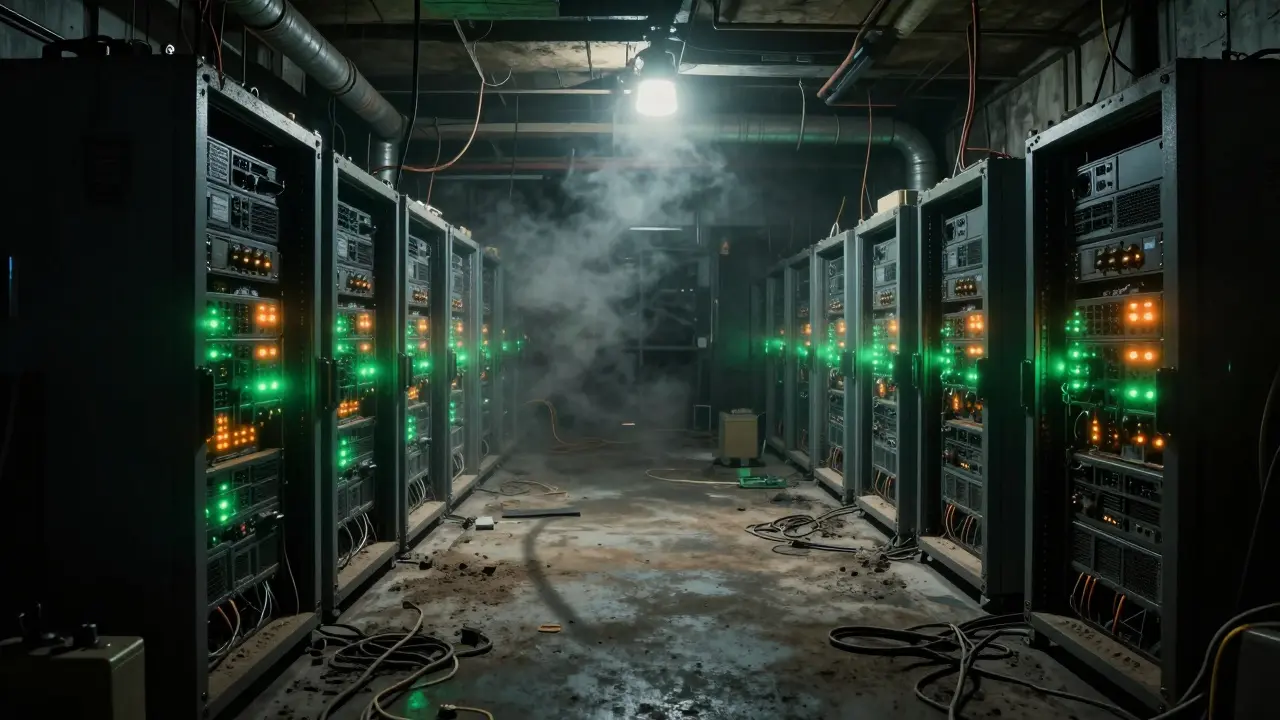
- Security Authorities: These teams handle the digital surveillance and physical raids. They are specifically looking for mining farms-which were once common due to cheap energy-and links to organized crime.
- Judicial Authorities: These are the prosecutors and judges who handle the actual court cases, managing the transition from a police arrest to a prison sentence.
- Financial Authorities: Their main job is monitoring the flow of money to catch those trying to hide crypto-to-fiat conversions under the guise of other business expenses.
Why the Extreme Stance?
You might wonder why a country would go this far when the rest of the world is moving toward adoption. The Algerian government has a few specific reasons. First is the protection of the Algerian Dinar, which is the official currency of Algeria. By banning crypto, the government maintains a total monopoly on monetary sovereignty, preventing citizens from hedging against inflation with stablecoins.
Second, there is a heavy focus on Anti-Money Laundering (AML) and Counter-Terrorist Financing (CTF). The government follows the guidelines of the Financial Action Task Force (FATF), an international body that sets standards for stopping illegal money flows. From the government's perspective, the anonymity of blockchain is a security flaw that could be exploited by bad actors.
The Human Cost: Talent Exodus and Ghost Farms
Before July 2025, Algeria was actually a rising star in the crypto world. A report from Chainalysis, a blockchain data provider, previously ranked Algeria as one of the fastest-growing markets in the MENA region. People were using peer-to-peer (P2P) trading to bypass traditional banking hurdles, and a vibrant community of developers was emerging.
Then the ban hit. Overnight, these professionals became criminals. We are now seeing a massive "brain drain" where blockchain engineers and fintech experts are fleeing to the UAE or Bahrain-countries that have done the opposite and created welcoming frameworks for digital assets. The mining sector, which had thrived on subsidized electricity, has been completely dismantled. Operators who didn't shut down in time now face fines up to 1,000,000 dinars (roughly $7,700 USD).

Algeria vs. The World: A Divergent Path
The contrast here is jarring. While the European Union is rolling out MiCA (Markets in Crypto-Assets), a comprehensive regulatory framework for digital assets in the EU), Algeria is mirroring the strict approach used by China. This creates a digital divide in North Africa.
While neighbors like the UAE are building "Crypto Valleys" to attract global investment, Algeria is closing its doors. This doesn't just affect traders; it hurts the broader tech ecosystem. When you criminalize the underlying technology (blockchain), you make it nearly impossible for local startups to innovate in areas like supply chain tracking, secure voting, or digital identity.
Is it illegal to just hold Bitcoin in Algeria?
Yes. Under Law No. 25-10, the simple possession of any digital asset is criminalized. This means that even if you aren't actively trading or selling, just having cryptocurrency in a wallet is a punishable offense.
What are the penalties for violating the crypto ban?
Violators can face prison sentences ranging from two months to one year. Additionally, the court can impose fines between 200,000 and 1,000,000 Algerian dinars (approximately $1,540 to $7,700 USD).
Can I talk about cryptocurrency on social media in Algeria?
It is very risky. The law explicitly bans the promotion and dissemination of information about cryptocurrencies. Content creators and influencers who advocate for crypto could be targeted under the promotion clauses of the legislation.
Does the ban apply to blockchain technology in general?
The law specifically targets "digital assets" and the activities associated with them (trading, mining, wallets). While the law focuses on the currency aspect, the broad language regarding "promotion" and "use" often makes developers hesitant to work with any blockchain-related project within the country.
Who is responsible for monitoring crypto activity?
A coordinated network of agencies handles this, including the Bank of Algeria for financial monitoring, the Banking Commission for institutional compliance, and security authorities for digital surveillance and physical arrests.
Next Steps and Risks
For anyone currently operating in this space or considering it, the risks are now extreme. If you are a foreign investor, avoid any projects that rely on local Algerian nodes or mining operations, as these are primary targets for security raids. For blockchain professionals, the only safe path forward appears to be relocating to jurisdictions with clear legal frameworks, such as the UAE or the EU.
If you are caught in a violation, the first point of contact will likely be the judicial authorities. Given the government's strong stance on monetary sovereignty, there is little room for negotiation or "grandfathering in" old holdings. The era of the "gray market" in Algeria is officially over.
Lauren Abrams
April 10, 2026 AT 05:34It's wild how quickly a government can just flip the switch and make a piece of software illegal.
Amanda Faust
April 10, 2026 AT 16:15standard monetary sovereignty play basically they just dont want people escaping the dinar since they cant control the peg on a decentralized ledger
Samson Selleck
April 11, 2026 AT 03:43The systemic fragility of the Algerian monetary framework necessitates such an archaic, blunt-force instrument to mitigate capital flight. We are witnessing a classic case of asymmetric information where the state attempts to maintain a monopoly on liquidity by criminalizing the very mechanisms of DeFi. It is a quaint, albeit draconian, attempt to stave off the inevitable erosion of fiat hegemony. The juxtaposition between the EU's MiCA framework and this scorched-earth policy highlights a profound divergence in cognitive approach to fiscal governance. One prioritizes institutionalized agility while the other clings to a Westphalian notion of absolute sovereignty. The resulting brain drain is not merely an incidental outcome but a predictable consequence of stifling intellectual capital. When you incentivize the exodus of blockchain engineers, you aren't just banning a currency; you are lobotomizing your own fintech potential for the next decade. The sheer audacity of criminalizing a seed phrase held in one's mind is almost poetically absurd in its futility. This is institutional panic masquerading as security. It is a textbook example of how an inability to integrate disruptive technology leads to an obsessive need to eradicate it. In the long run, this creates a clandestine shadow economy that is far harder to monitor than a transparent public ledger. The irony is palpable.
Artavius Edmond
April 11, 2026 AT 15:43Man, that's a tough spot for those developers. I really hope they find safe harbor in places like the UAE quickly.
Alan Seiden
April 11, 2026 AT 23:21Absolutely pathetic. This is exactly why certain nations simply cannot be trusted with modern infrastructure. They lack the fortitude and the basic intellectual capacity to regulate assets without resorting to prison sentences. It is a disgrace to the concept of global trade.
Kelly Cantrell
April 12, 2026 AT 15:10You can bet the FATF is pushing this from behind the scenes. They want every single transaction tracked and tied to a government ID. If you can't control the money, you can't control the people, so they just ban the tech entirely. Classic power move to keep us all in the dark.
Jason Davis
April 14, 2026 AT 09:35just a heads up for anyon anyone trying to help folks there, p2p is still the only way but it's way more dangrous now with those security raids. be careful with the metadata on your messages
Jessie Tayaban
April 15, 2026 AT 07:52Omg this is literally like a horror movie!!
Imagine just having a phone and suddenly you're a criminal?? I can't even process how scary that is for the people living there right now!!
Akshay Gorad
April 16, 2026 AT 21:10It is unfortunate to see such strict measures, though the need for national security is often complex.
Chidinma Sandra okafor
April 17, 2026 AT 18:19Oh honey, look at how they try to play the big game. It's honestly just cute that they think they can stop the internet with a piece of paper. Good luck with that!