
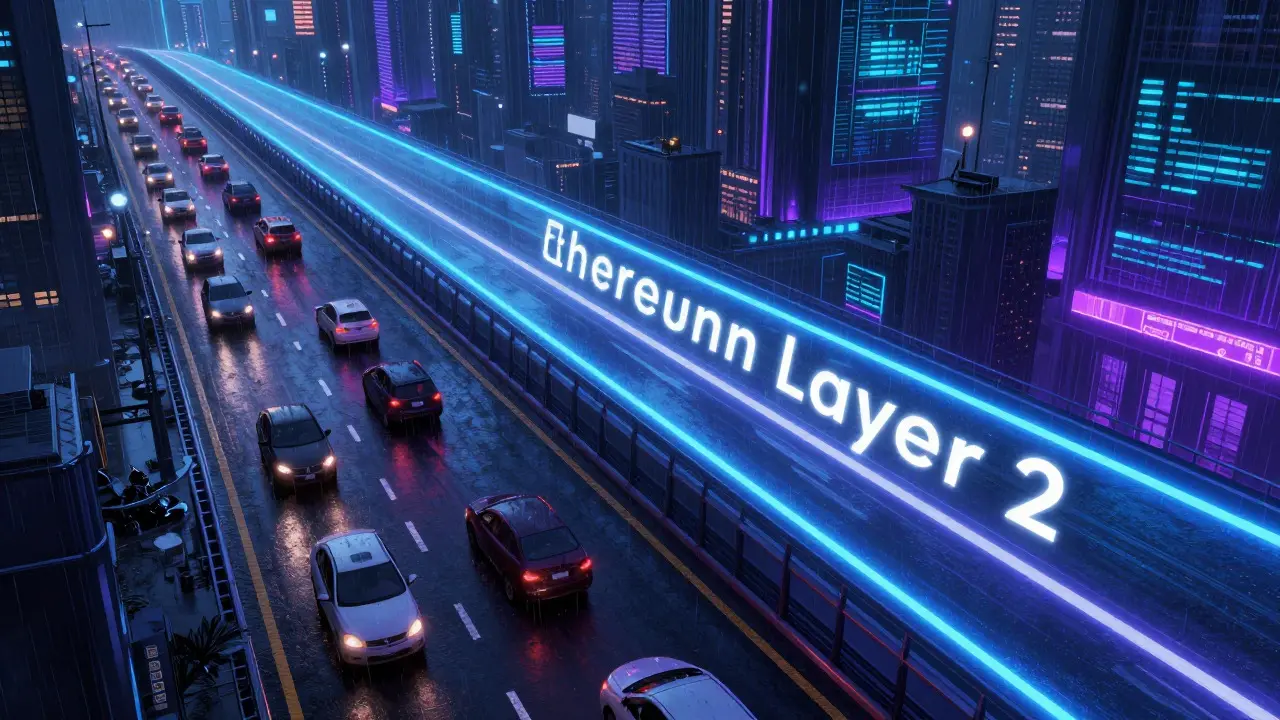
Imagine trying to send a quick text message during a massive stadium concert. The network is jammed, the signal is weak, and you’re staring at a loading circle that just won’t finish. Now imagine paying $60 for that single text. That was Ethereum in 2021.
If you’ve tried using DeFi apps or minting NFTs on the main Ethereum network recently, you know the pain has lessened but hasn’t vanished. High gas fees and slow confirmation times still happen when the network gets busy. This is exactly why Ethereum Layer 2 networks exist. They are the solution to the congestion problem, acting like express lanes on a crowded highway.
By mid-2025, these secondary networks handled over 85% of all transactions in the Ethereum ecosystem. Today, in July 2026, they are not just an option; they are where most of the action happens. But what exactly are they? How do they work without compromising security? And which one should you use?
What Is Ethereum Layer 2?
To understand Layer 2 (L2), you first need to understand Layer 1 (L1). Ethereum’s mainnet is Layer 1. It is the foundation. It holds the ultimate truth of who owns what. It is incredibly secure because thousands of computers around the world verify every transaction. But it is also slow and expensive because every computer has to do that verification.
Layer 2 networks are secondary blockchain frameworks built on top of Ethereum's mainnet to process transactions off-chain while inheriting Ethereum's security model. Think of L2 as a side table where people can quickly trade items, sign papers, and settle debts among themselves. Once everyone agrees on the results, they take a single summary receipt back to the main table (Ethereum L1) and record it there.
This approach solves the "blockchain trilemma." For years, developers struggled to balance three things: decentralization, security, and scalability. You could usually only pick two. Layer 2 allows Ethereum to keep its high security and decentralization while dramatically improving scalability. Instead of processing 15 to 30 transactions per second (TPS) on the mainnet, Layer 2 networks can handle thousands.
The Two Main Types of Layer 2 Solutions
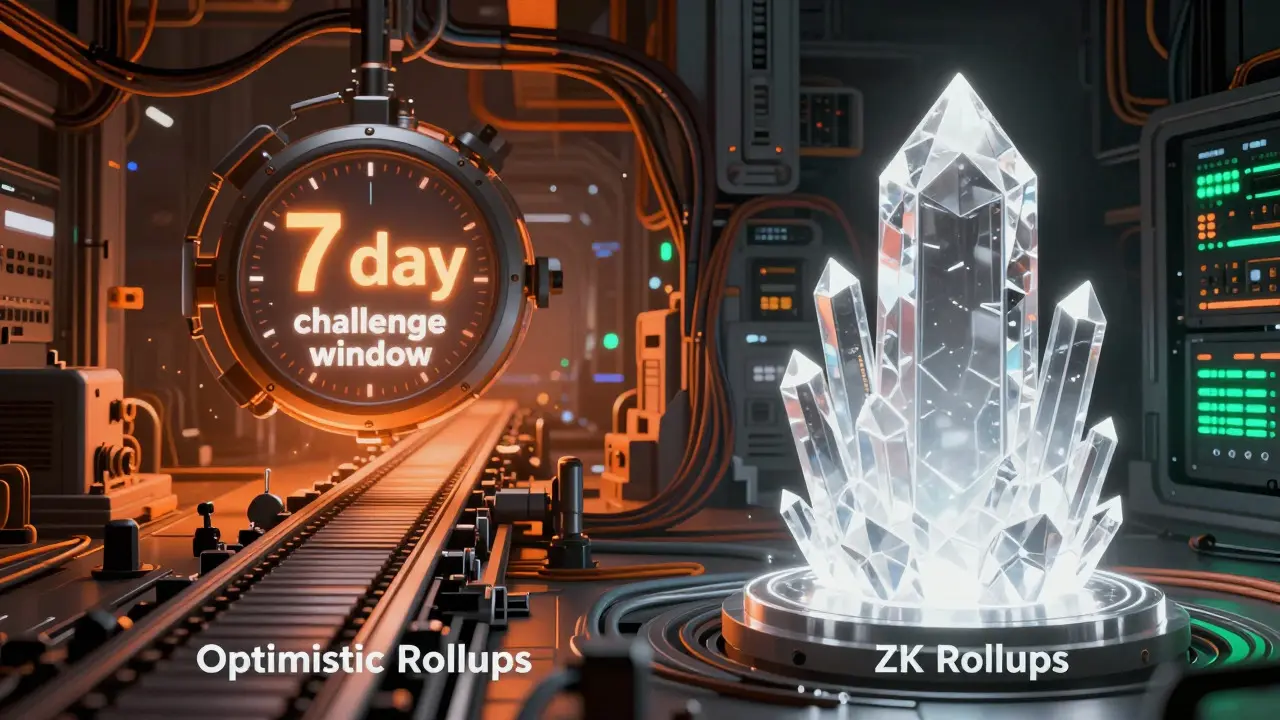
Not all Layer 2 networks are built the same way. There are two dominant technologies powering them today: Optimistic Rollups and Zero-Knowledge (ZK) Rollups. Understanding the difference helps you choose the right network for your needs.
Optimistic Rollups
Networks like Arbitrum One is a leading optimistic rollup network known for its high total value locked and mature developer ecosystem, Optimism is an optimistic rollup platform that powers many other chains through its OP Stack technology, and Coinbase’s Base fall into this category.
"Optimistic" means the system assumes transactions are valid by default. It processes them quickly. However, it leaves a seven-day window open for anyone to challenge those transactions. If someone spots a fraud, they can submit a "fraud proof," and the bad transaction gets reversed. This makes it cheap and fast for users, but withdrawals from L2 back to L1 can take up to a week if a dispute arises.
Zero-Knowledge (ZK) Rollups
Networks like zkSync Era is a zero-knowledge rollup network offering lower data availability costs and faster finality than optimistic solutions and Starknet is a ZK-rollup network utilizing Cairo VM for complex computations, popular for gaming and high-performance applications use cryptography instead of assumptions.
These networks generate a mathematical proof (a validity proof) that shows all transactions were correct. This proof is verified on Ethereum. Because the math guarantees correctness, there is no waiting period for disputes. Finality takes minutes rather than days. The trade-off? Generating these proofs requires heavy computation, which can sometimes make development more complex and hardware requirements higher.
| Feature | Optimistic Rollups (e.g., Arbitrum, Optimism) | ZK Rollups (e.g., zkSync, Starknet) |
|---|---|---|
| Security Model | Fraud Proofs (7-day challenge window) | Validity Proofs (Cryptographic verification) |
| Withdrawal Time | Up to 7 days (if disputed) | Minutes to hours |
| Average Cost (July 2025) | ~$0.008 per transaction | ~$0.0015 per transaction |
| Complexity | Lower (EVM compatible) | Higher (Specialized languages like Cairo/Zinc) |
| Best For | General DeFi, established dApps | Gaming, high-frequency trading, privacy |
Why Use Layer 2? The Real Benefits
You might be wondering if the hassle of switching networks is worth it. The answer is yes, primarily for two reasons: cost and speed.
In July 2025, the average transaction fee on Ethereum mainnet hovered around $3.75 during normal times, spiking much higher during congestion. On Layer 2 networks, the average fee dropped to roughly $0.003. That is a difference of over 1,000x. For small transfers, micro-payments, or frequent DeFi interactions, mainnet fees simply eat your profits. Layer 2 makes these actions economically viable.
Speed matters too. While Ethereum mainnet struggles with 15-30 TPS, Layer 2 networks like Arbitrum and zkSync can process thousands of transactions per second. When you swap tokens on Uniswap via Base or Arbitrum, the confirmation often comes in under two seconds. On mainnet, you might wait minutes.
There is also the environmental angle. Because Layer 2 batches thousands of transactions into one mainnet write, the energy efficiency per transaction is significantly higher. Although Ethereum already moved to Proof-of-Stake (which is 99.95% more efficient than before), Layer 2 pushes that efficiency even further.
The Hidden Risks: Centralization and Bridges
It isn’t all perfect. Layer 2 introduces new risks that didn’t exist on the mainnet. The biggest issue is sequencer centralization.
A sequencer is the entity that orders transactions on the Layer 2 network before posting them to Ethereum. Currently, most major Layer 2s rely on a single centralized sequencer operated by the founding team. In April 2025, Coinbase’s Base network suffered a 44-minute outage due to a sequencer failure, affecting 1.2 million users. This highlights the "centralization paradox": we use Layer 2 for decentralization, but the infrastructure itself is often highly centralized.
Another risk is bridging. Moving assets from Ethereum mainnet to Layer 2 requires a bridge. Bridges have been prime targets for hackers. Since 2023, Chainalysis reported 37 Layer 2-specific exploits totaling $283 million in losses. The largest was an $89 million hack on the Optimism bridge in January 2025. Always use official bridges or trusted aggregators like LI.FI or Socket, and double-check contract addresses. Phishing attacks often trick users into sending funds to fake contracts on different layers.
Which Layer 2 Should You Choose?
Choosing a Layer 2 depends on what you want to do. Here is a breakdown of the major players as of mid-2026:
- Arbitrum One: The leader in Total Value Locked (TVL) with over $18 billion. It has the most mature ecosystem, meaning most DeFi protocols are available here. It uses Nitro technology for performance. Best for general DeFi usage.
- Optimism & Base: Optimism pioneered the OP Stack, which now powers many chains including Base (Coinbase’s L2). Base has seen explosive user growth due to easy integration with Coinbase accounts. Great for beginners and social-fi apps.
- zkSync Era: Offers some of the lowest fees and fastest finality. It is ideal for users who want quick settlements and low costs. However, its smart contract language (Zinc) differs slightly from standard Solidity, so not all apps are ported yet.
- Starknet: Uses a unique programming language called Cairo. It excels at complex computations, making it the preferred choice for blockchain gaming and high-performance applications. Immutable X migrated here for NFT minting.

How to Get Started with Layer 2
Getting started is easier than it sounds. You don’t need to download new software. Most modern wallets like MetaMask support Layer 2 networks natively.
- Add the Network: Open your wallet settings. Look for "Add Network." Search for Arbitrum, Optimism, Base, etc. Your wallet will auto-fill the RPC details.
- Bridge Assets: Go to a bridge site (like the official Arbitrum Bridge or Optimism Gateway). Connect your wallet. Select the amount of ETH or ERC-20 tokens you want to move. Confirm the transaction on Ethereum mainnet.
- Wait for Confirmation: Depending on the bridge, this can take a few minutes to a few hours. Once done, your funds will appear in your wallet on the Layer 2 network.
- Use DApps: Visit your favorite DeFi app (Uniswap, Aave, etc.). Make sure the app interface is set to the correct network. Interact as usual.
Pro tip: Keep some ETH on the mainnet for gas fees when bridging out, and keep some ETH on each Layer 2 you use for local gas fees. Fees are tiny, but you still need them.
The Future of Ethereum Scaling
Layer 2 is not a temporary fix. As Vitalik Buterin stated in his June 2025 research post, it is the permanent architecture for Ethereum’s mass adoption. We are seeing consolidation around a few key stacks: the OP Stack, the ZK Stack, and Starknet’s Cairo VM.
Developers are working hard to solve the centralization issue. Arbitrum announced a plan to decentralize its sequencers by early 2026. Ethereum’s upcoming "Verkle Tree" upgrade in Q2 2026 will reduce storage costs on mainnet by 95%, making Layer 2 operations even cheaper.
For users, the experience is becoming seamless. Cross-L2 communication protocols like EIP-7686 are reducing bridging failures. Aggregators are making it possible to swap assets across different Layer 2s without manually bridging. The goal is a unified liquidity pool where you don’t even notice which layer you are on.
Is Layer 2 safe?
Yes, generally safer than many alternatives, but with caveats. Layer 2 inherits Ethereum's security for final settlement. However, risks exist in bridge contracts and centralized sequencers. Always use official bridges and verify contract addresses to avoid phishing.
Do I need to pay gas fees on Layer 2?
Yes, but they are extremely low. You need ETH (or the native token of that chain) to pay for transactions on Layer 2. Fees typically range from $0.001 to $0.01, compared to dollars on Ethereum mainnet.
Can I lose money if a Layer 2 fails?
If the Layer 2 protocol itself fails technically, your funds are usually safe on Ethereum mainnet, though withdrawing might take time. The real risk is hacking of bridge contracts or smart bugs in dApps running on L2. Diversify and use audited platforms.
Which Layer 2 is best for beginners?
Base and Arbitrum are often recommended for beginners. Base integrates easily with Coinbase accounts, and Arbitrum has the widest selection of familiar DeFi apps. Both have extensive documentation and large communities for support.
How long does it take to withdraw from Layer 2 to Ethereum?
It depends on the type. Optimistic rollups (Arbitrum, Optimism) can take up to 7 days for full security finality, though many offer instant withdrawals with insurance. ZK rollups (zkSync, Starknet) allow withdrawals in minutes to hours due to cryptographic proofs.
Are Layer 2 tokens considered securities?
Regulatory guidance varies. The SEC's July 2025 guidance indicated that Layer 2 tokens may remain classified as securities if their underlying Layer 1 counterparts are deemed securities. Always consult local regulations before investing in governance tokens of specific L2 networks.