

Imagine a government that doesn't just hack banks but runs a global criminal enterprise to fund its weapons program. That is exactly what North Korea has become. In the first half of 2025 alone, state-sponsored hackers stole over $2.17 billion in cryptocurrency. This isn't random theft; it's a coordinated strategy managed by the Reconnaissance General Bureau, primarily through the infamous Lazarus Group. The scale is staggering. Since tracking began, the cumulative value of these thefts has surpassed $6 billion.
The international community can no longer ignore this threat. With the United Nations Panel of Experts dissolving in May 2024, a vacuum opened up in enforcement. But instead of letting things slide, eleven nations stepped in. They formed the Multilateral Sanctions Monitoring Team (MSMT) in October 2024. This group includes the US, UK, Australia, Canada, Japan, South Korea, and several European powers. Their goal is simple: track, report, and stop the money flow that fuels Pyongyang’s illicit activities. If you are involved in crypto, whether as an investor or a business owner, understanding this shift is critical for your security.
The Rise of the Multilateral Sanctions Monitoring Team
Why did the world need a new team? The old UN system relied on consensus, which often meant slow action and weak enforcement. When China vetoed the renewal of the UN Panel of Experts, the door closed on that approach. The MSMT was built differently. It operates as a coalition of like-minded nations, allowing for faster information sharing and more aggressive monitoring.
| Feature | UN Panel of Experts (Pre-2024) | MSMT (Current) |
|---|---|---|
| Decision Making | Consensus-based (slow) | Coalition-based (agile) |
| Membership | All UN Security Council members | 11 specific nations (US, UK, AU, etc.) |
| Focus | Broad sanctions violations | Specific cyber/crypto crimes |
| Enforcement Power | Limited reporting | Direct law enforcement coordination |
The MSMT released its first major joint statement in Ottawa in October 2025. They described North Korea’s operations not just as hacking, but as a "sophisticated global criminal enterprise." This language matters. It shifts the narrative from isolated cyber incidents to organized economic warfare. By consolidating intelligence from twelve different jurisdictions, the MSMT can see patterns that individual countries miss. For example, they tracked how stolen funds move from initial hacks through decentralized exchanges and into privacy coins, eventually ending up in physical goods or fiat currency abroad.
Understanding the Lazarus Group’s Tactics
To fight the enemy, you have to understand their playbook. The Lazarus Group, acting under the Reconnaissance General Bureau, has evolved significantly. In 2024, they accounted for about 35% of all global crypto thefts. By early 2025, that number climbed. Their methods are diverse and increasingly technical.
The biggest shock came in February 2025 with the ByBit exchange hack. Hackers stole $1.5 billion, making it the largest single crypto theft in history. How did they do it? They didn't break a complex encryption algorithm. Instead, they exploited a compromised multi-signature approval system during a routine wallet transfer. This highlights a key vulnerability: human error and process flaws are often easier targets than code.
But Lazarus does more than just hack wallets. They infiltrate companies. Thousands of North Korean IT workers use fake identities to get jobs at Western tech firms. These workers generate revenue for the regime while simultaneously conducting espionage against defense contractors. The MSMT has documented cases where these employees accessed sensitive military technology data while coding software for civilian clients. This dual-use strategy makes detection incredibly difficult for HR departments and cybersecurity teams alike.

Blockchain Analytics: The New Forensic Tool
You can't catch digital criminals with traditional police work alone. You need blockchain analytics. Companies like Chainalysis, Elliptic, and TRM Labs have become essential partners in this fight. They provide the "eyes" for the MSMT and law enforcement agencies worldwide.
These firms don't just look at transaction hashes. They analyze laundering patterns. For instance, when North Korean actors steal Bitcoin, they rarely keep it as Bitcoin. They quickly move it through cross-chain swaps, decentralized exchanges (DEXs), and sometimes mixers to obscure the trail. Advanced analytics tools can cluster wallets based on behavioral similarities, identifying links back to known DPRK addresses even after multiple hops.
The effectiveness of this approach was proven in September 2025. Following the LND.fi hack, a coordinated effort between Chainalysis, Elliptic, and financial intelligence units from five MSMT nations froze $237 million in stolen funds within just 72 hours. This rapid response set a new standard. Previously, asset recovery took months or years, giving hackers time to launder the money. Now, speed is the priority.
Challenges in Implementation and Enforcement
Despite these successes, the road ahead is bumpy. One major hurdle is the lack of global participation. The MSMT includes powerful economies, but it excludes others. Non-participating nations may inadvertently facilitate DPRK operations because they aren't bound by the same monitoring protocols. This creates gaps in the net that savvy criminals exploit.
There is also the issue of cost and expertise. Implementing robust crypto compliance is expensive. A survey by the Crypto Compliance Consortium estimated that smaller platforms face annual compliance costs of around $1.2 million. Major players like Coinbase and Binance have adopted MSMT-recommended protocols, but smaller exchanges struggle. This disparity means weaker links in the chain remain vulnerable.
Training analysts is another challenge. Recognizing DPRK-specific transaction patterns requires specialized knowledge. As of October 2025, the MSMT had trained 487 analysts across participating nations. However, TRM Labs notes that effective mastery takes 6-8 months of dedicated training. Many jurisdictions still lack sufficient staff, leading to bottlenecks in investigation and prosecution.
The Role of AI and Future Threats
North Korea isn't standing still. They are adopting artificial intelligence to enhance their attacks. Between July and September 2025, there were documented cases of generative AI being used to create highly convincing social engineering content. These AI-generated messages bypassed traditional security filters at three major technology firms, tricking employees into revealing credentials.
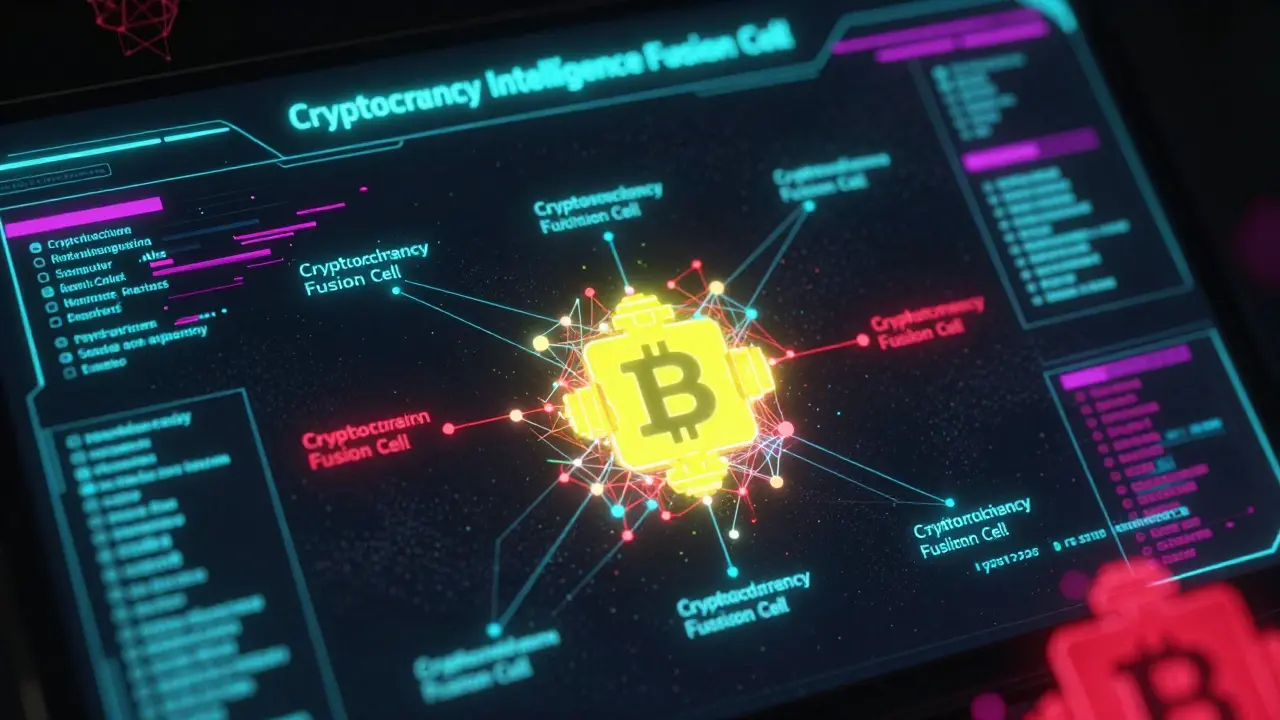
This escalation prompted the MSMT to announce a new initiative for early 2026: a Cryptocurrency Intelligence Fusion Cell. Modeled after counterterrorism structures, this cell will receive $85 million in initial funding from participating nations. Its purpose is real-time monitoring and rapid response. The goal is to move from reactive investigations to proactive interception.
Regulatory frameworks are catching up too. The US implemented Executive Order 14155 in April 2025, requiring enhanced due diligence for transactions over $10,000. Meanwhile, the EU’s MiCA II regulations, effective January 1, 2026, establish comprehensive cross-border monitoring rules. These laws force exchanges to act as gatekeepers, increasing the friction for criminals trying to cash out.
What This Means for You
If you hold cryptocurrency, you are part of this ecosystem. The rise of state-sponsored crime means that security is no longer just about keeping your private keys safe. It’s about choosing platforms that adhere to strict compliance standards. Look for exchanges that participate in industry-wide threat intelligence sharing. Avoid mixing services that promise anonymity without transparency, as these are prime laundering routes for groups like Lazarus.
For businesses, especially those hiring remote IT talent, vetting processes must tighten. Verify identities thoroughly. Be aware that some "freelancers" might be fronts for state actors. The intersection of labor exploitation and cybercrime is a growing risk that requires both legal and technical safeguards.
Who is the Multilateral Sanctions Monitoring Team (MSMT)?
The MSMT is a coalition of 11 nations including the US, UK, Australia, Canada, Japan, South Korea, France, Germany, Italy, Netherlands, and New Zealand. Formed in October 2024, it replaced the dissolved UN Panel of Experts to monitor and enforce sanctions against North Korea, specifically focusing on cyber and cryptocurrency crimes.
How much money has North Korea stolen via crypto?
Since tracking began, North Korean hackers have stolen over $6 billion in cryptocurrency. In the first half of 2025 alone, they stole more than $2.17 billion, accounting for roughly 35-38% of all global crypto thefts during that period.
What was the ByBit hack?
The ByBit hack occurred in February 2025 and resulted in the theft of $1.5 billion, making it the largest single cryptocurrency theft in history. Attackers exploited a compromised multi-signature approval system rather than breaking encryption directly.
How do blockchain analytics firms help fight this crime?
Firms like Chainalysis, Elliptic, and TRM Labs provide attribution capabilities by tracing blockchain transactions, analyzing laundering patterns, and integrating intelligence. They help law enforcement identify wallets linked to North Korean entities and freeze assets quickly, as seen in the LND.fi case where $237 million was frozen in 72 hours.
Is North Korea using AI in its cyberattacks?
Yes. Recent reports indicate that North Korean actors are using generative AI to create sophisticated social engineering content. This AI-generated material has successfully bypassed security protocols at major technology firms, tricking employees into compromising their systems.