
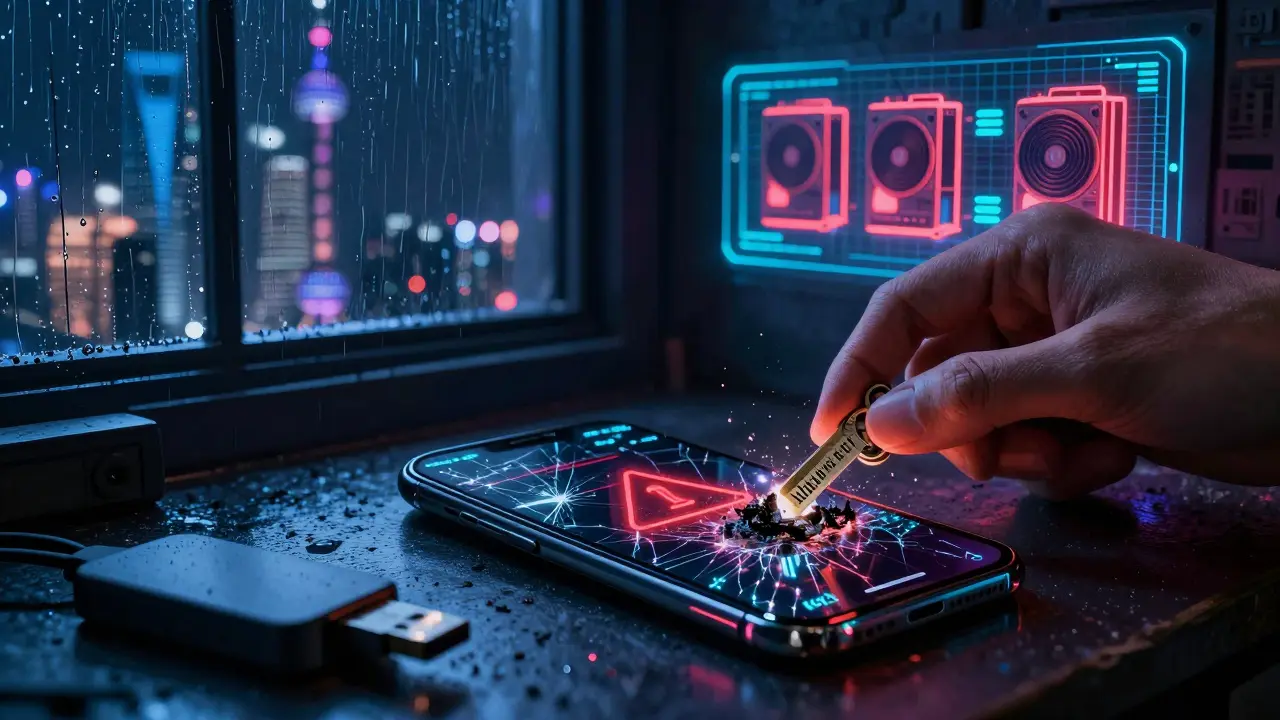
China’s cryptocurrency ban isn’t a gray area-it’s a hard stop. Starting May 31, 2025, holding, trading, or mining any cryptocurrency within China became illegal. Not just exchanges. Not just mining farms. Crypto itself. Even if you bought Bitcoin in 2021 and kept it in a wallet you never touched since, you’re now in violation. The government doesn’t just want you to stop using crypto-it wants you to erase it. And they’re watching.
Think of it like this: if you’re a Chinese citizen, your crypto isn’t yours anymore. It’s a legal liability. The Ministry of Public Security now has tools to track wallet addresses linked to your ID, freeze accounts, and even investigate you if you hold crypto outside China. That’s right-your offshore wallet isn’t safe just because it’s not on Chinese soil. The rules now follow you.
What’s Actually Banned (And What Isn’t)
The 2025 ban isn’t an update-it’s a total rewrite. Here’s what’s illegal:
- Buying, selling, or trading any cryptocurrency on domestic or foreign exchanges while in China
- Holding Bitcoin, Ethereum, USDT, or any other digital asset in any wallet linked to your identity
- Mining crypto using any hardware, even a single GPU in your home
- Using crypto to pay for goods or services, even privately
- Working for or investing in any crypto-related business, including DeFi protocols or NFT marketplaces
- Using VPNs or proxies to access foreign exchanges if detected
What’s not banned? The digital yuan (e-CNY). The government actively promotes it as the only legal digital currency. Banks, shops, and even street vendors now accept it. It’s tracked, controlled, and tied to your real identity. There’s no anonymity. No decentralization. Just state-approved transactions.
Why You Can’t Just Use a VPN
Many people assume a VPN is enough. It’s not. In 2025, Chinese authorities upgraded their internet monitoring system to detect not just VPN traffic, but the patterns of crypto-related activity that go with it. If you log into Binance or Kraken through a VPN, your device fingerprint, timing, and IP history are logged. If your bank account shows sudden transfers to known crypto wallet addresses-even once-the system flags you.
One user in Guangzhou tried using a premium VPN to trade on OKX. He didn’t get caught for months. Then, his bank account was frozen because he transferred 0.1 ETH to a wallet that had previously received funds from a known mining pool. He was summoned by local police. He lost his job. His passport was flagged. He didn’t get his money back.
VPNs don’t protect you from financial surveillance. They just add another layer of risk.
What Happens If You’re Caught
There are no fines. No warnings. No “first offense” leniency. The punishment is immediate and severe:
- Your bank accounts are frozen without notice
- Your passport may be restricted from international travel
- You can be summoned for interrogation by local public security bureaus
- If you’re deemed to have “engaged in illegal financial activities,” you could face criminal charges under Article 225 of China’s Criminal Law
- Employers are required to report any employee suspected of crypto activity
There’s no public record of how many people have been prosecuted, but insiders say enforcement is ramping up. Local governments are under pressure to meet “crypto crime reduction” targets. That means more audits, more checks, more random wallet scans.

There’s No Legal Way Around It
You might read articles claiming you can “legally” hold crypto using offshore trusts, family members’ names, or anonymous wallets. That’s misinformation. China’s 2025 law doesn’t care about legal structures. If you’re a Chinese citizen, the government considers any crypto you control-even indirectly-as yours. If your mother holds Bitcoin in her name but you’re the one who bought it, you’re still liable.
Even using crypto for humanitarian purposes-like sending aid to a friend overseas-is illegal. The law doesn’t make exceptions. There’s no “good reason” clause.
What People Are Actually Doing (And Why It’s Risky)
Some Chinese citizens are still holding crypto. Not because they’re brave-they’re just not caught yet. Here’s what they’re doing:
- Keeping wallets offline, with no internet connection, and no links to personal info
- Using hardware wallets stored in sealed envelopes, buried or hidden
- Transferring crypto to friends or relatives abroad before the ban took effect
- Converting crypto to physical gold or high-value goods (like luxury watches) before the ban
One person in Shanghai converted 10 BTC to 200 Rolex watches in 2024. He shipped them to a cousin in Singapore. He now lives in China with no crypto-but he has assets. He says he sleeps better. But if customs ever finds those watches linked to him, he’s in trouble.
Another strategy: buying crypto in cash from overseas traders during international travel. But this is dangerous. Border control now scans for crypto-related apps on phones. If you have a wallet app open, even in incognito mode, your device can be seized. You don’t need to be caught trading-you just need to be caught with the tools.

The Only Safe Option
There’s one path that doesn’t involve risk: compliance.
If you’re in China, and you want to stay out of trouble, here’s what you do:
- Withdraw all crypto from wallets you control
- Convert it to fiat through an exchange before the ban-this is now impossible, so if you still hold crypto, you’re past the deadline
- Destroy private keys. Physically. Burn the paper. Shred the backup. Delete the file. Don’t keep a copy anywhere.
- Stop using any crypto-related apps. Uninstall them. Clear your browser history. Disable auto-fill for wallet addresses.
- Use only the digital yuan for all digital payments. It’s legal. It’s safe. It’s tracked-but so is your bank account. At least you’re not breaking the law.
It’s not about being clever. It’s about surviving. The Chinese government doesn’t want to negotiate. It wants total control. And it has the power to enforce it.
What About Foreigners in China?
If you’re not a Chinese citizen, the rules are slightly different-but not by much. Foreigners are not explicitly targeted, but they’re not protected either. If you’re working in China on a visa, your employer reports your financial activity. If you’re caught trading crypto, your visa could be revoked. Your bank could freeze your account. You could be deported.
Some expats tried using crypto to pay rent or send money home. All of them were contacted by authorities. One American teacher in Chengdu lost his job after his bank flagged a transfer to a Coinbase wallet. He wasn’t charged, but he had to leave the country within 30 days.
Bottom line: if you’re not Chinese, you’re still not safe. The rules apply to anyone physically inside China’s borders.
The Bigger Picture
China’s crypto ban isn’t about stopping innovation. It’s about control. The digital yuan is the future they want: centralized, traceable, and state-owned. Crypto represents the opposite: freedom, anonymity, decentralization. That’s why they’re erasing it.
It’s not just about money. It’s about power. And in China, power doesn’t tolerate competition-even digital competition.
If you’re outside China, you can still trade, hold, and use crypto. But if you’re inside, there’s no workaround that’s truly safe. The only way to avoid restrictions is to not have any crypto at all.
Can I still use crypto in China if I don’t tell anyone?
No. China’s surveillance system doesn’t rely on confessions. It uses financial monitoring, device fingerprinting, and blockchain analysis to detect crypto activity. Even if you never speak about it, your transactions leave digital traces. Banks, payment processors, and internet providers are legally required to report suspicious activity. If your wallet address is linked to your identity-even indirectly-you will be found.
What if I moved my crypto out of China before the 2025 ban?
If you moved crypto out before May 31, 2025, and did not use any Chinese-linked accounts or IDs to access it afterward, you’re in a gray zone. Authorities are unlikely to pursue you unless you make a mistake-like transferring funds back into China or using a Chinese IP to access your wallet. But if you’re a Chinese citizen, they still consider that crypto yours, regardless of location. There’s no legal protection.
Can I use a foreign bank account to hold crypto?
Yes, but only if you’re not in China. If you’re physically in China and use a foreign bank account to buy, sell, or hold crypto, you’re violating the law. Chinese authorities monitor cross-border financial flows. If your bank account shows activity tied to crypto exchanges, you’ll be flagged-even if the account is in your spouse’s name or a relative’s name.
Is mining crypto at home illegal?
Yes. Mining crypto using any hardware-whether it’s a single GPU or a warehouse full of ASICs-is illegal. Authorities conduct random inspections of homes and businesses. They use thermal imaging to detect unusual heat signatures from mining rigs. Even running one miner for a week can get you visited by police. There are no exceptions.
What happens to crypto I already owned before the ban?
The law doesn’t distinguish between old and new holdings. If you owned crypto before May 31, 2025, and still hold it now, you’re in violation. Authorities are not offering amnesty. Your assets are considered illegal property. You can’t legally sell them. You can’t legally move them. The only safe option is to destroy access to them permanently.
Kathryn Flanagan
December 14, 2025 AT 18:52Look, I get that China’s got its own rules, but this feels like taking away someone’s right to own something they worked for. I’m not saying break the law, but if someone bought Bitcoin in 2021 and never touched it again, why should they lose it all? It’s not like they’re hurting anyone. It’s just money, stored digitally. The government’s got the digital yuan, fine, but why can’t people have choices too?
I’ve got friends who moved crypto out before the ban, and now they’re just sitting on it overseas. They’re not using it, not trading, not doing anything risky. Just holding. Is that really a crime? I don’t think so. This feels less like financial regulation and more like control for control’s sake.
I know it’s easy to say ‘just comply,’ but when the state says ‘this thing you own is now illegal,’ it changes the whole idea of ownership. That’s not just about crypto-it’s about trust. And right now, that trust is broken.
I’m not trying to stir up trouble. I just think people deserve to be treated like adults. Not like kids who need to be told what they can and can’t have. Even if it’s digital.
And honestly? If I lived there, I’d probably do the same thing as that guy in Shanghai-turn it into watches. At least then you can hold it in your hands. That’s real. That’s tangible. You can’t confiscate a Rolex without looking like a jerk.
Still, I feel bad for people who didn’t have the means to move their assets. That’s the real tragedy here-not the law, but the inequality in how it hits people.
amar zeid
December 16, 2025 AT 18:31While the legal framework presented is indeed stringent, one must consider the geopolitical context of monetary sovereignty. The People’s Republic of China, as a centralized state with a long-standing tradition of state-directed economic policy, views decentralized digital assets as existential threats to fiscal control. The digital yuan is not merely a currency-it is an instrument of governance. Therefore, the prohibition of crypto is not punitive, but preemptive. One cannot expect a sovereign entity to permit parallel financial systems that operate beyond its audit trail. The moral question of individual ownership is secondary to systemic stability. This is not tyranny-it is statecraft.
Alex Warren
December 18, 2025 AT 10:53They didn’t ban crypto because it’s dangerous. They banned it because it’s uncontrolled. And control is everything in China. The digital yuan isn’t a currency-it’s a surveillance tool. Every transaction logged. Every person tracked. No anonymity. No privacy. No freedom. That’s the real goal. Crypto represented a loophole. Now it’s erased.
And yeah, you can hide your keys. You can bury your hardware wallet. But if you’re Chinese, they’ll find you. Not because you’re dumb. Because they’re relentless.
Steven Ellis
December 18, 2025 AT 21:25It’s heartbreaking to see how quickly freedom can be redefined as risk. The people in China who held crypto weren’t criminals-they were early adopters, investors, believers in a decentralized future. Now they’re being asked to erase their own history. Destroy their private keys. Burn their paper wallets. It’s not just financial loss-it’s psychological. You’re being told your belief, your foresight, your effort, was wrong. And now you have to pretend it never happened.
There’s no dignity in compliance when compliance means surrender. But I get it. Survival comes first. If you have a family, a job, a life in China, you don’t fight a system that can freeze your bank account, revoke your passport, and ruin your career over a few coins.
So yes, do what you must to stay safe. But don’t forget: the people who lost their crypto didn’t lose money. They lost a dream. And that’s harder to recover.
Claire Zapanta
December 19, 2025 AT 08:55Of course China bans crypto-because the West told them to. This is all part of the New World Order. The IMF, the Fed, the globalist elites-they don’t want people owning anything outside their control. Crypto is the last bastion of individual freedom. And now China’s doing their dirty work for them. They’re not doing this for ‘stability.’ They’re doing it because the U.S. told them to. The digital yuan? That’s the first step toward a global digital currency where every purchase you make is monitored, taxed, and controlled by a single entity. Wake up. This isn’t about China. It’s about the end of cash. The end of privacy. The end of you.
Ian Norton
December 20, 2025 AT 18:21Let’s be real. Most people who held crypto in China were either speculators or scammers. The guy who turned 10 BTC into 200 Rolexes? He’s not a victim-he’s a tax evader. The ‘private wallets’? Probably used for money laundering. The ‘humanitarian transfers’? Probably funding underground gambling rings. Don’t romanticize this. The government didn’t ban crypto because they’re authoritarian-they banned it because it was being abused. And now people are crying about ‘freedom’ when they were just using it to dodge taxes and sanctions. Get over it.
Sue Gallaher
December 21, 2025 AT 07:12China’s right to do whatever it wants. If you live there you follow the rules. End of story. Why should Americans or Europeans get to tell them how to run their country? We don’t like their laws? Don’t move there. Simple. I’m sick of people acting like China is the bad guy because they don’t let you gamble with digital coins. We got laws against insider trading and Ponzi schemes. Why is crypto different? Because it’s new? So what. It’s still money. And money is regulated. Deal with it.
Jeremy Eugene
December 22, 2025 AT 20:26While the legal and technical implications of the 2025 cryptocurrency prohibition are well-documented, it is important to recognize the broader ethical dimensions of state sovereignty over digital assets. The Chinese government’s actions, while severe, are consistent with its constitutional framework and economic policy objectives. To critique these measures without acknowledging the context of national financial security is to engage in ideological projection rather than objective analysis. Respect for legal jurisdiction is not capitulation-it is civility.
Nicholas Ethan
December 22, 2025 AT 20:40Anyone who still holds crypto in China after May 31, 2025 is either delusional or actively trying to get caught. The surveillance infrastructure is too advanced. The financial monitoring is too tight. The penalties are too severe. There is no ‘gray area.’ There is no ‘safe way.’ The only rational choice is to delete everything and move on. No one is coming to save you. No one is going to fight for your Bitcoin. You made your choice. Now live with it.
Kathy Wood
December 24, 2025 AT 08:06THIS IS A TRAGEDY. A HORRIBLE, UNFORGIVABLE, DYSTOPIAN NIGHTMARE. THEY’RE TAKING AWAY YOUR MONEY. YOUR FREEDOM. YOUR FUTURE. PEOPLE ARE BEING ARRESTED FOR HAVING A WALLET. WHAT IS THIS? NAZI GERMANY? STALIN’S RUSSIA? I’M CRYING RIGHT NOW. I CAN’T BELIEVE THIS IS HAPPENING IN 2025. SOMEONE PLEASE DO SOMETHING. I’M SO ANGRY. I’M SO SAD. I WANT TO SCREAM. WHY CAN’T WE DO MORE? WHY ISN’T THE WORLD DOING MORE?!
Rakesh Bhamu
December 24, 2025 AT 13:47I understand the fear, but I also understand why China made this move. Crypto is volatile. It’s unregulated. It’s hard to track. And in a country that’s trying to modernize its financial system without chaos, it’s just too risky. The digital yuan is clean, fast, and secure. It’s not perfect-but it’s theirs. And they’re not asking you to give up your rights. They’re asking you to use their system. That’s not evil. That’s governance.
Yes, some people lost assets. But many others never even had crypto. They’re just trying to survive. Maybe instead of focusing on what was taken, we should think about what’s being built. A system where everyone can pay for groceries with their phone. Where no one gets ripped off by shady exchanges. Where the government isn’t leaking your data to advertisers.
It’s not freedom. But it’s order. And sometimes, order is better than chaos.
Hari Sarasan
December 25, 2025 AT 16:57Let us not mince words: the Chinese state has enacted a paradigmatic assertion of monetary hegemony. The cryptographic decentralization paradigm, by its very ontological structure, constitutes an epistemic threat to the centralized epistemic authority of the nation-state. The digital yuan, as a sovereign digital asset, represents not merely a currency but a hegemonic apparatus of data governance, algorithmic control, and behavioral modulation. To possess non-state digital assets within the PRC is not merely a regulatory infraction-it is an act of epistemological defiance. The state does not merely ban crypto. It erases its metaphysical possibility. This is not oppression. This is ontological reordering.
Stanley Machuki
December 26, 2025 AT 13:11Just delete it. Burn the paper. Wipe the drive. Move on.
You’re not losing money. You’re avoiding prison.
Lynne Kuper
December 27, 2025 AT 16:53Oh wow, so you’re telling me the government is watching? Shocking. Next you’ll say the sky is blue and water is wet.
Meanwhile, people are still trying to use VPNs like it’s 2018. Bro. It’s 2025. They’ve had years to build this. You think your fancy NordVPN is gonna save you? Nah. Your phone’s fingerprint, your router’s MAC address, your bank’s transaction history-they’re all linked. You’re not hiding. You’re just making it easier for them to find you.
And honestly? If you’re still holding crypto in China, you’re not brave. You’re just reckless. And now you’re gonna be the reason your cousin gets audited because your wallet address got flagged. Stop being a liability.
Lloyd Cooke
December 27, 2025 AT 17:19There is a profound irony in the Chinese state’s pursuit of digital sovereignty: in attempting to eliminate the decentralized, it has inadvertently illuminated the fragility of centralized authority. The digital yuan, though seamless in its design, is a monument to vulnerability-every node, every transaction, every keystroke, a potential point of failure. Crypto, for all its volatility, offered not just anonymity, but epistemic pluralism. The state’s victory is not a triumph of order, but a surrender to fear. To control all is to fear all. And in that fear, the state becomes its own prison.
Perhaps the true rebellion is not in holding crypto, but in remembering that freedom is not a thing you own-it is a state of mind. And minds, unlike wallets, cannot be frozen.
Albert Chau
December 29, 2025 AT 11:33You people act like this is the first time a government banned something inconvenient. Back in the 1920s, you couldn’t own alcohol. In the 1970s, you couldn’t own certain drugs. Now you can’t own crypto. It’s not about freedom. It’s about control. And guess what? It’s always been that way. You’re not special. Your Bitcoin isn’t sacred. Stop pretending you’re a revolutionary. You’re just someone who bought a trend and now can’t let go.
Tiffany M
December 30, 2025 AT 04:57China’s not evil-they’re just trying to keep their house in order. If you lived there, you’d get it. You wouldn’t want your kid’s school payment to get hacked because someone used a sketchy exchange. You’d want your taxes to be clear. You’d want your grandma to be able to pay for medicine without some scammer stealing her digital yuan.
Yeah, it’s harsh. But I’ve seen how crypto scams ruin families in the US. People lose life savings. People get scammed into fake NFTs. People think they’re rich because they own a token that’s worth $0. Maybe China’s just trying to protect people from themselves.
And honestly? The digital yuan is kinda cool. You can pay for dumplings with your phone. No fees. No lag. No crypto drama. Maybe we should all just chill and let them do their thing.
Lois Glavin
December 31, 2025 AT 19:36I’ve got a friend who used to mine crypto in her garage in Shenzhen. She had one GPU. Just one. She said it was like a hobby-like knitting, but with electricity.
After the ban, they came for her. Not the police. Just a guy from the neighborhood committee. Asked if she still had the machine. She said no. He nodded. Said thanks. Didn’t ask to see anything.
She says she sleeps better now. No more noise. No more bills. No more fear.
She’s not angry. She’s just… done.
Maybe that’s the real story here. Not the money. Not the law. Just someone who gave up a little thing to keep the peace.
Bridget Suhr
January 2, 2026 AT 14:49ok so i just wanna say… if you still have crypto in china… you’re kinda dumb? like… i get it, you thought you were smart buying btc in 2021. but now? it’s not worth risking your job, your passport, your family. just delete it. burn the paper. move on. it’s not the end of the world. you’ll live. i promise. i’ve lost way more than crypto to bad decisions. you’re not alone. just… be smart. for once.