
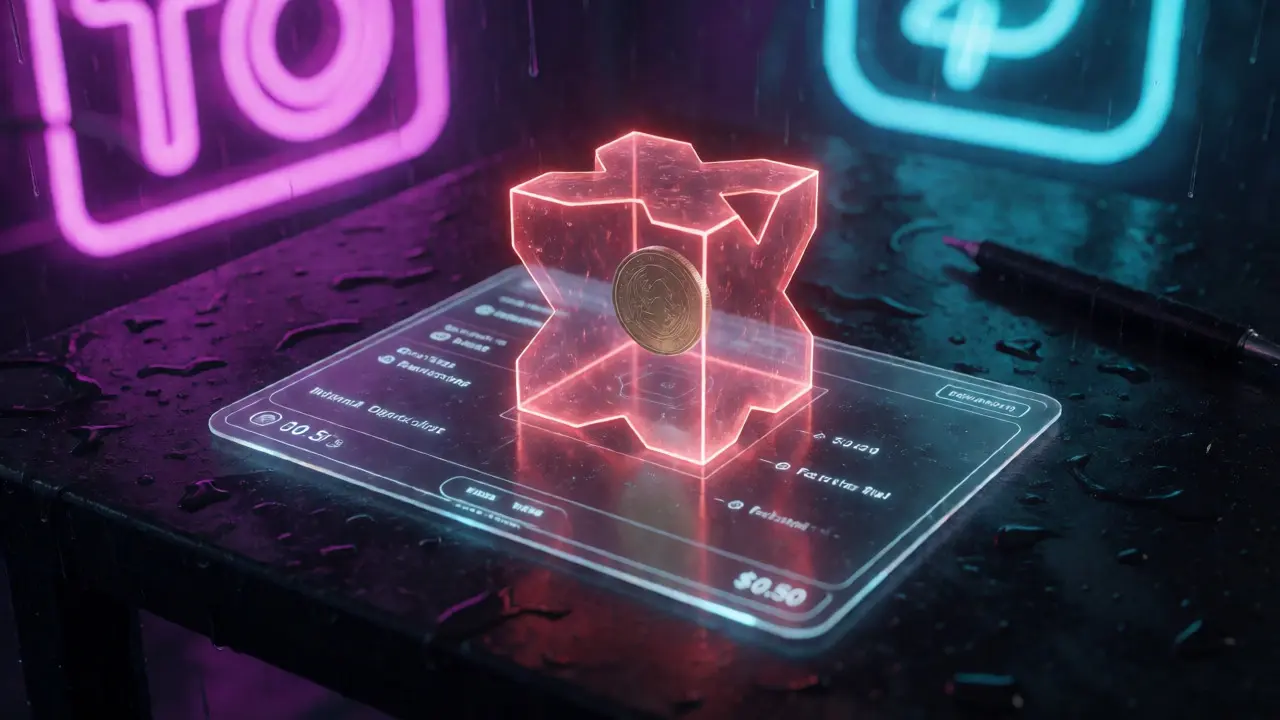
You just read a great article. You want to tip the author $0.50 for their time. In the traditional web world, that transaction is nearly impossible. The credit card fee might be higher than your tip, or the platform takes a huge cut. Blockchain micropayments change this equation entirely. They allow you to send fractions of a cent directly to creators without intermediaries eating up the value.
This isn't just about tipping. It's about shifting from subscription models-where you pay $15/month for Netflix-to pay-per-view models where you only pay for what you actually watch. But how does it actually work? And why hasn't everyone switched yet? Let's break down the mechanics, the money, and the messy reality of using blockchain for small content transactions.
The Core Problem with Traditional Micropayments
Before we talk about solutions, look at the barrier. Traditional payment processors like Visa, Mastercard, or PayPal charge fixed fees plus a percentage. If you try to send $0.10, a flat fee of $0.30 makes the transaction negative. This is why you can't buy a single song for $0.05 on most platforms anymore; they bundle them into albums or subscriptions.
Users hate friction too. Creating an account, linking a bank, and verifying identity for a $0.20 purchase feels like overkill. Centralized exchanges add another layer of pain. For instance, Coinbase has historically charged around $0.99 for small transactions under $10. That kills the viability of micro-transactions instantly. Cryptocurrency volatility adds fuel to the fire. If Bitcoin drops 5% while you're deciding whether to buy a $1.00 ebook, the price effectively changes before you click "buy."
How Blockchain Solves the Fee Issue
Blockchain removes the middleman. There is no bank processing your $0.05 transfer. Instead, you use a digital wallet and network fees (gas). On efficient networks, these fees are negligible for small amounts, especially when compared to credit card interchange fees.
The system relies on three types of tokens to function smoothly:
- Fungible Tokens: These act as digital currency within a specific ecosystem. Think of them like arcade tokens. You buy them in bulk, then spend them one by one on articles, videos, or tips. Because they are interchangeable, spending one token is exactly like spending any other.
- Non-Fungible Tokens (NFTs): These represent unique assets. An NFT might be a limited edition digital artwork or a lifetime access pass to a creator's archive. You aren't paying per view here; you're buying ownership or exclusive status.
- Governance Tokens: These give holders voting rights. Fans who hold these tokens can decide which topics the creator covers next or how community funds are spent. It turns passive consumers into active stakeholders.

Smart Contracts: The Automatic Payout Engine
The magic ingredient is the smart contract. This is self-executing code stored on the blockchain that triggers actions when conditions are met. Imagine a blog post priced at 10 tokens. When you click "read," the smart contract checks your wallet balance. If you have enough, it instantly deducts 10 tokens and sends them to the author. Simultaneously, it might split the revenue: 80% to the writer, 10% to the editor, and 10% to the platform. All of this happens in seconds, transparently, with no invoices sent weeks later.
This transparency builds trust. You know exactly where your money goes. The author knows they got paid immediately, not net-30 days later. For collaborative projects, this automatic distribution prevents disputes over who owes whom what.
Real-World Use Cases Beyond Tipping
It’s easy to dismiss this as just crypto-hype for tipping, but the applications are broader. Here is where tokenized content monetization shines:
| Feature | Traditional Subscription | Ad-Supported Model | Blockchain Micropayment |
|---|---|---|---|
| Cost to User | High monthly commitment ($10-$50) | Free (but pays with data/time) | Pay-as-you-go (cents per item) |
| Creator Revenue | Stable but capped by subscriber count | Unpredictable, dependent on clicks | Direct correlation to consumption |
| Transaction Speed | Monthly billing cycle | Delayed ad payouts (30-60 days) | Instant settlement |
| User Control | Locked into provider | No control over content flow | Total choice per piece of content |
Publishing and Journalism: Instead of hitting a hard paywall after three articles, readers pay 5 cents per article. This lowers the barrier to entry. A casual reader won't commit to a $10/month subscription for one story, but they will happily pay $0.05. Over time, loyal readers accumulate more costs, but only if they engage deeply.
Gaming and Micro-DONATIONS: Gamers often want to support streamers with tiny amounts during live events. Blockchain wallets allow for seamless, low-cost streaming of donations. No more waiting for Twitch payout thresholds. The money hits the streamer's wallet the second you hit send.
E-books and Digital Art: Authors can sell individual chapters rather than whole books. Artists can sell high-resolution downloads for pennies, undercutting stock photo sites while keeping full profit margins because there are no licensing agencies taking 50%.

The Adoption Hurdles: Why Isn't Everyone Doing This?
If the tech is so good, why do we still see mostly credit cards? Three big reasons stand in the way.
User Experience (UX) Complexity: Managing private keys and seed phrases scares people. Losing your password means losing your money forever. Most users expect customer support to reset passwords. Blockchain doesn't offer that safety net easily yet. Wallets need to become as simple as Apple Pay.
Volatility and Stability: Creators don't want their income to fluctuate wildly because the underlying token crashed 20% overnight. Successful systems often use stablecoins (tokens pegged to fiat currency like the USD) or internal utility tokens that creators convert to cash regularly. Without stability, budgeting becomes a nightmare.
Regulatory Uncertainty: Are these tokens securities? Utilities? Commodities? Tax laws vary by country. In Australia, for example, treating every $0.10 tip as a taxable event could create massive administrative overhead for creators until reporting tools improve.
Getting Started: What Creators Need Now
If you are a creator looking to experiment, you don't need to build your own blockchain. Several layers exist to help:
- Plugins and Widgets: Tools like Brave Browser's BAT (Basic Attention Token) integration allow websites to accept crypto tips without complex coding. Users with compatible wallets can tip with one click.
- APIs and SDKs: Developers can integrate payment gateways like Alchemy Pay or MoonPay to handle the conversion between fiat and crypto, smoothing out the volatility issue for end-users.
- Hybrid Platforms: Some existing platforms like Patreon are exploring crypto payouts. This lets you keep your current audience structure while offering crypto options to those who prefer it.
Start small. Offer a premium newsletter section for 10 tokens. See if your audience engages. If they do, expand to pay-per-article. Don't overhaul your entire business model overnight.
Are blockchain micropayments cheaper than credit cards?
Generally, yes, for very small amounts. Credit cards have fixed interchange fees that make sub-$1 transactions unprofitable. Blockchain networks, particularly Layer 2 solutions like Polygon or Solana, have transaction fees often below $0.01, making micro-transactions economically viable.
Do I need to understand cryptocurrency to use these systems?
Not necessarily. Many modern interfaces abstract away the complexity. You might see a button that says "Pay $0.50" instead of "Send 500 SATS." The backend handles the blockchain interaction, though you still need a digital wallet connected to your browser or phone.
What happens if the value of the token drops after I buy content?
If you bought a fungible utility token specifically for that platform, its value is usually tied to the platform's economy, not the open market. However, if you are holding volatile coins like Bitcoin, yes, your purchasing power can change. Many creators mitigate this by converting crypto earnings to stablecoins or fiat immediately.
Can fans really influence content creation through governance tokens?
Yes, this is called Decentralized Autonomous Organization (DAO) governance. Token holders vote on proposals, such as which book topic to write next or how to allocate marketing budgets. It shifts power from the creator alone to the community collective.
Is this secure against fraud?
The blockchain ledger itself is highly secure and immutable. Fraud risks shift to user error (sending to wrong address) or smart contract bugs. Reputable platforms audit their smart contracts to prevent code exploits, ensuring that funds are distributed exactly as programmed.
Sophie Fitzgerald
September 9, 2026 AT 22:23I totally agree with the point about friction. It is so annoying to set up a wallet just to tip someone fifty cents. I think if we could make it as easy as Apple Pay, people would actually use it.
Ritchie Grogg
September 10, 2026 AT 04:27Oh my god, this hits so hard. I literally cried reading this because I've been trying to support small creators for years and felt like I was getting ripped off by every platform. It's just so sad how much value gets lost in the middleman fees. You're right, it shouldn't be this hard to show appreciation.
Alexander James
September 11, 2026 AT 09:06We have a moral obligation to move away from these predatory subscription models that lock users into debt cycles while enriching corporations who contribute nothing to the actual creation of content. Blockchain isn't just tech; it's justice. Every time we allow a centralized entity to take a cut without adding value, we are complicit in the exploitation of digital labor. We must demand transparency and direct compensation, or we are failing our ethical duties to the creative class.
Mary Burnett
September 11, 2026 AT 14:01The analysis regarding regulatory uncertainty is particularly pertinent. As noted in the text, the classification of tokens remains ambiguous across various jurisdictions, which poses significant compliance risks for both creators and consumers. Until clear legal frameworks are established, widespread adoption may remain limited to early adopters who are comfortable navigating this gray area.
Stephen McElreavy
September 11, 2026 AT 23:49Great breakdown of the Layer 2 scaling solutions! It is crucial to understand that on-chain settlement finality combined with off-chain aggregation via rollups is what makes sub-cent transactions viable. Without protocols utilizing zk-Rollups or optimistic Rollups, the gas fees on Ethereum mainnet would still render micro-payments economically unfeasible for most users. The interoperability between EVM-compatible chains and non-EVM ecosystems like Solana will be the key driver for mass adoption here.
Indu Nair
September 13, 2026 AT 14:55This is exactly the shift we need!! Stop letting big tech steal your attention and your money!!! Go blockchain NOW!!! If you aren't using smart contracts, you are already behind!!! Wake up and embrace the decentralized future!!!
Dominic Jones
September 15, 2026 AT 00:37It is... important... to consider... the philosophical implications... of ownership... in a digital space... When we tokenize content... we are redefining... what it means... to possess an idea... Is it truly yours... if it exists... only as code... on a distributed ledger...?
Sheryl Nelsen Hutton
September 15, 2026 AT 22:00While the potential for disintermediation through cryptographic primitives and consensus mechanisms offers a theoretically elegant solution to the inefficiencies inherent in traditional fiat-based payment rails, one must carefully weigh the cognitive load imposed on end-users who lack familiarity with public-key cryptography, private key management, and the nuances of transaction finality versus confirmation times, especially when considering the broader sociological impact of shifting financial responsibility entirely onto the individual consumer rather than institutional custodians.
sri harni
September 16, 2026 AT 15:19Interesting read. In India, UPI has already solved most of the small transaction issues for us, so we don't really feel the pain points described here. But I see the value for global cross-border tips where currency conversion is expensive.
Rishi Mehta
September 17, 2026 AT 22:47this is all just hype man i tried it once and lost my keys and now i cant access my art and its like gone forever its heartbreaking why do we even bother with this stuff when paypal works fine mostly ugh
Eugene McGrath
September 18, 2026 AT 05:42Whatever. Another crypto bro echo chamber piece. Nobody wants to manage seed phrases for $0.50 tips. Just stick to credit cards like normal people instead of forcing this jargon-heavy nonsense on everyone.
Courtney Parker
September 19, 2026 AT 02:59Actually, I think you're missing the bigger picture. Tipping culture itself is toxic and reinforces inequality. Why should readers pay extra? Also, wallets are too complicated :( :/