
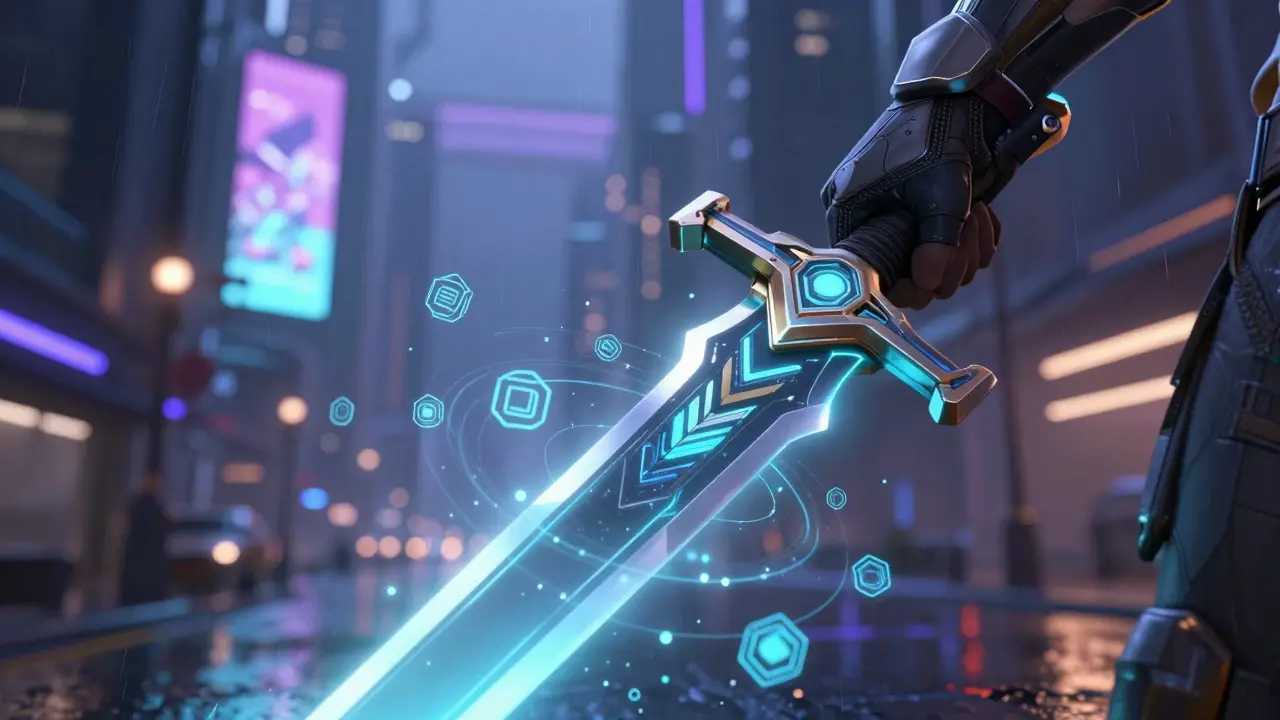
Remember when everyone was buying pixelated monkeys and Axies? It felt like the end of traditional gaming. Fast forward to mid-2026, and the dust has settled. The wild speculation is gone, but the technology didn't disappear. It just got quieter, smarter, and more useful. NFTs in gaming is no longer about gambling on a JPEG; it's about whether you actually own the sword you spent three months grinding for.
The industry is at a crossroads. On one side, we have legacy studios cautious about alienating their core audience. On the other, a new wave of developers using blockchain technology to create transparent economies where players can truly monetize their time. If you're wondering if this is a fad or the future, the answer lies in how these pieces fit together today. We aren't looking at a total replacement of current gaming models, but rather a significant evolution in how digital assets work.
The Market Reality: Numbers vs. Noise
Let’s strip away the marketing fluff and look at the actual data. Projections from major market analysts suggest the NFT gaming sector will hit approximately USD 471.90 billion by the end of 2024, with expectations to nearly double by 2029. That’s a compound annual growth rate (CAGR) of 14.84%. To put that in perspective, that’s faster than the growth of the entire mobile gaming market during its peak years.
However, numbers can be misleading if you don’t know who’s driving them. Currently, titles like Alien Worlds, Splinterlands, and Axie Infinity dominate the charts. These are primarily "play-to-earn" games. They work, but they attract a specific type of player: someone looking to earn crypto income, not necessarily someone seeking immersive narrative experiences. The gap between "crypto-gaming" and "mainstream gaming" is still wide, but it is narrowing as user experience improves.
True Ownership: What It Actually Means for You
The core promise of an NFT in gaming is simple: verifiable, transferable digital ownership stored on a distributed ledger. In traditional games, if the server shuts down, your inventory vanishes. With blockchain-backed assets, the item exists independently of the game client. You can sell it, trade it, or even use it in another compatible game.
This concept of cross-game interoperability is the holy grail here. Imagine earning a rare skin in one RPG and wearing it in a different shooter. While fully seamless integration across all platforms is still years away, early examples are emerging. This shifts the power dynamic from the developer to the player. You aren't renting an asset; you're holding it. For collectors, this changes everything. Rare digital items become tangible investments, similar to physical trading cards or vintage toys, but without the storage costs.
The Mobile Shift and Accessibility Barriers
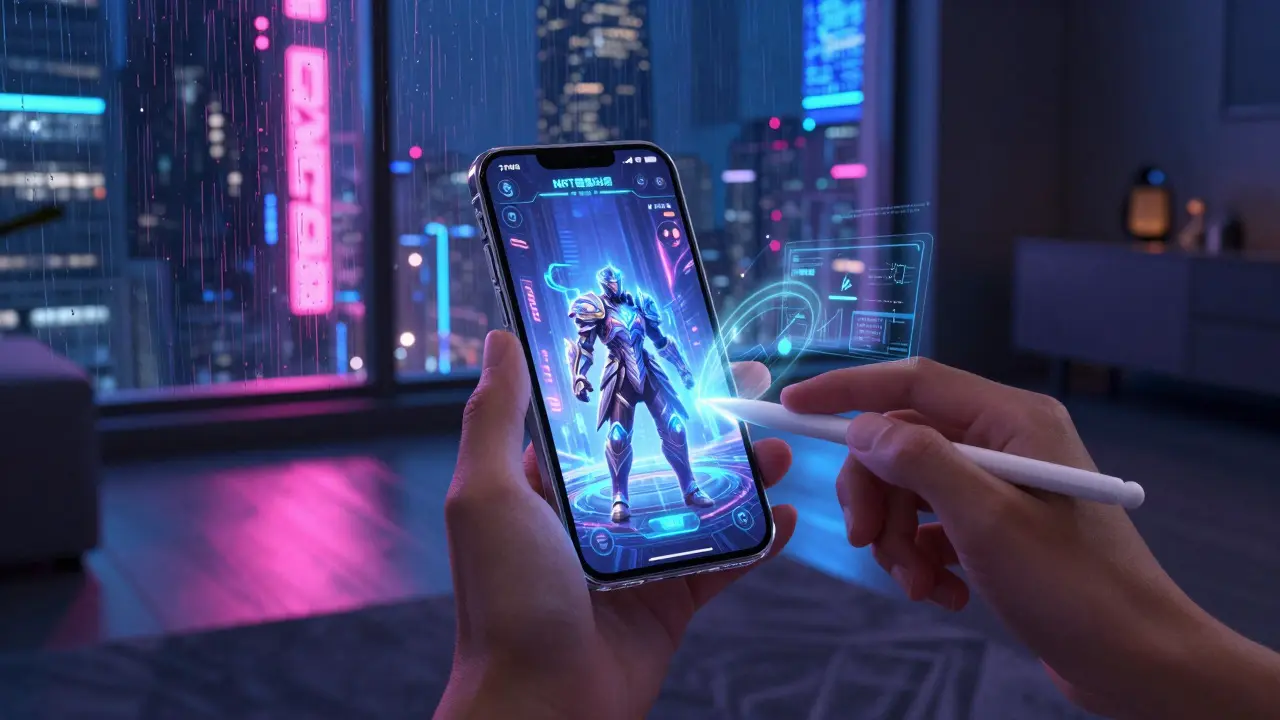
Here’s a statistic that should make every desktop-first developer nervous: 50% of all gamers now play primarily on mobile devices. If NFT gaming wants to go mainstream, it has to live in your pocket, not under your desk. This is why we’re seeing a massive push toward mobile-optimized blockchain games.
But there’s a catch. The biggest barrier to entry isn’t the graphics; it’s the wallet. Asking a casual gamer to manage a private key, buy Ethereum or Solana, and understand gas fees is like asking them to file their taxes manually before letting them play. New solutions are addressing this. Apps like MetaverseGo simplify the process by handling the crypto backend invisibly. The goal is "invisible tech"-you play the game, you own the item, and the blockchain happens in the background. Until this friction disappears, mass adoption will remain limited to enthusiasts.
Gameplay First: Avoiding the Play-to-Earn Trap
Why did so many NFT games fail in 2022? Because they prioritized finance over fun. Players realized that once the token price dropped, the game became boring. The lesson learned by survivors is stark: gameplay must come first.
Industry leaders at recent conferences, including voices from Blizzard Entertainment, emphasize building unique brands rather than just slapping tokens onto existing mechanics. Successful projects now treat NFTs as a layer of engagement, not the core loop. If the game is fun without the financial incentive, the NFT adds value. If the game is only fun because you might get rich, it’s a pyramid scheme waiting to collapse. The best examples right now blend compelling narratives with economic incentives, ensuring that retention is driven by enjoyment, not just speculation.
Technical Foundations: How It Works Under the Hood
You don’t need to be a coder to understand the basics, but knowing the components helps explain why some games run smoothly and others lag. An NFT gaming ecosystem typically consists of three main parts:
- The Blockchain Layer: This is the database. Networks like Ethereum, Polygon, and Solana store the proof of ownership. Each has different speeds and costs. Polygon, for instance, is popular for gaming because it offers low transaction fees compared to Ethereum mainnet.
- The Smart Contracts: These are the rules. They define what the item does, who owns it, and what happens when it’s sold. A bug here can lead to lost assets or duplicated items, which is why security audits are critical.
- The Game Client: This is what you see and touch. It connects to the blockchain via APIs. Modern engines like Unity and Unreal Engine now have built-in plugins to handle this communication seamlessly.
Cloud computing also plays a huge role. Since rendering complex 3D scenes while checking blockchain data can be heavy, services like Onlive and StreamMyGame allow games to run on powerful remote servers and stream the video to your device. This makes high-fidelity NFT games accessible on lower-end phones and laptops.
Comparison: Traditional vs. Blockchain Gaming Models
To understand the shift, let’s compare the two approaches side-by-side. This table highlights the fundamental differences in how assets and economies are managed.
| Feature | Traditional Gaming | Blockchain/NFT Gaming |
|---|---|---|
| Asset Ownership | Licensed from developer; lost if server closes | Owned by player; persists beyond single game |
| Trading | In-game only; often restricted | Open market; global liquidity |
| Economy Control | Centralized; devs can print infinite items | Decentralized; supply often fixed by code |
| Entry Barrier | Low (download and play) | Moderate (wallet setup required) |
| Monetization | Microtransactions, ads, subscriptions | Play-to-earn, secondary sales, staking |
The Role of AI and the Metaverse
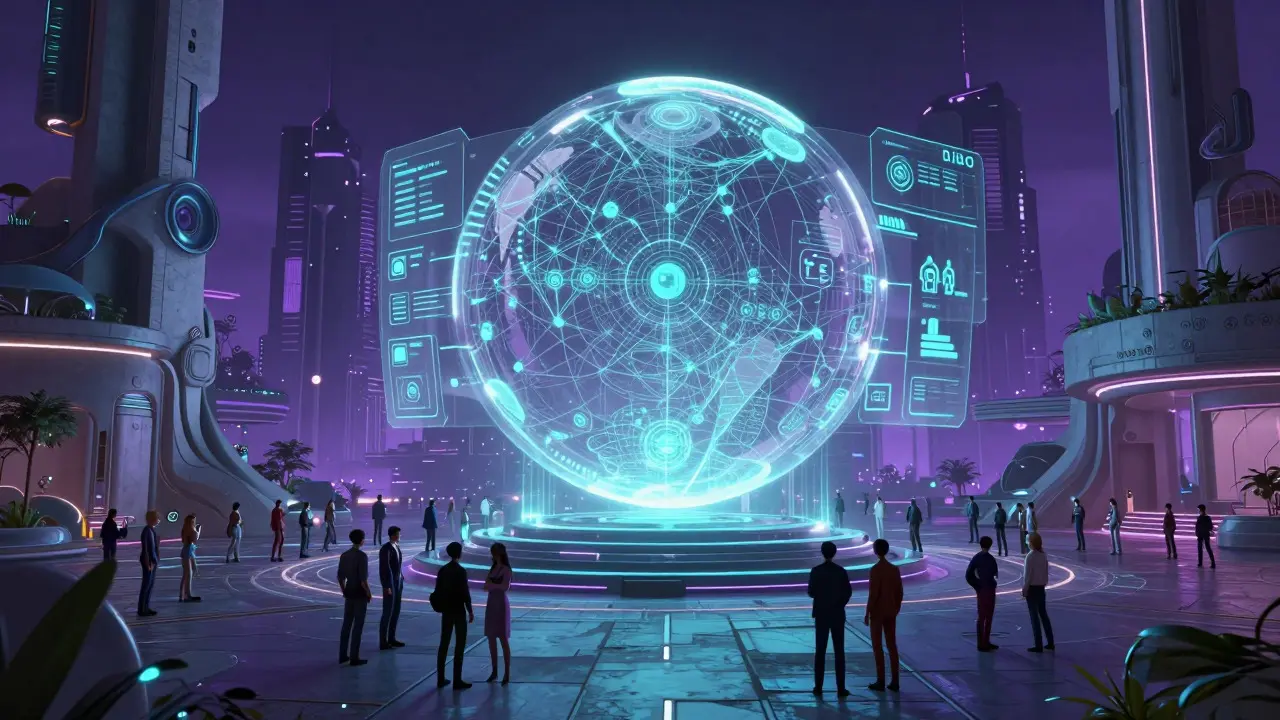
We can’t talk about the future without mentioning AI. Artificial intelligence is changing how NFT games are made and played. Developers use AI to generate unique textures and sounds, reducing production costs. More importantly, AI powers non-player characters (NPCs) that can converse with players naturally. This creates deeper immersion, making the virtual world feel alive rather than scripted.
This ties directly into the Metaverse. The term is overused, but the concept is real: persistent, shared virtual spaces. NFTs serve as the currency and identity layer for these worlds. Your avatar, your land, and your tools are NFTs. As VR hardware becomes cheaper and more comfortable, with over $2 billion already spent on Meta Quest content, the line between physical and digital ownership will blur further. Gen Z, who represents 32% of consumer tech purchasing power, is particularly receptive to this blend of social interaction and digital ownership.
Risks and Regulatory Uncertainty
It’s not all sunshine and rainbows. The biggest risk right now is regulatory confusion. Are NFTs securities? Commodities? Digital collectibles? Different countries have different answers. This uncertainty keeps large institutional investors on the sidelines. Additionally, market volatility remains a threat. If the underlying cryptocurrency crashes, the perceived value of in-game assets drops, potentially killing the economy of a game overnight.
Security is another concern. Smart contract vulnerabilities can lead to hacks, wiping out player assets. Environmental impact, though improving with the switch to Proof-of-Stake blockchains, still lingers in public perception. Developers must be transparent about their energy usage and security measures to build trust.
What to Watch in 2026 and Beyond
So, where do we go from here? Keep an eye on three trends:
- Standardization: Expect more common protocols that allow assets to move easily between games. Think of it as USB-C for gaming items.
- Hybrid Models: Games that offer optional blockchain features. You can play traditionally, but if you want to sell your loot, you opt-in to the blockchain layer.
- DAO Governance: More games will hand control over to players through Decentralized Autonomous Organizations. This means players vote on game updates, balancing changes, and revenue sharing.
Sarah Campbell
August 17, 2026 AT 21:28Finally some US content that isn't just copying European trends! 🇺🇸 I mean, look at those numbers. 471 billion dollars? That is pure American innovation. The rest of the world is still playing with their little pixel monkeys while we are building real economies. It’s about time the global gaming industry realized that if you want true ownership, you need to be on a US-led blockchain. No more renting from foreign servers! Let’s keep our digital assets right here where they belong. 🚀
Phelan Deihl
August 19, 2026 AT 02:56I think there is a lot of truth in what was said about the friction of wallets. For most people, the idea of managing private keys is just too much mental load. If the tech can stay invisible, like the post suggests, then maybe it will actually work for casuals. It’s a quiet shift but a necessary one.
Mohamed Shoaeb
August 19, 2026 AT 15:05Agreed. The 'invisible tech' angle is the only way this scales. In India alone, mobile is king and nobody wants to learn crypto jargon before pressing start. If the backend handles the gas fees and key management, we might see real adoption outside of the enthusiast niche. The gap between crypto-gaming and mainstream gaming is huge but closing fast if UX improves.
Sonia Gomez Gomez
August 20, 2026 AT 07:39:) You guys are all so naive. This is just another way for corporations to steal your data and sell it back to you. Remember when they said the internet would free us? Now we are slaves to algorithms. NFTs are just a new chain. Don’t let them fool you into thinking you own anything. They always take the profit and leave you with the risk. Wake up sheeple!
SHIV SHANKAR KANTA
August 22, 2026 AT 05:43Is ownership even a concept anymore or just a word we use to feel safe in an empty void. The soul of the game is gone replaced by the cold logic of ledgers. We trade joy for tokens and wonder why the fire died. The market does not care for art it cares for value and value is fleeting like breath in winter. Do not mistake the map for the territory friends.
Darren Moon
August 22, 2026 AT 06:50One must appreciate the granular analysis of the technical foundations provided herein. The delineation between the blockchain layer, smart contracts, and the game client is pedagogically sound. However, the assertion regarding cross-game interoperability remains, at best, aspirational. The latency overhead associated with querying distributed ledgers during real-time gameplay is non-trivial and often overlooked in such optimistic projections. One should remain skeptical until the sub-millisecond transaction finality becomes a standard feature rather than a theoretical promise. The current infrastructure is merely a prototype for a future that may never fully materialize as envisioned by the hype cycle.
Quang Thai Tran
August 22, 2026 AT 23:09Consider the regulatory implications carefully. Are these assets securities? The SEC has yet to provide a definitive framework, which leaves institutional investors paralyzed. Furthermore, one must suspect that the 'transparency' touted by proponents is merely a facade for centralized control by large mining pools or validator sets. The decentralization narrative is often a marketing tool to obscure the fact that a few entities hold the majority of the supply. Until the legal status is clarified and the centralization metrics are audited publicly, this remains a speculative bubble waiting to burst. Trust no one who tells you the system is fair without proof.
Dianne Ritter
August 24, 2026 AT 09:08Oh, how delightful to see a balanced take. Most articles are either full of doom or blind optimism. This one actually reads the room. The comparison table is particularly useful for explaining it to my non-technical friends who keep asking me why I’m buying digital swords. It’s nice to see someone acknowledge that the mobile shift is the real barrier, not the graphics. Well done, whoever wrote this. It’s refreshing to find substance in the noise of the metaverse hype train. 🌟
Tasha Davis
August 25, 2026 AT 01:07YES! Finally! I have been saying this for years. Gameplay first! If the game is boring, no amount of tokenomics will save it. We need to stop treating players like ATMs and start treating them like fans. Imagine if every RPG had this level of ownership. My collection would be worth something! Let’s go! 🔥🔥🔥
Abigail Sparks
August 25, 2026 AT 05:14Let's be real. The biggest hurdle is still trust. People got burned in 2022. To fix that, developers need to show transparent revenue sharing. If players see that their playtime directly contributes to the game's longevity and their asset value, they will stick around. Stop hiding the mechanics. Be bold. Be clear. Own the narrative. The ones who do this will win the next decade. Don't be afraid to lead.
OLIVER CHRISTIAN
August 25, 2026 AT 17:08Good point about the hybrid models. That seems like the sweet spot. You don't force everyone onto the blockchain, but you give them the option. It respects the purists who hate the tech but appeals to the traders who love the liquidity. It’s a pragmatic approach that avoids the all-or-nothing trap that killed so many projects. Smart move by the studios getting this right.
Mike Baca
August 27, 2026 AT 09:39I’ve been thinking about this a lot lately. The idea that a sword could exist independently of the game server is wild. It changes the power dynamic completely. Developers used to hold all the cards, now the player holds the deed. It’s like going from renting a house to owning the land. Sure, the taxes (gas fees) are annoying, but the security is real. I think we’re underestimating how much Gen Z values this kind of autonomy. They grew up in a world of subscriptions; they want to own things again. Even if it’s digital. The philosophy of digital scarcity is finally clicking for the masses. It’s not just about money, it’s about agency. And that’s a powerful thing. Who else feels like this is the real unlock?
Teri W
August 28, 2026 AT 20:29It’s about time we stopped pretending this is all fun and games. There is a moral responsibility here. If you are going to introduce gambling mechanics disguised as 'trading', you should be regulating it like casinos. These kids are losing their savings on digital monkeys. It’s irresponsible. The industry needs to step up and protect the vulnerable, not just chase profits. We need ethical standards now. No more excuses. The community deserves better than being treated like marks in a casino. Let’s demand accountability from these developers. They owe us transparency. Enough is enough. Time for change. #EthicalGaming