

You probably clicked on this title looking for a PancakeSwap review specifically for Ethereum. Here is the twist: PancakeSwap doesn't actually run on the Ethereum mainnet. It lives on BNB Chain (formerly Binance Smart Chain). But don't close the tab yet. If you are an Ethereum user frustrated by $50 gas fees eating your profits, this might be exactly what you need. This guide breaks down why millions of traders bridge their assets to PancakeSwap, how its V2 and V3 pools work, and whether it's safe enough for your portfolio in 2026.
Why Traders Leave Ethereum for PancakeSwap
The core appeal of PancakeSwap is cost. On Ethereum, swapping tokens can cost more than the trade itself during congestion. On BNB Chain, transactions typically cost pennies. The platform uses an Automated Market Maker (AMM) model, meaning there is no order book. You trade directly against a pool of liquidity provided by other users. This removes intermediaries, giving you full custody of your funds via your own wallet. No KYC headaches, no withdrawal limits, just pure peer-to-contract trading.
Is it faster? Yes. BNB Chain blocks confirm in about 3 seconds compared to Ethereum's variable times. For active traders executing multiple swaps a day, this speed and cost efficiency create a massive advantage. However, remember that moving assets from Ethereum to BNB Chain requires a bridge, which adds a small step and slight risk. Once there, though, the friction disappears.
V2 vs V3: Which Pool Should You Use?
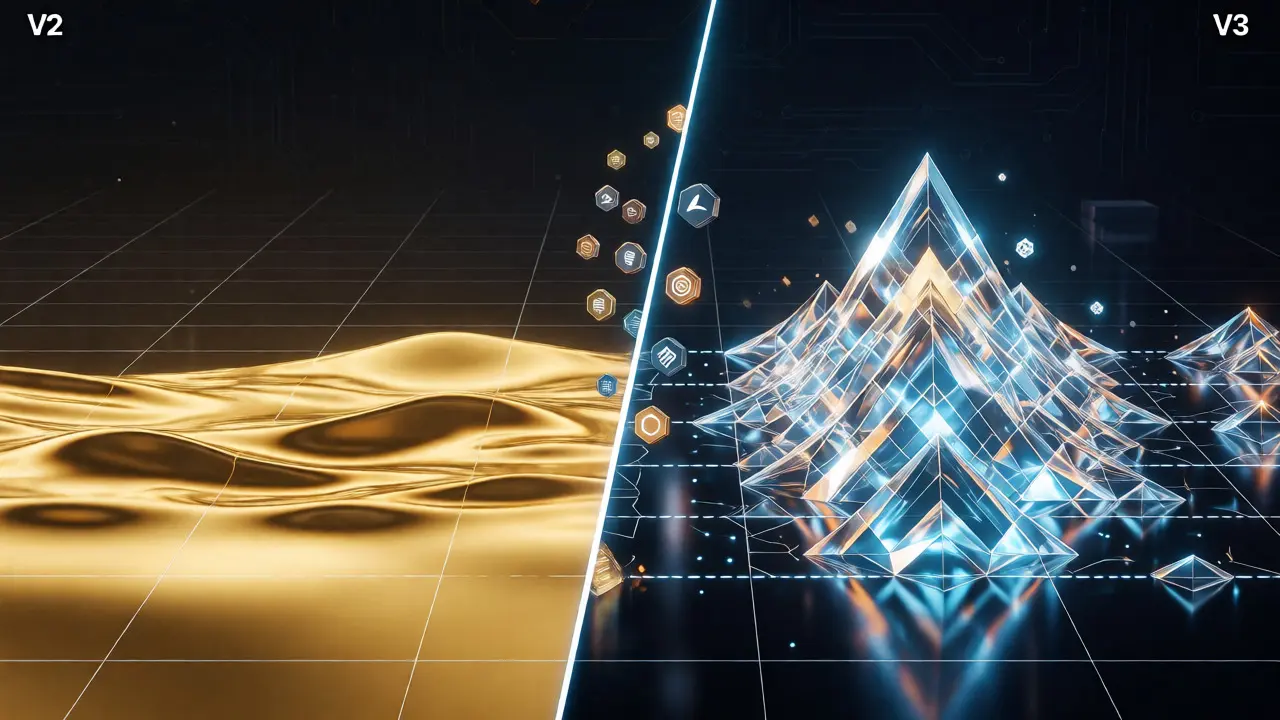
PancakeSwap offers two distinct versions, and choosing the wrong one costs you money. Understanding the difference is critical before your first swap.
| Feature | PancakeSwap V2 | PancakeSwap V3 |
|---|---|---|
| Fee Structure | Fixed 0.25% per swap | Tiered: 0.01%, 0.05%, 0.25%, 1% |
| Liquidity Model | Uniform distribution across all prices | Concentrated liquidity within specific price ranges |
| Best For | Simple swaps, beginners, volatile pairs | Stable pairs, professional LPs, high volume |
| Complexity | Low | High (requires price range management) |
If you are just swapping tokens, stick with V2 for simplicity. The flat 0.25% fee is predictable. V3 allows you to choose lower fees (like 0.05%) if you trade stablecoin pairs like USDT/USDC. But if you provide liquidity in V3, you must manage your position. If the price moves out of your chosen range, you stop earning fees. It’s powerful but demanding.
Beyond Swaps: Staking, Farms, and Perpetuals
PancakeSwap isn't just a place to trade; it's a DeFi hub. The ecosystem includes several ways to earn yield, but each carries different risks.
- Yield Farming: Deposit tokens into liquidity pools to earn CAKE rewards. High APY often signals high risk or impermanent loss potential.
- Syrup Pools: Stake CAKE tokens to earn new project tokens. This is generally safer than farming because you aren't exposing yourself to token pair volatility.
- Perpetual Futures: Powered by ApolloX infrastructure, this allows leveraged trading. You can go long or short on crypto without owning the underlying asset. Note: Liquidation risks are real here.
- Prediction Markets: A gamified way to bet on price movements. Think of it as binary options-will BTC be higher in 5 minutes? High entertainment value, high house edge.
For most users, Syrup Pools offer the best balance of effort and reward. Farming requires constant monitoring to avoid impermanent loss, where the value of your deposited assets drops compared to simply holding them.
Risks You Can't Ignore
Decentralized exchanges carry inherent dangers that centralized platforms like Coinbase do not. In 2026, PancakeSwap received a risk score of 3.01/10 from Trustpilot-like aggregators, indicating "higher-than-average" risk. Why?
First, smart contract bugs. While PancakeSwap has undergone audits, code vulnerabilities remain a threat in DeFi. Second, rug pulls. Because anyone can list a token on PancakeSwap, scam projects frequently appear. Unlike major exchanges with listing teams, PancakeSwap relies on community vigilance. Always check token contracts on tools like Token Sniffer before buying obscure coins.
Third, no customer support. If you send funds to the wrong address or approve a malicious contract, there is no help desk to call. Your seed phrase is your only lifeline. Treat every transaction as final.
How to Start Trading Safely
Ready to try it? Follow these steps to minimize mistakes:
- Set up a compatible wallet: Install MetaMask or Trust Wallet. Add the BNB Chain network manually if it doesn't auto-detect.
- Fund your wallet: Buy BNB on a centralized exchange and withdraw it to your wallet. You need BNB for gas fees.
- Connect to PancakeSwap: Visit the official site (always double-check the URL) and click "Connect."
- Select your pair: Choose V2 for simple swaps. Verify the token addresses match the ones you intend to buy.
- Adjust slippage: Default is usually 0.5%. For volatile memecoins, increase it to 1-3% to ensure the transaction goes through.
- Approve and Swap: First, approve the token spend (a one-time gas fee). Then, execute the swap.
Start with a tiny amount, like $10, to test the process. Once you understand the flow, scale up. Never invest more than you can afford to lose, especially in low-cap tokens.
Verdict: Who Should Use PancakeSwap?
PancakeSwap shines for experienced DeFi users who prioritize low fees over deep liquidity in major pairs. If you are trading ETH or BTC primarily, stick to Ethereum-based DEXs like Uniswap. But if you hunt for early-stage altcoins, participate in yield farming, or want to trade frequently without gas anxiety, PancakeSwap is arguably the best tool on BNB Chain.
It is not for absolute beginners who fear self-custody or those who need fiat on-ramps directly within the interface. For everyone else, it remains a dominant force in the multi-chain landscape.
Can I use PancakeSwap directly on Ethereum?
No, PancakeSwap operates primarily on BNB Chain. To use it, you must bridge your assets from Ethereum to BNB Chain using a cross-chain bridge service. Some newer updates allow routing from Layer 2 solutions, but native Ethereum mainnet swaps are not supported directly on the PancakeSwap interface.
What is the difference between CAKE and other tokens?
CAKE is the native governance and utility token of PancakeSwap. You use it to pay for certain features, stake it in Syrup Pools to earn rewards, and vote on protocol changes. Other tokens you trade are external BEP-20 assets listed on the platform.
Is PancakeSwap safe from hacks?
The platform itself is secure due to rigorous auditing, but risks exist. Users face risks from interacting with unverified smart contracts, phishing sites, and malicious token approvals. Always verify URLs and revoke unnecessary token approvals regularly using tools like Revoke.cash.
Do I need to complete KYC verification?
No. As a decentralized exchange, PancakeSwap does not require Know Your Customer (KYC) checks. You connect your crypto wallet and trade anonymously. This preserves privacy but means there is no account recovery if you lose your private keys.
What happens if I provide liquidity incorrectly?
If you provide liquidity in a V3 pool and the price moves outside your selected range, you stop earning trading fees until the price re-enters the range. You also face "impermanent loss," where the value of your holdings decreases compared to just holding the tokens separately, due to price divergence.