

Imagine buying a token tied to your favorite musician, YouTuber, or fitness coach-thinking you’re investing in their success. But what if they stop posting? What if their fanbase turns on them? What if the token’s price crashes 90% in three days, and you can’t sell it without losing half your money? This isn’t science fiction. It’s the reality of social token investment in 2025.
Social tokens are cryptocurrencies created by individuals or small communities to reward fans, unlock exclusive content, or even let holders vote on creative decisions. They sound exciting: direct support for creators, community ownership, and the chance to get in early on the next big thing. But behind the hype lies a minefield of risks most beginners never see coming.
They’re Not Investments-They’re Betrayals Waiting to Happen
Unlike Bitcoin or Ethereum, social tokens have no intrinsic value. Their price doesn’t come from technology, network usage, or mining rewards. It comes entirely from one thing: the creator’s reputation. If the creator disappears, gets into a scandal, or just gets bored, the token collapses. That’s not speculation-it’s history.
Take the ‘Drama Token’ case from July 2025. A popular streamer launched a social token with 15,000 early buyers. Two weeks later, they got caught in a public lie about their income. Within 72 hours, the token lost 92% of its value. Buyers couldn’t exit. The liquidity pool was only $320,000. When 2,000 people tried to sell at once, the price tanked. No one helped. No one refunded. The Discord server went silent.
This isn’t rare. TRM Labs found that 63% of celebrity-backed social tokens collapsed within 90 days of launch because the creator stopped engaging. The token wasn’t a financial instrument-it was a loyalty program that broke when loyalty vanished.
Liquidity Is a Myth
You think you can sell anytime? Think again. According to GeckoTerminal’s September 2025 data, 61% of social tokens have less than $500,000 in total liquidity across all exchanges. Compare that to Bitcoin’s $28.5 billion daily volume. A social token with $187,000 in average daily volume is 152 times more vulnerable to price manipulation.
What does that mean for you? If you own $5,000 worth of a token with $400,000 in total liquidity, trying to sell $2,000 of it could crash the price by 30% before your order fills. That’s called slippage-and it’s standard. Trustpilot reviews from 1,892 users show 63% complained they couldn’t exit positions without massive losses. You’re not trading. You’re gambling on someone else’s willingness to buy at your price.
Creators Control Everything-And They Often Abuse It
Most social tokens are built with centralized control. Only 54% use multi-signature wallets for treasury management. The rest? One person holds the keys. That means the creator can:
- Print more tokens anytime (inflationary models are used by 68% of projects)
- Move funds out of the project wallet without warning
- Delist the token from exchanges
- Change the rules of access or rewards
TokenUnlocks.io found that 42% of social token projects have cliff periods under six months for team allocations. That means insiders can dump their entire stake just months after launch. And 28% have no cliff at all. You’re buying from someone who can legally walk away with millions while you’re stuck with worthless tokens.
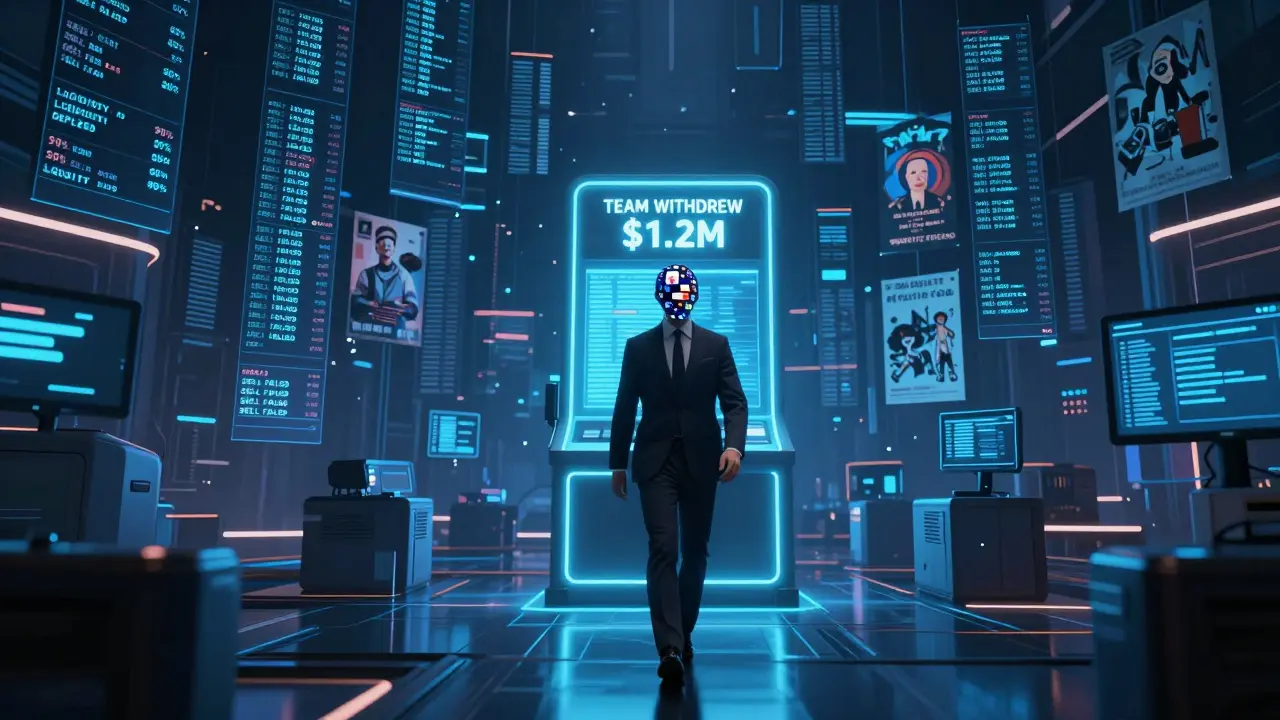
The ‘ArtistCoin’ case in August 2025 showed this perfectly. A singer raised $1.2 million with a social token promising concert tickets and studio access. Three months later, they signed with a major label and stopped updating the token’s ecosystem. The price dropped 97% in 48 hours. The creator kept the funds. The token became dead weight.
Regulators Are Coming-and They’re Not Friendly
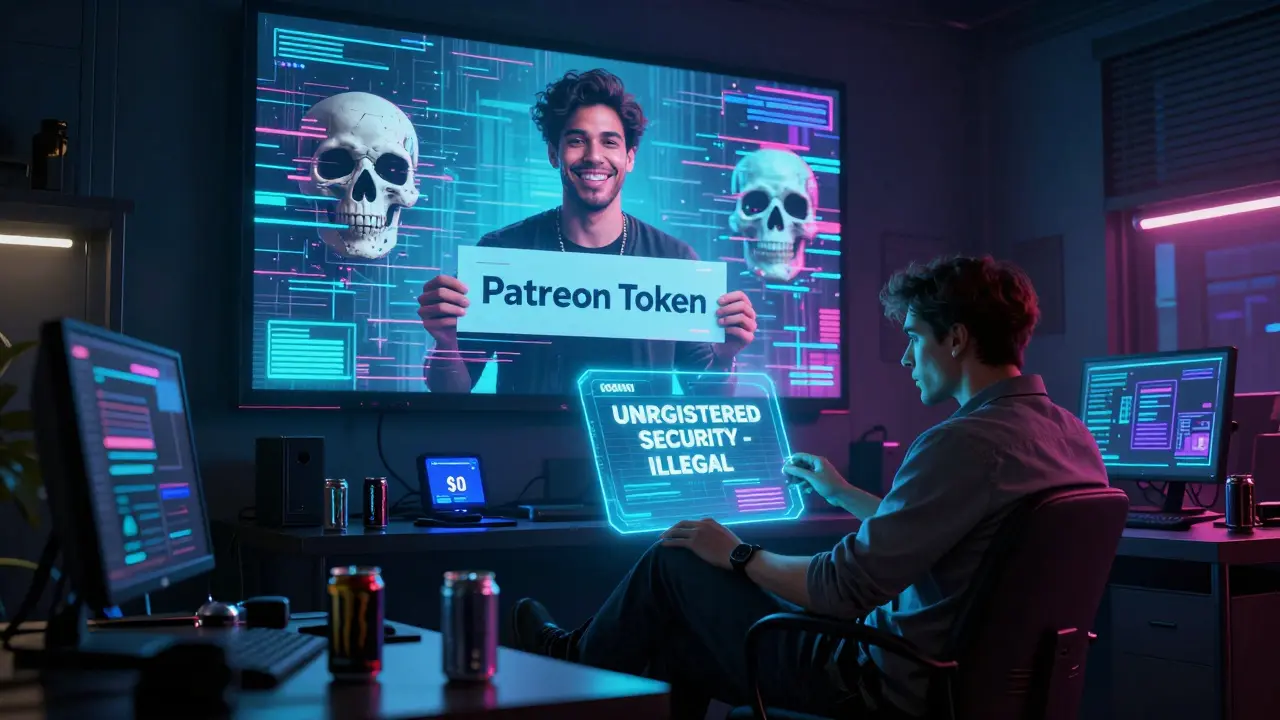
The SEC has opened 142 active investigations into social tokens for potential unregistered securities offerings as of Q3 2025. That’s 38% of all crypto investigations. Why? Because if a token promises future profits based on the creator’s efforts, it’s legally a security. And unregistered securities are illegal in the U.S.
In August 2025, the SEC approved Rule 19c-4, which requires social tokens with “substantial creator influence” to register as securities-or prove they’re decentralized. Only 12% of existing social tokens meet that bar. If you own one that doesn’t, it could be delisted overnight. No warning. No refund.
Other countries aren’t waiting. The UK’s FCA now requires creators to hold 12 months of operational reserves or face delisting. The EU’s MiCA rules treat many social tokens as asset-referenced tokens, forcing compliance with strict capital rules. In Australia, the ACCC has started warning retail investors about “creator-driven tokens with no underlying assets.”
By 2026, global regulators plan to enforce mandatory financial disclosures and minimum liquidity thresholds. Most social tokens won’t survive.
The Market Is Collapsing-and It’s Getting Worse
The social token market peaked at $32.9 billion in Q4 2024. By Q3 2025, it had shrunk to $12.5 billion-a 62% drop. Why? Because the hype ran out, and reality hit.
Top projects are swallowing the rest. The top 10 social tokens now control 58% of the entire market segment. That’s up from 32% in early 2024. Smaller tokens are vanishing. Only 7% of Fortune 500 companies are even experimenting with them-and those are just marketing tests, not real financial integration.
ARK Invest predicts 75-80% of current social tokens will stop trading by 2027. The few survivors? They’ll be tied to platforms like Patreon or Substack, where they serve as utility tools-not speculative assets.
Scams Are Everywhere
The Crypto Scam Database recorded 317 social token-specific scams in 2025 alone. Average victim loss? $3,850-nearly double the average for general crypto scams.
Common scams include:
- “Exclusive access” tokens that never deliver content
- Teams that vanish after raising funds
- Shill campaigns on Twitter and TikTok using fake accounts
- Token launches with no whitepaper, no team, no roadmap
Reddit’s r/CryptoCurrency community documented 2,847 social token failures between January and September 2025. The most common complaint? “Abandoned projects.” Forty-one percent of cases involved creators who took the money and disappeared.
What About the Success Stories?
You’ll hear about the one or two tokens that made it. The ‘Patreon Token’ is often cited. But here’s the truth: it didn’t succeed because it was a social token. It succeeded because it was part of a multi-billion-dollar platform with real revenue, existing users, and legal infrastructure. Its token was a loyalty perk-not a standalone investment.
There are no proven social tokens that made investors rich without being backed by a functioning business. Every “success” you hear about is either a pump-and-dump, a lucky early buy, or a token that was never meant to be traded.
What Should You Do Instead?
If you want to support creators, do it the old-fashioned way: buy their merch, subscribe to their newsletter, tip them directly. Don’t buy a token that can vanish overnight.
If you’re set on crypto investing, stick to assets with real utility: Bitcoin for store of value, Ethereum for smart contracts, stablecoins for low-risk exposure. These have proven networks, transparent economics, and regulatory clarity.
And if you still want to dabble in social tokens? Follow Fidelity’s advice: never allocate more than 1-3% of your total crypto portfolio to them. And never put more than 0.5% into any single token. Treat it like a lottery ticket-not an investment.
Because in the end, social tokens aren’t about technology. They’re about trust. And trust, once broken, can’t be rebuilt.
Are social tokens legal?
It depends. In the U.S., if a social token promises profit based on the creator’s efforts, the SEC considers it an unregistered security-and that’s illegal. Many projects are under investigation. In the EU, MiCA rules may require registration. In Australia and the UK, regulators are warning investors and imposing restrictions. Legal status is uncertain and changing fast.
Can I make money from social tokens?
You might, but it’s extremely risky. Most people lose money. The few who profit are usually early buyers who sold before the creator lost interest or the market crashed. There’s no reliable strategy. Unlike Bitcoin or Ethereum, social tokens have no fundamental value-only hype. Treat any potential profit as luck, not skill.
How do I know if a social token is a scam?
Look for red flags: no public team, no whitepaper, no clear use case, liquidity under $500,000, team tokens with no vesting schedule, and creators who don’t engage after launch. Check TokenSniffer or CertiK for audits. If the creator’s social media is inactive or full of paid shills, walk away. If it sounds too good to be true, it is.
Why do people still invest in social tokens?
Because they’re emotionally hooked. People want to feel close to their favorite creators. They think, “If I buy this token, I’m helping them succeed.” That emotional connection overrides rational analysis. Add in FOMO from viral tweets and influencer hype, and you’ve got a perfect storm for poor decisions.
What’s the safest way to invest in social tokens?
There isn’t one. But if you insist, limit exposure to under 1% of your crypto portfolio. Only consider tokens from creators with established businesses, diversified income, and transparent operations. Avoid tokens with inflationary supply, no vesting, or low liquidity. Monitor creator activity weekly. Be ready to exit fast. Most importantly, assume you’ll lose everything.
Do social tokens have any real value?
Only if they’re used as utility tools within an active platform-like unlocking Discord access or early concert tickets. As financial assets? No. Their value is based entirely on perception, hype, and creator popularity. When those fade, so does the price. There’s no cash flow, no revenue, no assets backing them.
Rick Hengehold
December 28, 2025 AT 05:16This isn't even investing-it's emotional gambling with a side of delusion. If you're buying a token because you 'believe in the creator,' you're already losing.
Brandon Woodard
December 29, 2025 AT 11:00Allow me to elucidate the fundamental fallacy underpinning this entire asset class: social tokens are not securities, nor are they currencies-they are performative loyalty artifacts masquerading as financial instruments. The moment the creator ceases to perform, the artifact becomes inert. One might even argue this is the most honest form of capitalism: if your value is purely performative, your collapse is merely a reflection of your own obsolescence.
Ryan Husain
December 31, 2025 AT 06:16I get why people are drawn to this. It feels like being part of something bigger, like you're not just a consumer-you're a stakeholder. But the data doesn't lie. When you look at the numbers, 63% of these tokens die within 90 days. That’s not a risky investment-it’s a time bomb with a personalized name on it. If you’re going to do this, treat it like a $5 lottery ticket, not your retirement plan.
Rajappa Manohar
January 1, 2026 AT 05:27so many ppl buying these tokens like its free money but no one checks if the creator even has a website lmao
nayan keshari
January 3, 2026 AT 02:15Everyone’s acting like this is new. Remember when people bought Beanie Babies? Or NFTs of monkeys? Same energy. The only difference is now they’re calling it ‘community ownership’ so it sounds ethical. It’s not. It’s just a new way to scam fans who think they’re helping.
Kenneth Mclaren
January 4, 2026 AT 12:34They're all controlled by the same 3 hedge funds. You think that streamer is really behind the token? Nah. They're just a puppet. The real players are the ones who dumped before launch and are now shorting the whole sector. The SEC? They’re playing along to look like they’re doing something. Meanwhile, your $5k is fueling a multi-million-dollar pump-and-dump disguised as 'creator empowerment.' Wake up.
Jack and Christine Smith
January 4, 2026 AT 14:52my friend bought a fitness coach's token and now he's mad because the coach posted a bikini pic and lost 80% of his followers. the token crashed. my friend says 'but i believed in him!' bro... you believed in a post.
Prateek Chitransh
January 5, 2026 AT 21:03Look, I’ve been in crypto since 2017. I’ve seen every trend come and go. Social tokens? They’re the equivalent of buying a signed poster and thinking you own a piece of the artist’s career. If you want to support creators, buy their merch. Tip them on Patreon. Show up to their live streams. Don’t turn your admiration into a speculative gamble with zero safety nets. You’re not an investor-you’re a fan. Don’t confuse the two.
Michelle Slayden
January 6, 2026 AT 06:52The philosophical underpinning of social tokens reveals a profound cultural shift: we are no longer content to admire; we demand ownership. But ownership without governance, without recourse, without asset backing, is not ownership-it is illusion. The tragedy is not that these tokens fail, but that we willingly suspend disbelief in the name of emotional connection. The market does not reward sentiment; it rewards structure. And structure, in this case, is conspicuously absent.
Alison Hall
January 7, 2026 AT 07:28Just don’t. I’ve seen too many people lose their rent money on these. If you want to support someone, send them a PayPal tip. It’s simpler, safer, and actually helps. No blockchain needed.