
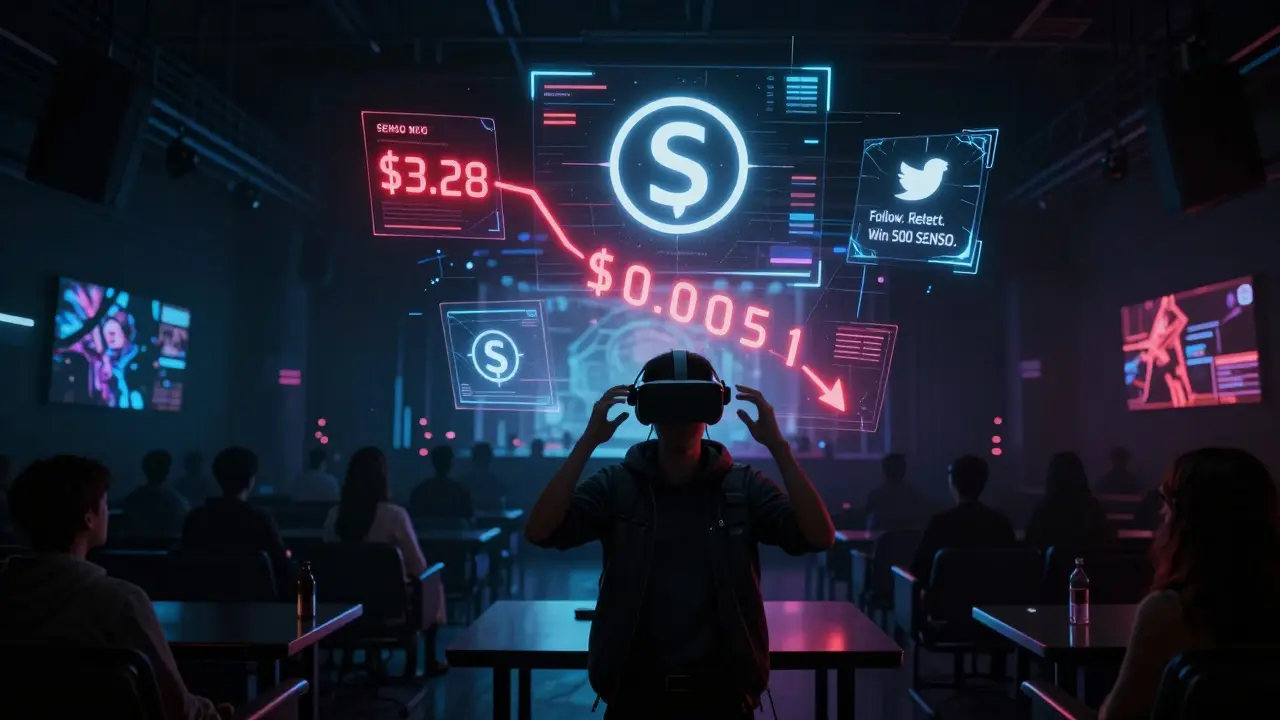
If you're hearing about a SENSO token airdrop and wondering if it's worth your time, here’s the truth: there’s no mass distribution happening. Not anymore. Not like you’ve seen with other crypto projects. The SENSO token airdrop that’s still floating around online is tiny, exclusive, and not designed to grow a community-it’s a ghost of what it once was.
SENSO is the native token of Sensorium Galaxy, a VR social platform launched in 2018 by a Swiss company. It’s meant to be the currency inside a virtual world where users hang out, attend concerts, and interact with digital art. Sounds cool? Maybe. But the token’s value has collapsed since its peak. Back in November 2021, SENSO hit $3.28. Today? It’s trading between $0.0047 and $0.0051. That’s a 99.8% drop. Most people who bought in at the top are long gone. The ones still around? They’re not chasing airdrops-they’re wondering if the platform will ever recover.
What’s Left of the SENSO Airdrop?
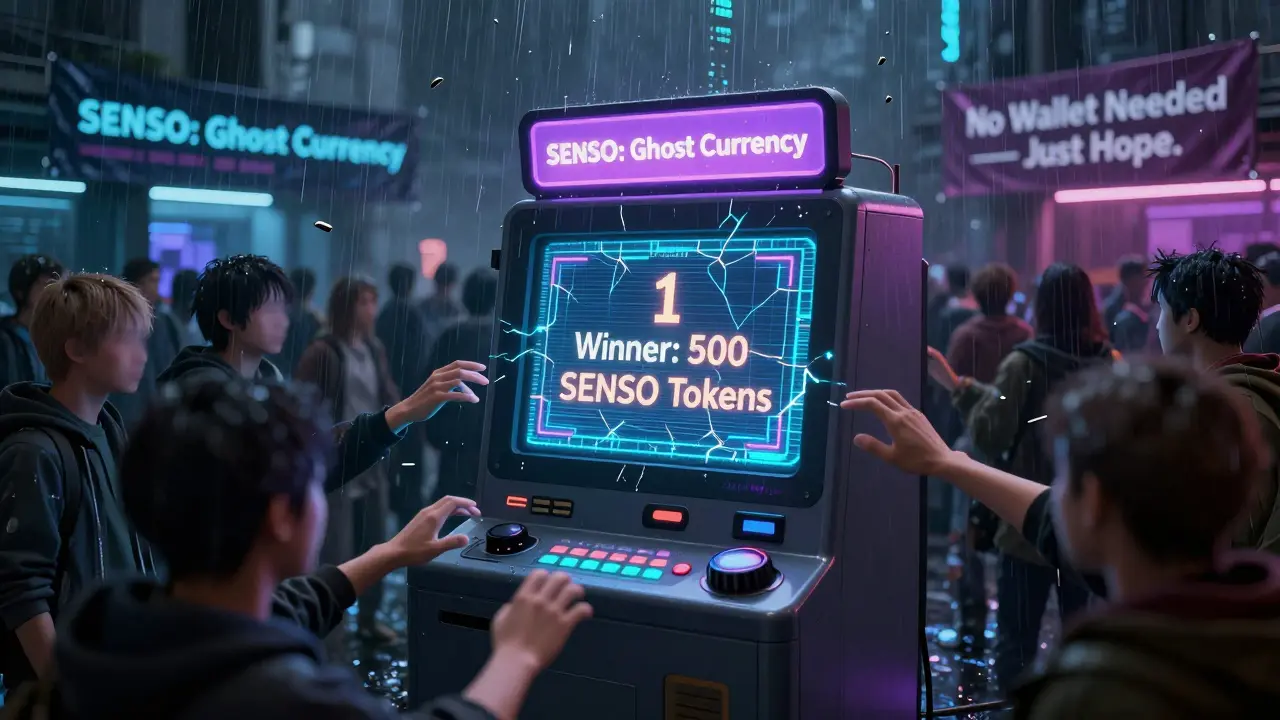
The last known airdrop campaign ran on the SENSO Web3 Marketplace, built on Binance Smart Chain. The details? Barely anything. Only 500 SENSO tokens were up for grabs. Total value? Around $500. And only one person would win it. That’s not an airdrop-it’s a lottery with odds worse than a Powerball ticket.
To enter, you had to follow the official SENSO Twitter account and retweet a single post. No wallet connection. No staking. No NFT ownership. No complex tasks. Just two clicks. And even then, you were competing against thousands of others for a single prize. There was no public list of participants. No transparency. No guarantee the prize would even be claimed. It’s the kind of campaign that feels more like a placeholder than a real effort to onboard users.
Why Did SENSO’s Airdrop Fail?
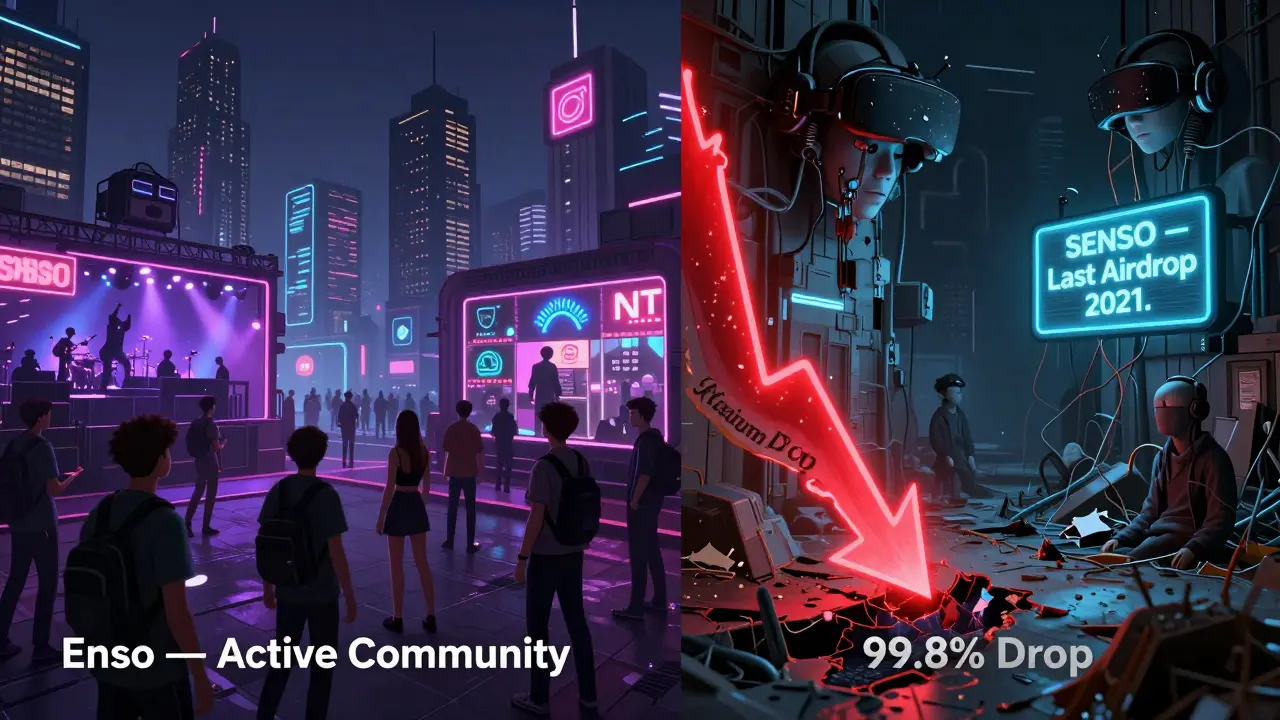
Most airdrops are designed to create buzz, drive adoption, and build a user base. SENSO’s didn’t. It didn’t even try. Compare it to projects like Enso (a totally different token with a similar name), which runs point-based missions across DeFi, AI, and social tasks to earn rewards. Enso has a real roadmap, a $5 million funding round, and human verification to prevent bots. SENSO? Nothing like that.
The problem isn’t just the airdrop. It’s the whole ecosystem. Sensorium Galaxy, the VR platform behind SENSO, never gained real traction. People didn’t stick around. The virtual concerts? Few showed up. The NFT galleries? Mostly empty. Without active users, the token has no utility. It can’t be spent meaningfully. It can’t be earned through use. It’s just a digital ticker on a chart that keeps falling.
Even the marketplace-supposedly a place to buy and sell digital items using SENSO-looks abandoned. There are no listings. No sellers. No buyers. The platform exists on paper, but not in practice. That’s why the airdrop was so small. Why spend tokens on users who won’t use them?
Is SENSO Still Active in 2026?
Yes, but barely. Sensorium Galaxy’s website still loads. The app still works. There are occasional updates about new artist partnerships-usually with niche electronic musicians or VR artists who have small followings. But the user numbers? Unreported. The token supply? Unknown. CoinGecko doesn’t even list a circulating supply. That’s a red flag. If a project won’t tell you how many tokens are out there, it’s not trustworthy.
Trading volume is also a mess. In the last 24 hours, only $237,567 worth of SENSO changed hands. That’s less than what a single popular NFT collection moves in a day. The price is flatlining. The RSI (a technical indicator) shows it’s oversold, but no one’s buying. No one’s even trying.
And here’s something else: people keep confusing SENSO with Enso. Enso is a separate DeFi project with its own airdrop, its own token, its own community. If you search for "SENSO airdrop" on Twitter or Reddit, half the results are about Enso. That’s not a coincidence-it’s a sign that SENSO has faded into obscurity.
Should You Participate in the SENSO Airdrop?
If you’re asking yourself this, the answer is no-not unless you’re doing it for fun.
- It takes two minutes to follow and retweet. Fine. Do it if you want.
- But don’t expect to win. The chance is less than 1 in 10,000.
- Don’t invest money into SENSO hoping for a comeback. The market has spoken. It’s dead.
- Don’t link your wallet. There’s no smart contract to interact with. No rewards to claim. Just a Twitter post.
The only reason to engage with SENSO now is if you’re already a Sensorium Galaxy user. If you wear a VR headset, attend virtual events, and like the idea of digital social spaces, then maybe SENSO has some use inside the app. But even then, you’re not earning it-you’re spending it. And the value keeps dropping.
What’s Really Happening in the VR Token Space?
SENSO isn’t alone. Most metaverse and VR tokens from 2021 are ghosts. Decentraland’s MANA? Down 90%. Sandbox’s SAND? Down 95%. Even Axie Infinity’s AXS, once a household name, is trading at 5% of its peak. The hype cycle ended. Investors moved on. Users didn’t stick around.
The problem? Virtual worlds need real people, not just tokens. You can’t build a community with digital currency alone. You need content, events, interaction, and fun. Sensorium Galaxy tried to compete with big names like Meta and Roblox, but it never cracked the user experience. The graphics were good, but the social hooks were weak. Why spend hours in a VR concert if you can’t talk to your friends?
Today, the only VR projects surviving are those that focus on utility: training, education, remote work. Not entertainment. Not NFT galleries. Not airdrops.
What Should You Do Instead?
If you’re looking for crypto airdrops in 2026, skip SENSO. Look elsewhere.
- Check out active DeFi protocols like Enso, which has real missions and point systems.
- Follow emerging Web3 gaming projects with active Discord communities.
- Watch for airdrops tied to real products-not just VR worlds with no users.
- Avoid any airdrop that asks for nothing but a Twitter follow. It’s a trap.
The crypto space is full of noise. SENSO was once part of it. Now it’s just static.
Is the SENSO token airdrop still active in 2026?
The last known SENSO airdrop was a one-time, single-winner campaign with only 500 tokens distributed. As of 2026, there is no active, ongoing airdrop. Any claims of a new SENSO airdrop are likely scams or confusion with the unrelated Enso project.
How many SENSO tokens were available in the airdrop?
Only 500 SENSO tokens were allocated for the airdrop, with a total value of around $500 at the time. It was designed for one winner only, not for mass distribution.
What do I need to do to enter the SENSO airdrop?
To enter the last known airdrop, users had to follow the official SENSO Twitter account and retweet a specific announcement. No wallet connection, staking, or deposit was required. However, this campaign is no longer active.
Why is SENSO’s price so low?
SENSO’s price crashed from $3.28 in 2021 to under $0.005 in 2026 because Sensorium Galaxy failed to attract and retain users. Without real adoption in its VR platform, the token lost utility and market demand. The broader metaverse token market also collapsed after the 2022 hype.
Is SENSO the same as Enso?
No. SENSO is the token for Sensorium Galaxy, a VR social platform. Enso is a separate DeFi project with its own token, airdrop, and community. Many users confuse the two because of the similar names, but they are unrelated.
Can I still use SENSO tokens today?
You can still hold SENSO tokens, but their use is extremely limited. They may be used inside the Sensorium Galaxy VR app for purchases, but the platform has minimal activity. There is no active marketplace, no trading demand, and no new features being added. The token has little to no practical value.
Sean Logue
February 28, 2026 AT 18:29Jan Czuchaj
March 2, 2026 AT 15:44KingDesigners &Co
March 3, 2026 AT 07:35Felicia Eriksson
March 5, 2026 AT 07:19aaron marp
March 6, 2026 AT 08:31Patrick Streeb
March 7, 2026 AT 02:35Phillip Marson
March 8, 2026 AT 03:18Tracy Whetsel
March 9, 2026 AT 01:21Alyssa Herndon
March 9, 2026 AT 03:53Ifeanyi Uche
March 9, 2026 AT 03:59Jeff French
March 10, 2026 AT 22:33