

Imagine a world where you don't have to spend weeks arguing with an insurance adjuster or filling out ten different forms just to prove your car was actually stolen. For most of us, the insurance claim process feels like a relic of the 1980s-slow, opaque, and frustrating. But there's a bigger problem happening behind the scenes: fraud. From duplicate claims to forged documents, insurance fraud costs billions every year, and those costs eventually trickle down to your monthly premium. Fraud Prevention in Insurance with Blockchain is the application of decentralized, immutable ledgers to verify data and automate claims, making it nearly impossible for fraudsters to manipulate records. It's not just a tech trend; it's a complete overhaul of how trust works in the insurance industry.
The Core Problem: Why Traditional Systems Fail
The biggest weakness in current insurance systems is that data is siloed. Company A doesn't know what Company B is doing. If a fraudster submits the same claim for a piece of damaged jewelry to three different insurers, there's a decent chance all three will pay out because their databases don't talk to each other. In fact, data from the Coalition Against Insurance Fraud suggests that duplicate claims go undetected in about 12% of cases.
When data is locked in private servers, the only way to verify a claim is through manual checks-phone calls, emails, and physical inspections. This is where the "information asymmetry" happens. The policyholder knows exactly what happened, but the insurer is guessing based on the documents provided. This gap is exactly what fraudsters exploit.
How Blockchain Actually Stops the Cheat
Blockchain isn't just for Bitcoin. In insurance, it acts as a "shared source of truth." Instead of every company having its own separate ledger, they use a Distributed Ledger Technology (DLT) where every transaction is timestamped and permanent. Once a piece of data-like a digital death certificate or a police report-is validated and added to the chain, it cannot be changed or deleted. This is called immutability.
If a fraudster tries to submit the same claim twice, the system immediately flags it because the unique ID of that event already exists on the ledger. A pilot program by Swiss Re showed that this cross-verification can slash duplicate submissions by a staggering 68%. It turns the process from "trust but verify" to "mathematically proven."
| Feature | Traditional Systems | Blockchain Solutions |
|---|---|---|
| Data Storage | Siloed/Private Databases | Shared, Decentralized Ledger |
| Verification | Manual/Human-led | Automated/Cryptographic |
| Record Integrity | Editable (Risk of tampering) | Immutable (Tamper-proof) |
| Claim Speed | 30-45 Days (Average) | 2-3 Days (in some cases) |
The Magic of Smart Contracts
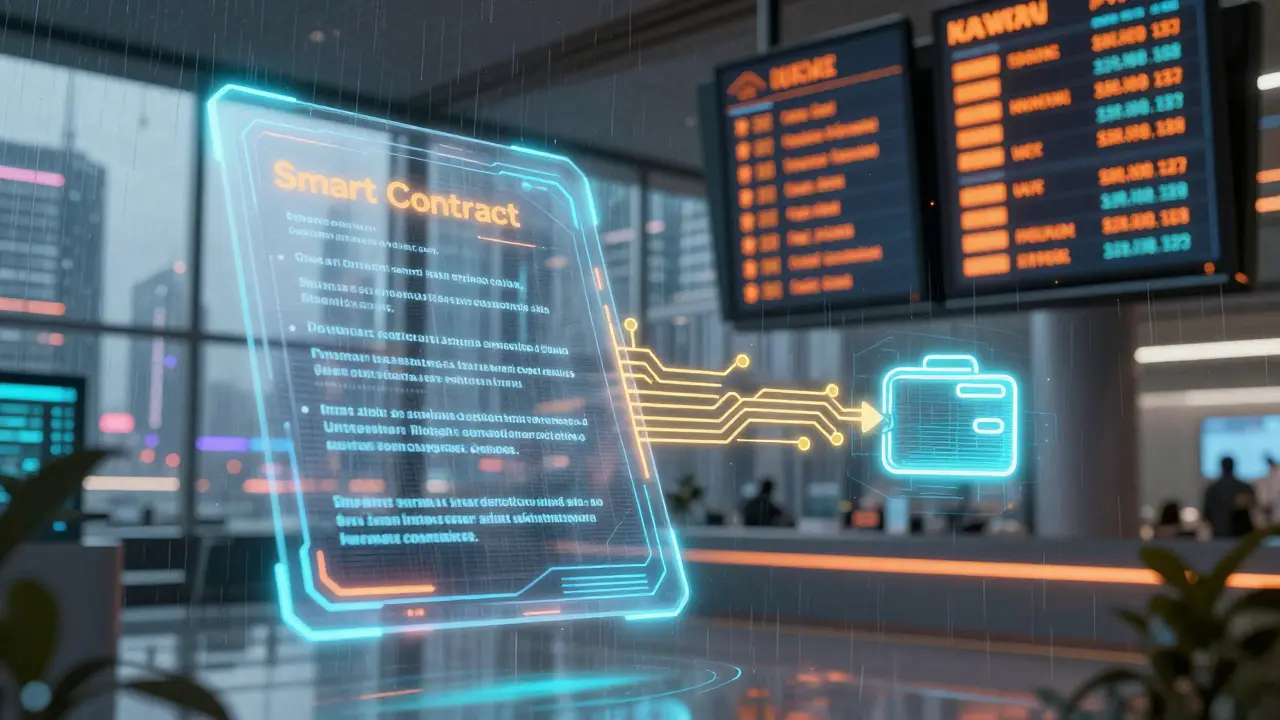
One of the most exciting parts of this shift is the use of Smart Contracts. These are essentially "if/then" programs stored on the blockchain. They don't need a human to approve them; they execute automatically when certain conditions are met. For example, imagine flight delay insurance. Instead of you filing a claim and waiting weeks for a check, a smart contract monitors the flight data. If the flight is delayed by more than two hours, the contract automatically triggers a payout to your account. No paperwork, no room for a fraudster to lie about the delay, and no manual processing.
AXA's "Fizzy" product is a real-world example of this in action. By using parametric triggers, they've seen verification times drop from over a month to just a couple of days. When the data comes directly from a trusted source (like an airport's API) and is recorded on a blockchain, the opportunity for fraud virtually disappears.
Real-World Wins and Hard Lessons
We're seeing some massive wins in specific sectors. The B3i consortium, which includes over 40 global insurers, reported a 42% drop in fraudulent marine cargo claims. By tracking shipments in real-time across a shared network, they stopped people from claiming losses on cargo that was never actually lost or damaged.
However, it hasn't all been smooth sailing. Some companies have struggled with the "garbage in, garbage out" problem. A blockchain can prove that a document hasn't been changed *since it was uploaded*, but it can't prove the document was true to begin with. If a fraudster uploads a fake police report that looks real, the blockchain just stores a permanent record of a fake report.
Then there's the scaling issue. Traditional databases can handle 50,000 transactions per second, while many blockchain networks still struggle at 1,500. One major US auto insurer actually abandoned a pilot after 18 months because they couldn't scale the system to handle more than 5% of their total claims. It's a reminder that the tech needs to be practical, not just fancy.
Blending Blockchain with AI for Maximum Security
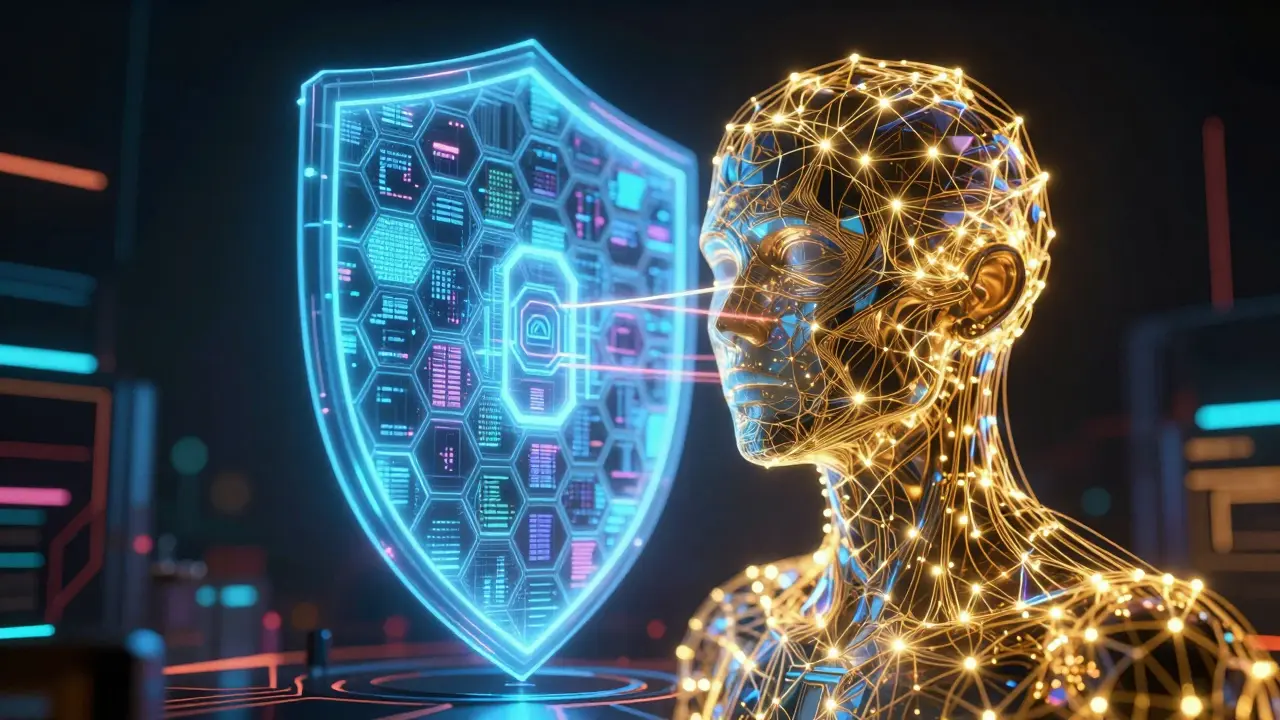
Blockchain is great at proving *what* happened, but it's not great at spotting *patterns*. This is where Artificial Intelligence comes in. AI can look at thousands of claims and notice that 50 different people all used the same phrasing in their reports-a classic sign of an organized fraud ring. Blockchain can't "see" that pattern, but it can provide the clean, unchangeable data that the AI needs to be accurate.
Industry experts, including those at the Wharton School, argue that the future is a hybrid model. Blockchain provides the "truth" (the data integrity), and AI provides the "insight" (the pattern recognition). Together, they create a shield that is much harder to pierce than either one alone.
Overcoming the Hurdles to Adoption
If this is so great, why isn't every insurer using it? First, there's the legacy system problem. Most insurance companies are running on software from the 90s. Integrating a modern blockchain with a 30-year-old mainframe is a nightmare. Some firms report that onboarding for new KYC (Know Your Customer) solutions can take nearly a year due to these technical clashes.
Then there's the regulatory mess. Depending on where you are in the US or EU, the rules for blockchain vary wildly. There's also the conflict with GDPR: if the law says a user has the "right to be forgotten," how do you do that on a blockchain where nothing can ever be deleted? Companies are now experimenting with Zero-Knowledge Proofs (ZKPs), which allow a party to prove a statement is true without actually revealing the sensitive data itself. This is the key to balancing transparency with privacy.
What to Expect in the Next Few Years
We are moving toward a world where insurance policies will be tokenized. Instead of a PDF policy, you'll have a digital asset that proves your coverage. This will make transferring policies or updating terms instantaneous. We'll also see a huge surge in Parametric Insurance, where payouts are based on data triggers rather than loss adjustments. This could grow from a $1.2 billion market to nearly $8 billion by 2027.
For the average person, this means fewer headaches. You won't have to "prove" your loss as much because the data will already be there, verified and locked. Insurance will move from being a reactive process (something that happens after a disaster) to a proactive, automated service.
Does blockchain completely eliminate insurance fraud?
No, it doesn't. While it's incredibly effective at stopping duplicate claims and preventing the alteration of records, it can't stop someone from entering false information at the start (the "garbage in, garbage out" problem). To stop sophisticated, coordinated fraud, blockchain needs to be paired with AI analytics.
Is my personal data safe on a public blockchain?
Most insurers don't use public blockchains like Bitcoin. They use "permissioned" networks (like Hyperledger Fabric), where only authorized parties can see the data. Additionally, new tech like Zero-Knowledge Proofs allows insurers to verify a claim without actually storing your private medical or personal details on the ledger.
How does a smart contract work in a real insurance claim?
A smart contract is a self-executing piece of code. For example, in weather insurance for farmers, the contract is programmed to pay out if rainfall drops below a certain millimeter threshold. When an official weather station (the "oracle") reports the drought, the smart contract automatically sends the funds to the farmer without the farmer ever having to file a claim.
Will blockchain make insurance premiums cheaper?
Potentially, yes. Because insurance companies lose billions to fraud and spend a fortune on manual claims processing, reducing those costs can lead to lower premiums. Some reports suggest blockchain can reduce operating costs by up to 30%, which provides a strong incentive for companies to pass some of those savings to customers.
Why is it taking so long for insurance companies to adopt this?
There are three main hurdles: legacy technology, regulation, and talent. Many companies are still using outdated software that doesn't integrate easily with DLT. Regulations vary by country and state, making global rollout complex. Finally, there is a shortage of blockchain developers who actually understand the nuances of the insurance industry.
Caiaphas Konkol
April 21, 2026 AT 19:09Of course they want us on a "shared ledger" because it makes the surveillance state so much more efficient. Once your entire life is tokenized, you're just a line of code for them to delete when you stop being useful. Pure dystopia masquerading as efficiency.
Eric Raines
April 23, 2026 AT 09:35Everyone's acting like this is new, but basically it's just a database with extra steps and way more hype. The "garbage in garbage out" thing is the only part of this post that actually matters because people will always find a way to lie to the system.
Clair Geary
April 25, 2026 AT 06:16this sounds like a total gamechanger for those of us who hate paperwork
imagine just getting a payout without the typical corporate runaround it's honestly wild how slow things usually move
Yvette P
April 27, 2026 AT 04:55Oh, honey, let's be real here. While the theoretical application of DLT to mitigate asymmetric information is cute, the actual implementation is usually a dumpster fire of poorly written solidity code and a total lack of interoperability between legacy COBOL systems. Most of these "pilot programs" are just expensive PR stunts to pump the stock price while the actual claims adjusters are still using Excel 2003 and praying the server doesn't crash. The latency issues mentioned are just the tip of the iceberg when you consider the gas fees or the computational overhead of maintaining a consensus mechanism across a permissioned network of greedy insurers who would rather hoard their data than actually share it for the "greater good." It's basically a solution looking for a problem that the industry isn't actually incentivized to solve unless the government forces their hand with some heavy-handed regulation that will probably be outdated by the time it's signed.
Jason M
April 28, 2026 AT 11:04This is an absolute revelation! The potential for smart contracts to empower the average consumer is simply breathtaking. Imagine the liberation from the bureaucratic nightmare we've all endured for decades!
Candace Sherrard
April 29, 2026 AT 18:42It is interesting to consider how the concept of trust is shifting from a human-centric model based on reputation and legal contracts to a mathematical model based on cryptographic proofs, which fundamentally alters our social contract with the institutions we rely on for security in a volatile world.
Kyle Bush
May 1, 2026 AT 08:42USA should be leading this charge! 🇺🇸 We have the best tech and the biggest market, we can't let other countries beat us to the punch! Let's get this done! 🚀💥
Sarah Ingrams
May 3, 2026 AT 02:48sounds like it could really help people get their money faster
debashish sahu
May 3, 2026 AT 13:53The integration of such technology in India could be very beneficial given the scale of our population and the complexity of our insurance markets.
praveen subbiah
May 3, 2026 AT 17:51India will dominate the implementation of these systems because our IT talent is unparalleled in the world! We are the future of the global digital economy! 🇮🇳
Jagdish Sutar
May 4, 2026 AT 00:13It would be wonderful to see these tools used to make insurance more inclusive for people in rural areas who often struggle with the documentation process.
Hannah Rubia
May 4, 2026 AT 01:21The mention of Zero-Knowledge Proofs is particularly pertinent here, as they provide a sophisticated method to ensure regulatory compliance with GDPR while maintaining the integrity of the ledger.
Tara Aman
May 4, 2026 AT 03:23I'm so excited to see how this evolves, it's definitely a step in the right direction for everyone involved!
Matthew Morse
May 5, 2026 AT 21:10too many buzzwords in this post
Paige Raulerson
May 5, 2026 AT 22:05The writing is a bit simplistic, but I suppose it's fine for the general public. Most people don't understand the actual underlying architecture anyway.
Ali Tate
May 6, 2026 AT 22:29absolute garbage tech if it can't scale to a real US workload. why even bother with a pilot if the throughput is a joke. american industry needs real power not these crypto toys
Kathleen Bergin
May 8, 2026 AT 09:43The blockchain just stores the data. If the data is wrong, it stays wrong. That's just how it works.
Charlie Queen
May 8, 2026 AT 17:44This is such a cool way to bring different industries together! 🌟 Hope to see more of this cross-collaboration across the globe! 🌎
Ellie Drews
May 10, 2026 AT 13:17I think we can all agree that any reduction in the time it takes to get a claim paid is a win for the little guy.