
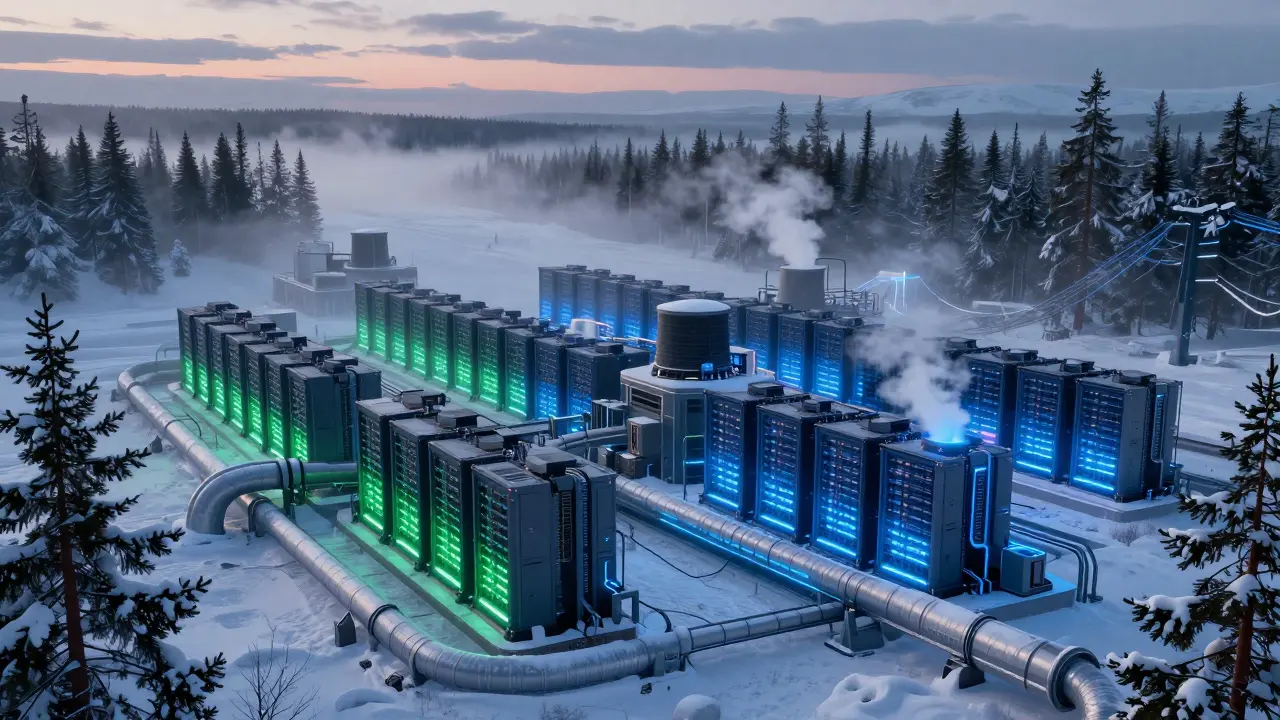
Imagine building a business on a foundation that suddenly turns to quicksand. That is exactly what happened to cryptocurrency mining in Sweden. For years, the Nordic country was known as a haven for digital asset operations. It offered cheap power and massive tax breaks. Then, in a dramatic U-turn, the government pulled the rug out from under miners. By eliminating generous incentives and slapping on punitive new taxes, Sweden transformed from a top destination into one of the most hostile places on Earth for mining Bitcoin.
The Golden Age of Swedish Mining
To understand why this shift matters, you have to look back at where things started. In 2017, the Swedish government introduced a policy that felt like a dream for tech companies. They offered a 98% tax reduction for data centers. This wasn't just a small discount; it was a massive subsidy designed to attract investment. The goal was simple: bring technology jobs and infrastructure to the country.
It worked. Giants like Microsoft, Amazon, and Facebook moved their servers to Sweden. But so did crypto miners. They loved the combination of two natural advantages. First, Sweden has abundant hydroelectric power, which is clean and relatively cheap. Second, the northern climate is naturally cold. Cooling server racks usually costs a fortune in electricity. In Sweden, the air outside does much of the work for free.
By 2023, before the crackdown, Sweden hosted about 150 megawatts of active mining capacity. Most of these operations were clustered in the north. It was profitable. It was sustainable, or so everyone thought. The country became what some called the last stronghold for Bitcoin miners in Europe.
The Policy Reversal: A 6,000% Hike
Then came the budget published in November 2022. It signaled a complete change in direction. The government decided that crypto mining no longer deserved special treatment. In fact, they wanted to discourage it entirely. When the new rules took effect in July 2023, the impact was immediate and severe.
| Period | Tax Rate (SEK per kWh) | Tax Rate (USD per kWh) | Change Factor |
|---|---|---|---|
| Before July 2023 | 0.006 SEK | $0.0006 USD | Baseline |
| After July 2023 | 0.36 SEK | $0.035 USD | 6,000% Increase |
That is not a typo. The energy tax jumped from 0.006 SEK to 0.36 SEK per kilowatt-hour. That is a 6,000% increase. At the same time, the previous 98% tax break vanished. For any business model based on thin margins, this is fatal. Miners who were making money yesterday were losing money overnight.

Why Did Sweden Change Its Mind?
Government policies rarely change without a reason. In Sweden's case, frustration had been building for years. Officials pointed to several key issues that made them view crypto mining differently than traditional data centers.
- Lack of Economic Contribution: Traditional data centers employ engineers, security staff, and local technicians. Crypto mining facilities often run with very few people. They consume huge amounts of power but create minimal local jobs.
- Energy Grid Strain: During the 2018 crypto market crash, many mining companies left Sweden abruptly. Some didn't even pay their final energy bills. This caused significant disruption for local energy providers who were left with unpaid debts and unused infrastructure.
- Environmental Concerns: While hydro power is green, the sheer volume of energy consumed by mining raised questions about efficiency. The government argued that public subsidies should go to industries that provide broader societal benefits, not just speculative financial gains.
The official stance was clear: crypto mining offered little value to the Swedish economy relative to its resource consumption. It was time to stop subsidizing it and start penalizing it.
The Exodus of Miners
You cannot survive when your biggest cost becomes six thousand percent higher. The reaction from the industry was swift. Operators described the situation as "devastating." There was no way to adjust pricing or improve efficiency enough to cover the new tax burden. Even the most advanced ASIC hardware could not make up for the math.
So, they left. Many shut down their Swedish facilities completely. Others packed up their rigs and moved them to friendlier jurisdictions. Where did they go? Countries like Kazakhstan, Texas in the United States, and parts of Canada became popular destinations. These places offer lower energy costs and more welcoming regulatory environments.
This mass relocation created a ripple effect. Local communities in northern Sweden lost potential revenue. Energy grid operators had to recalibrate systems that were built to handle large, steady loads from mines. The sudden drop in demand required adjustments to regional power distribution. It was a chaotic transition for everyone involved.

How Sweden Compares to the Rest of the World
Sweden’s approach is an outlier. If you look at other major economies, the strategies vary wildly. El Salvador has embraced Bitcoin as legal tender and actively promotes mining using geothermal energy. Several U.S. states compete fiercely to attract miners by offering stable power grids and political support. Norway, despite having similar hydro resources, has not implemented such harsh penalties.
Sweden stands alone in its aggression. No other EU member state has raised energy taxes specifically to target crypto mining to this extent. This makes Sweden a case study in how tax policy can be used to eliminate an entire industry within a specific border. It shows that governments hold all the cards when it comes to operational viability.
What Does This Mean for the Future?
As of late 2023, commercial crypto mining in Sweden is virtually dead. The era of easy profits in the North is over. For investors and operators, the lesson is clear: never assume regulatory stability. Policies can flip overnight, especially when political priorities shift.
For the rest of the world, Sweden serves as a warning. Other countries watching closely may consider similar measures if they feel their energy grids are being strained. However, most nations prefer a balanced approach, seeking to regulate rather than eradicate. Sweden chose eradication. Whether this will be seen as a smart move to protect national resources or a mistake that drove away innovation remains to be seen. One thing is certain: if you want to mine crypto in Sweden today, you need a very strong stomach and a lot of extra cash.
When did Sweden eliminate crypto mining tax incentives?
Sweden eliminated the 98% tax reduction for data centers and implemented new punitive energy taxes effective July 2023. The decision was part of the budget published in November 2022.
How much did the energy tax increase for data centers in Sweden?
The energy tax increased from 0.006 SEK to 0.36 SEK per kilowatt-hour, representing a 6,000% hike. This drastic increase made crypto mining economically unviable in the country.
Why did the Swedish government decide to ban crypto mining incentives?
The government cited minimal economic contribution, lack of job creation, and strain on the energy grid. Previous experiences with miners leaving during market crashes without paying bills also influenced the decision.
Where did Swedish crypto miners relocate after the tax changes?
Many operators relocated to jurisdictions with favorable energy policies and regulations, including Kazakhstan, Texas (USA), and various provinces in Canada.
Is there still any commercial crypto mining in Sweden?
As of late 2023, virtually all large-scale commercial crypto mining operations have either shut down or moved out of Sweden due to the prohibitive tax structure.