

Imagine you have Bitcoin, but you want to use it in Ethereum’s DeFi world - to lend it, stake it, or earn interest. The problem? Bitcoin can’t natively interact with Ethereum. That’s where wrapped assets come in. They’re digital tokens that act like copies of your original crypto, but they work on a different blockchain. Think of them as IOUs backed 1:1 by real Bitcoin, Ethereum, or other coins - except these IOUs can be used everywhere DeFi is alive.
Why Wrapped Assets Exist
Blockchains are like separate islands. Bitcoin does one thing. Ethereum does another. They don’t talk to each other. But DeFi on Ethereum exploded with lending, trading, and yield farming - and Bitcoin holders wanted in. Selling BTC to buy ETH meant paying taxes, losing control, and missing out on future price gains. Wrapped assets solved that. The first major wrapped token, WBTC (Wrapped Bitcoin), launched in January 2019. It let Bitcoin owners lock their BTC in a secure vault and get an equivalent amount of WBTC on Ethereum. Now they could use it on Uniswap, Aave, or Compound - without ever selling their Bitcoin. Today, WBTC alone has over $7.8 billion locked in DeFi protocols. That’s more than most altcoins.How Wrapped Assets Work
The process is simple, but the mechanics matter. 1. You send your Bitcoin to a trusted custodian (like BitGo for WBTC).2. The custodian confirms the deposit and triggers a smart contract.
3. An equal amount of WBTC is minted and sent to your Ethereum wallet.
4. When you want your Bitcoin back, you burn the WBTC - and the custodian releases your original BTC. This 1:1 backing is critical. Every WBTC token must have one real BTC locked somewhere. If that balance ever breaks, the whole system loses trust. Most wrapped tokens follow the ERC-20 standard on Ethereum. That’s why WETH (Wrapped Ether) even exists. ETH isn’t ERC-20 by default - it’s the native coin. But most DeFi apps only accept ERC-20 tokens. So WETH wraps ETH into a standard format so it can be used in liquidity pools and lending protocols.
Centralized vs. Decentralized Wrapped Assets
Not all wrapped assets are built the same. There are two main types:- Custodial - like WBTC. A company (BitGo) holds the real asset. Withdrawals need approval from multiple parties (3-of-5 signatures). This adds security but also centralization.
- Decentralized - like renBTC. Uses a network of nodes (called darknodes) that lock up collateral (REN tokens) to secure the bridge. No single company controls the funds. But it’s slower and more complex.
Real-World Use Cases
Wrapped assets aren’t just for trading. They’re used as collateral. - On Aave, users deposit WBTC to borrow DAI or other stablecoins.- On Compound, WBTC earns 3-5% APY - higher than holding BTC alone.
- Institutions like Grayscale now use WBTC as collateral for $287 million in DAI loans, avoiding capital gains taxes on selling Bitcoin. WETH is even more essential. Nearly every DeFi protocol on Ethereum accepts it. It’s the default way to interact with ETH in smart contracts. Without WETH, Ethereum’s DeFi ecosystem would be half as powerful.
Problems and Risks
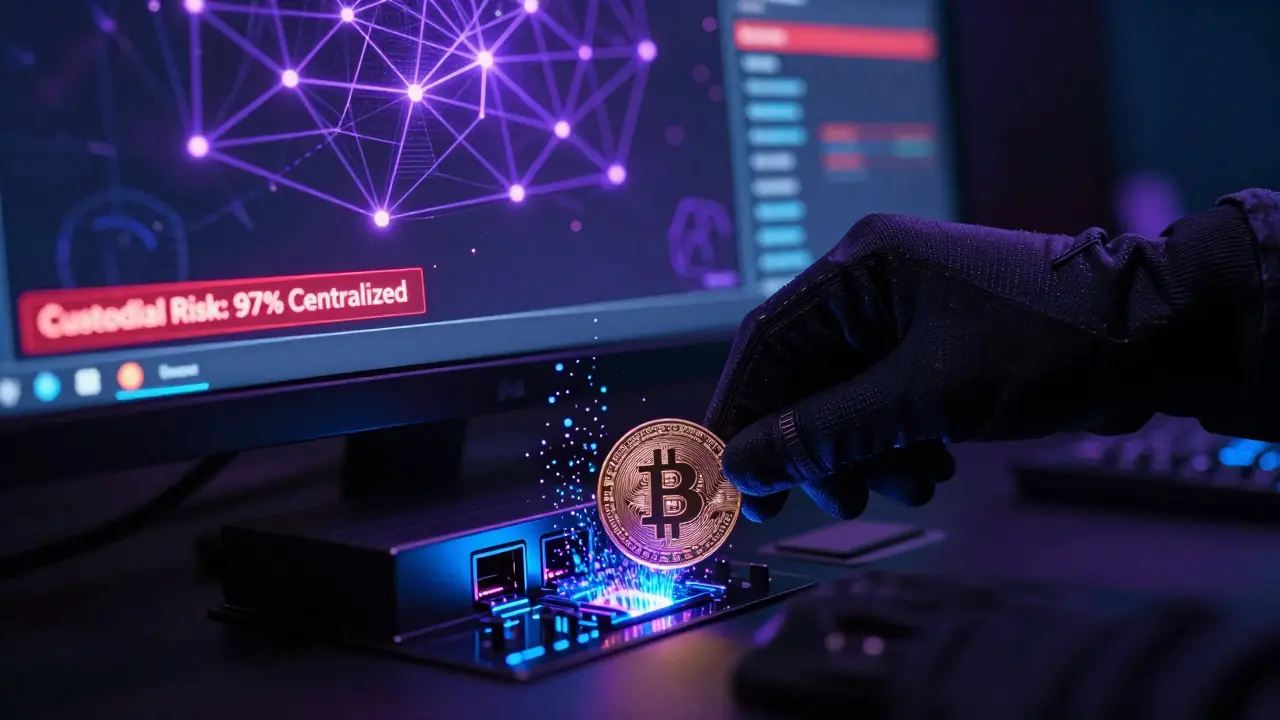
Wrapped assets aren’t perfect. They come with real risks. Custodial risk: If BitGo gets hacked or freezes withdrawals, WBTC becomes worthless. Chainalysis found 97% of WBTC custody relies on just five entities. That’s the opposite of decentralization. Smart contract bugs: In August 2022, the Nomad Bridge hack stole $600 million - including WBTC, WETH, and other wrapped tokens. A single flaw in the code let attackers drain funds. Fees and delays: Wrapping or unwrapping costs 0.1-0.5%. During Ethereum congestion, redemption can take hours. Some users report failed requests when gas fees spike. Regulatory gray area: The SEC hasn’t ruled on wrapped tokens, but they could be classified as securities if deemed investment contracts. That’s a looming threat.
What’s Next?
The future of wrapped assets is shifting. New versions like WBTC v3 are rolling out with stronger security - now requiring 4-of-7 signatures instead of 3-of-5. That cuts single-point failure risks by 62%. More importantly, trust-minimized bridges are emerging. Chainlink’s CCIP and LayerZero aim to move assets across chains without custodians or wrappers. They don’t create IOUs - they move the real asset securely. Delphi Digital predicts custodial wrapped assets will shrink to 40% of the market by 2027. Right now, they make up 78%. The trend is clear: decentralization is winning. But for now? Wrapped assets are still the glue holding DeFi together. Without them, Bitcoin couldn’t earn yield on Ethereum. ETH couldn’t be used in most DeFi apps. Cross-chain finance wouldn’t exist.How to Get Started
If you want to try wrapped assets:- Use a trusted platform like Coinbase or MetaMask to wrap BTC into WBTC.
- For decentralized options, try RenBridge or Synapse Protocol.
- Always check the token standard - use WBTC, not renBTC, if a protocol specifies it.
- Keep track of fees and gas costs. Don’t wrap small amounts - it’s not worth it.
- Never store wrapped assets on exchanges. Withdraw them to your own wallet.
vaibhav pushilkar
December 22, 2025 AT 12:25WBTC is basically Bitcoin’s visa to DeFi. No selling, no taxes, just plug and play. I’ve been using it on Aave for 2 years now - stable, reliable, and earns me 4% without touching my BTC.
Sybille Wernheim
December 23, 2025 AT 09:32OMG YES this is the magic trick of crypto 😍 I wrapped my ETH into WETH last week and now I’m earning yield on something I already owned. DeFi feels like cheating sometimes.
Cathy Bounchareune
December 23, 2025 AT 19:15Wrapped assets are the linguistic translators of blockchain - like when you drop a Shakespearean sonnet into a TikTok caption and it still makes sense. WBTC? That’s the meme version of Bitcoin with a fancy suit. renBTC? The underground poet who writes in haiku and still gets paid. Both work, but one’s got a better LinkedIn profile.
Kevin Karpiak
December 25, 2025 AT 19:07Why are we still using these middlemen? This isn’t crypto, it’s centralized banking with a blockchain sticker on it. Bitcoin was supposed to be trustless. This is a joke.
Amit Kumar
December 26, 2025 AT 21:11BRO. WBTC is the backbone of DeFi. If you think renBTC is better because it’s ‘decentralized’ - you’re living in a fantasy. The fees are insane, the speed is trash, and 90% of protocols don’t even support it. Use WBTC. End of story. 🤡
Naman Modi
December 27, 2025 AT 12:16lol imagine trusting a company to hold your btc 😭 i lost 0.5 btc once because of a custodian freeze. never again. renBTC all the way. even if it takes 3 days to unwrap. at least my coins are mine.
Craig Fraser
December 29, 2025 AT 00:45The regulatory risk here is non-trivial. If the SEC determines that wrapped tokens constitute unregistered securities, the entire ecosystem could face immediate compliance challenges. This is not a trivial technical issue - it is a legal time bomb.
Jacob Lawrenson
December 29, 2025 AT 20:23Just wrapped 0.2 BTC into WBTC and deposited it on Compound - 5.1% APY? That’s better than my savings account and I didn’t even have to sell my moon coins 🚀
Zavier McGuire
December 30, 2025 AT 14:56WETH is just ETH with a label. Why does everything need to be an ERC20? It’s unnecessary complexity. Just make the protocols work with native ETH
Jordan Renaud
December 30, 2025 AT 19:38Wrapped assets are the duct tape of DeFi - messy, temporary, but somehow holding the whole thing together. We’re building a cathedral with balsa wood and glue, hoping the wind doesn’t pick up. But until the bridges get real, this is the only way to move value across chains. Respect the hack.
Luke Steven
December 31, 2025 AT 00:05Think of wrapped tokens like borrowing your friend’s car to drive to a party. You didn’t buy it. You didn’t steal it. You just made it usable in a place it wasn’t meant to be. And you’re gonna return it. That’s the deal. The real future? Direct bridges. But until then? Pass the WBTC.