

Imagine holding a cryptocurrency that promises to pay you in Ethereum just for sitting on your wallet. Sounds like a dream, right? That is exactly the pitch behind EverETH Reflect, also known as EVERETH. It claims to be the world's first Ethereum reflections protocol, launched back in August 2021 on the Binance Smart Chain (BSC). The idea is simple: every time someone trades the token, a portion of the fee is automatically sent to all existing holders in the form of ETH. You don't have to stake it or click any buttons. You just hold.
But here is the catch that most casual investors miss. While the concept sounds elegant, the reality of EverETH Reflect is far more complex and significantly riskier than its marketing suggests. When we look past the shiny promise of passive income, we find a token with virtually no trading volume, an anonymous team, and dashboard metrics that raise serious red flags about whether those promised ETH rewards are actually being distributed at all.
The Core Concept: How Reflection Tokens Work
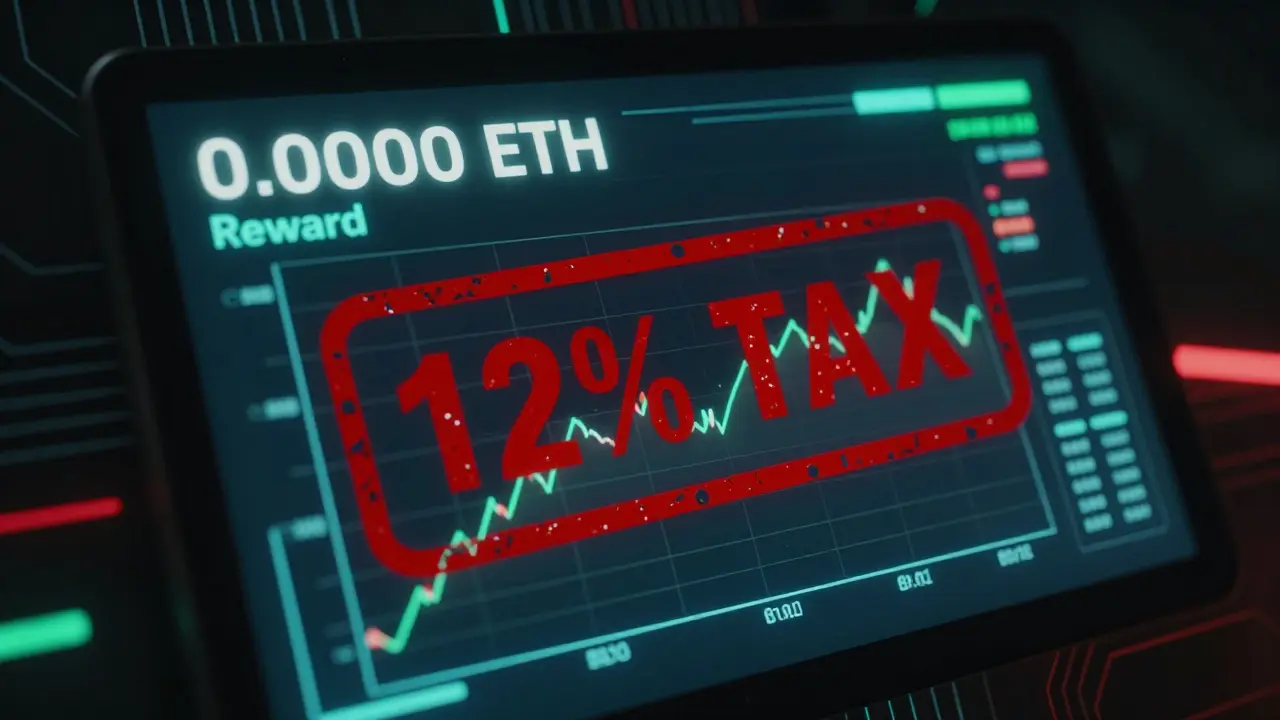
To understand EverETH, you first need to understand the mechanism driving it. Traditional dividends require you to sell shares or wait for quarterly payments. Reflection tokens operate differently. They bake a tax into every transaction. For EverETH, this total tax is a hefty 12%.
Here is how that 12% breaks down according to their official documentation:
- 10% goes to the Ethereum Rewards Pool (distributed to holders).
- 1% adds to the liquidity pool.
- 1% funds ecosystem development.
In theory, this creates a deflationary pressure and rewards loyalty. However, this high tax means you lose 12% of your value immediately upon buying or selling. To execute a trade on platforms like PancakeSwap, you must set your slippage tolerance between 12% and 15%. If you set it lower, the transaction fails. This isn't a minor inconvenience; it is a structural barrier that makes exiting your position difficult and expensive.
The Red Flags: Why the Data Doesn't Add Up
If you visit the official EverETH dashboard at evereth.net/reflect, you will see some startling numbers. As of the latest data, the "Total Ethereum Paid" metric sits at 0.0000. The user count is listed as 0. This is not a glitch; it is a feature of the current state of the project. Despite claiming to be operational since 2021, there is zero evidence that actual ETH rewards have been distributed to users.
Compare this to established reflection tokens like SafeMoon or BabyDoge, which may have their own controversies but have demonstrable transaction histories and active communities. EverETH lacks both. The absence of a visible community-no active Telegram, Discord, or Twitter engagement-suggests the project is effectively dormant. In the crypto world, silence usually means death, not stealth mode.
| Feature | EverETH Reflect (EVERETH) | Typical Established Reflection Token |
|---|---|---|
| Reward Currency | Ethereum (ETH) - Claimed | Native Token or BNB |
| Transaction Tax | 12% | 5% - 10% |
| Distributed Rewards (Verified) | 0.0000 ETH | Millions in distributed value |
| Community Activity | Negligible / None | Active Social Channels |
| Team Transparency | Anonymous | Doxxed or Semi-Doxxed |
Market Performance and Liquidity Crisis
Let's talk about money. Specifically, the lack of it. EverETH has a market capitalization hovering around $881,456, but its 24-hour trading volume is a mere $2,647.35. To put that in perspective, major cryptocurrencies move billions daily. Even mid-cap altcoins move millions. With less than $3,000 in daily volume, liquidity is practically non-existent.
This creates a classic "liquidity trap." You might buy the token easily, but when you try to sell, there may not be enough buyers in the order book to absorb your sale without crashing the price further. The token trades at approximately $0.000000002328. This places it firmly in the "penny crypto" category, where price movements are often driven by speculation rather than utility.
Price prediction services paint a grim picture. Analysts from LiteFinance, TradingBeasts, and Wallet Investor all forecast significant declines, with some predicting prices could drop another 80% or more. These models aren't guessing; they are reacting to the fundamental lack of demand and interest.
Technical Implementation: What You Need to Know
If you decide to proceed despite these warnings, you need technical competence. This is not a coin you buy on Coinbase or Binance. You must interact directly with decentralized finance (DeFi) protocols.
- Set up a Wallet: You need a BSC-compatible wallet like MetaMask, Trust Wallet, or Binance Wallet.
- Fund with BNB: You need BNB to pay for gas fees on the Binance Smart Chain.
- Connect to PancakeSwap: Go to PancakeSwap (v2) and connect your wallet.
- Paste the Contract Address: Since EverETH is not listed by default, you must manually enter the contract address:
0x16dcc0ec78e91e868dca64be86aec62bf7c61037. - Adjust Slippage: Set your slippage tolerance to 12-15%. This is critical due to the high tax structure.
Notice the complexity? For a beginner, this process is fraught with danger. Entering the wrong contract address can lead to buying a scam token designed to look identical. Setting slippage too low causes failed transactions, costing you gas fees for nothing.
The Regulatory and Security Landscape
Beyond the technical risks, there are legal ones. The U.S. Securities and Exchange Commission (SEC) has increasingly targeted unregistered securities in the crypto space. Commissioner Hester Peirce noted in 2023 that many reflection tokens exhibit characteristics of unregistered securities. Because EverETH has an anonymous team and no clear corporate entity, it falls into a regulatory gray area that could become a black hole overnight if enforcement actions tighten.
Furthermore, the smart contract itself poses risks. Without audited code or a public GitHub repository showing recent activity, you cannot verify if the contract contains "honeypot" mechanisms. A honeypot allows you to buy a token but prevents you from selling it, trapping your funds forever. Given the zero-user dashboard, there is no way to independently verify if selling is even possible for average holders.

Is There Any Legitimate Use Case?
Proponents argue that EverETH offers ETH exposure without owning ETH directly. In theory, if the token appreciates, you benefit from both the price increase and the accumulated ETH rewards. However, this logic collapses under scrutiny because:
- The reward pool shows zero distribution.
- The token price has consistently declined.
- The high transaction tax erodes capital gains.
If you want ETH exposure, buying ETH directly is cheaper, safer, and more liquid. If you want speculative growth, established projects with real usage metrics offer better odds. EverETH occupies a niche where neither utility nor speculation thrives.
Final Verdict: Proceed with Extreme Caution
EverETH Reflect is a textbook example of a high-risk, low-reward asset. It combines the allure of passive income with the harsh realities of illiquidity, anonymity, and potential obsolescence. The data simply does not support the narrative of a thriving, rewarding protocol. With zero verified ETH payouts and negligible trading volume, it appears to be a ghost ship sailing in the vast ocean of the Binance Smart Chain.
For most investors, the answer to "What is EverETH Reflect?" should be followed by "and why am I considering putting money into it?" Unless you are prepared to lose your entire investment for the sake of experimental curiosity, this token offers little value compared to safer alternatives.
Is EverETH Reflect a scam?
While we cannot definitively label it a scam without forensic analysis of the smart contract, it exhibits many characteristics of high-risk speculative assets or potential honeypots. The anonymous team, zero verified reward distributions, and lack of community activity are significant warning signs. Always assume the worst-case scenario with such tokens.
How do I claim my ETH rewards from EverETH?
According to the project's design, rewards are automatic and do not require claiming. However, the official dashboard shows "Total Ethereum Paid" as 0.0000, suggesting that no rewards have actually been distributed yet. If you hold the token, check your wallet balance for ETH, but do not expect anything based on current data.
Why is the slippage tolerance so high for EverETH?
EverETH has a 12% transaction tax embedded in its smart contract. To ensure your transaction goes through on PancakeSwap, you must set your slippage tolerance to at least 12-15%. If you set it lower, the network will reject the transaction because the price change exceeds your allowed limit.
Can I sell EverETH tokens?
Technically, yes, you can attempt to sell them on PancakeSwap. However, due to extremely low liquidity (daily volume under $3,000), finding a buyer at a fair price is difficult. Additionally, there is a risk that the contract could prevent selling (a honeypot), though this has not been officially confirmed. Proceed with extreme caution.
What is the future price prediction for EverETH?
Most analytical models predict a continued decline. Services like Wallet Investor and LiteFinance forecast prices dropping significantly below current levels ($0.000000002328). The lack of adoption, zero reward distribution, and broader market trends against low-cap tokens suggest a negative outlook.