

Buying cryptocurrency with Indian Rupees (INR) isn't as simple as clicking a button on a global app. While the Supreme Court of India lifted the banking ban on crypto back in March 2020, the landscape has shifted dramatically since then. Today, you face a strict regulatory environment defined by heavy taxation and mandatory compliance checks. If you are looking to convert your fiat currency into Bitcoin or Ethereum, you need to navigate Know Your Customer (KYC) protocols, understand the 30% capital gains tax plus 4% cess, and choose an exchange that actually complies with Indian laws.
The good news? It is still possible, and millions of Indians are doing it every day. Whether you want to hedge against inflation or just dip your toes into decentralized finance, the process is accessible if you know which doors are open and which ones are locked. This guide cuts through the noise to show you exactly how to buy crypto for fiat in India right now, avoiding the pitfalls that trap beginners.
Understanding the Legal and Tax Landscape
Before you deposit a single rupee, you must understand the rules of the game. Cryptocurrency ownership and trading are legal in India. However, the government treats crypto assets as 'virtual digital assets' (VDAs) rather than currency. This distinction matters immensely for your wallet.
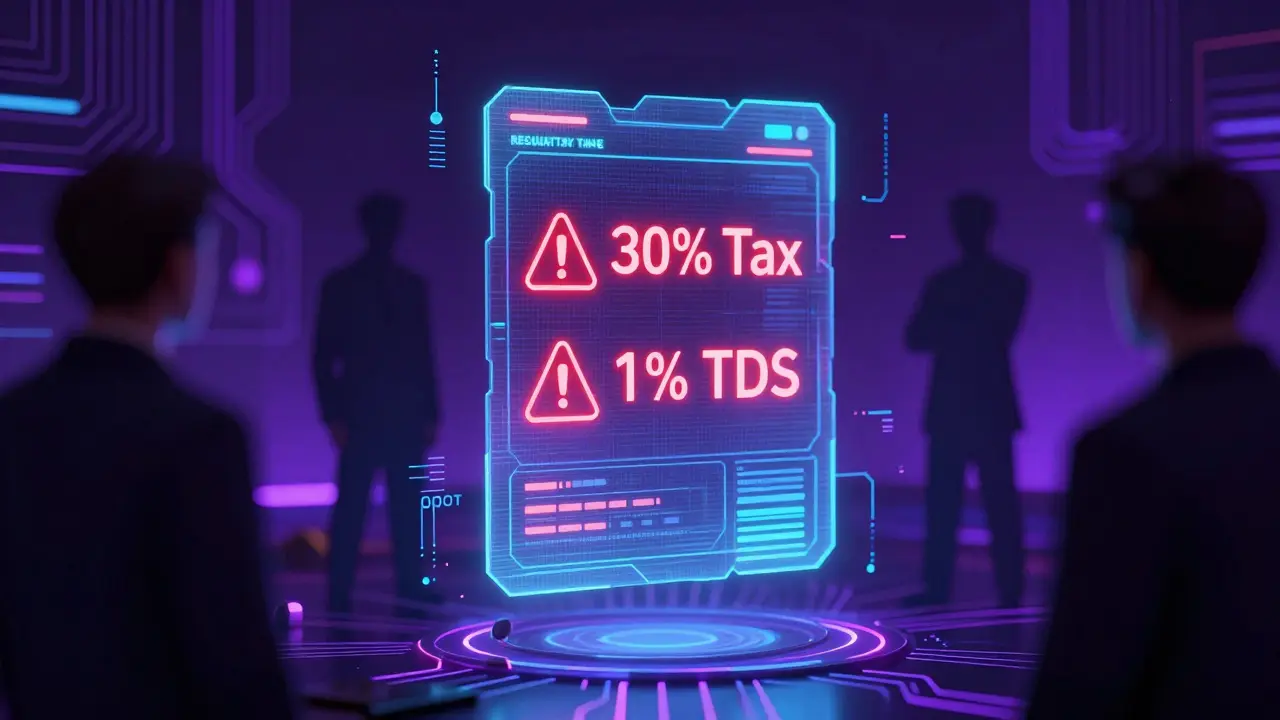
Effective April 1, 2022, the Union Budget introduced two major financial hurdles:
- 30% Tax on Profits: Any profit you make from selling crypto is taxed at a flat 30%. There is no basic exemption limit, meaning even small gains are taxable.
- 1% TDS (Tax Deducted at Source): Under Section 194S of the Income Tax Act, exchanges must deduct 1% TDS on every transaction above ₹50,000 (or ₹10,000 for certain high-volume users). This money is not lost; it goes toward your annual tax liability, but it reduces your immediate buying power.
You also pay a 4% Health and Education Cess on top of the 30% tax. Crucially, you cannot offset losses from one crypto trade against profits from another in the same financial year. This means if you lose ₹10,000 on Solana but gain ₹10,000 on Bitcoin, you still pay tax on the full ₹10,000 gain. Plan accordingly.
Step-by-Step: How to Buy Crypto with INR
The technical process is straightforward, but precision matters. Here is the standard workflow for converting fiat to crypto in India.
- Choose a Compliant Exchange: Stick to platforms registered with the Financial Intelligence Unit (FIU-IND). Domestic exchanges like WazirX is India's leading crypto exchange known for seamless UPI integration and low entry barriers, CoinDCX, and ZebPay are safer bets than international giants that may lack local support or TDS compliance.
- Complete KYC Verification: You cannot trade anonymously. You will need to upload your PAN card and Aadhaar card. Many exchanges require a selfie holding your PAN card to verify identity. This process usually takes 15-30 minutes.
- Fund Your Account via UPI: The Unified Payments Interface (UPI) is the fastest way to move money. Most compliant exchanges allow instant deposits via UPI IDs linked to your bank account. Bank transfers (NEFT/IMPS) work too but can take longer.
- Place Your Order: Once funds reflect in your exchange wallet, go to the spot market. Select the pair (e.g., BTC/INR) and choose 'Buy'. For beginners, a 'Market Order' executes immediately at the current price. A 'Limit Order' lets you set a specific price, waiting until the market hits it.
- Secure Your Assets: For small amounts, leaving them on the exchange is convenient. For larger holdings, transfer them to a private wallet. Only 28% of Indian users use hardware wallets, yet this remains the gold standard for security.
Top Exchanges for Buying Crypto in India (2026)
Not all exchanges are created equal. Some offer better fees, others have superior mobile apps, and some fail to comply with tax laws. Here is how the major players stack up based on recent performance data.
| Exchange | Best For | Min. Deposit | TDS Compliance | User Rating |
|---|---|---|---|---|
| WazirX | Beginners & Speed | ₹100 | Yes | 9.2/10 |
| CoinDCX | Security & Trust | ₹100 | Yes | 4.5/5 |
| ZebPay | Mobile Experience | ₹100 | Yes | 4.7/5 |
| Binance India | Coin Variety | ₹500 | No (Manual) | Mixed |
| Kraken | Low Fees (Advanced) | ₹2,000 | Limited | High |
WazirX stands out for its frictionless onboarding. With an average UPI settlement time of under 15 seconds, it removes the anxiety of delayed funds. It supports over 300 cryptocurrencies and allows fractional buying starting at just ₹100. This makes it ideal for students or those starting with small daily investments.
CoinDCX prioritizes security and institutional-grade infrastructure. It is often recommended for users who value asset protection over ultra-low fees. Its automated TDS deduction ensures you stay compliant without manual calculations.
ZebPay offers the best mobile interface, featuring one-tap trading and biometric login. However, be mindful of its fee structure: 0.15% to 0.50% depending on volume. For small traders, these fees can eat into profits quickly.
Avoid using non-compliant foreign exchanges that do not deduct TDS. While they might seem cheaper, the burden of calculating and paying taxes falls entirely on you. As noted by NASSCOM’s 2025 audit study, 37% of users on non-compliant platforms underpay taxes, risking penalties later.
Payment Methods: UPI vs. Bank Transfers
In India, UPI is king. Handling nearly 120 billion transactions monthly, it is the backbone of digital payments. When buying crypto, UPI offers instant liquidity. You type your UPI ID, enter the amount, and approve the transaction on your phone. The funds hit your exchange wallet almost immediately.
Bank transfers (NEFT/RTGS/IMPS) are reliable but slower. IMPS is near-instant but may have higher limits or charges depending on your bank. NEFT can take hours, especially during batch processing windows. If you are trying to catch a sudden price drop, UPI is your only viable option.
Some users try to bypass UPI transaction limits by splitting payments across multiple apps. While common, this increases complexity and potential failure rates. Stick to one primary payment method per exchange to keep records clean for tax purposes.
Security: Protecting Your Investment
The Indian crypto space has seen significant theft incidents. In October 2025 alone, Cyble reported 217 theft cases totaling ₹9.3 crore. Most of these were not due to exchange hacks, but user error-specifically, reusing passwords across platforms.
To stay safe:
- Enable Two-Factor Authentication (2FA): Never rely solely on SMS codes. Use an authenticator app like Google Authenticator or Authy.
- Use Withdrawal Whitelists: Set up whitelisted wallet addresses so funds can only be sent to pre-approved destinations.
- Consider Cold Storage: For long-term holds, move coins off-exchange to a hardware wallet like the Ledger Nano S+ (priced around ₹11,999). This keeps your private keys offline, immune to online breaches.
- Beware of Phishing: Always check the URL. Scammers create fake sites mimicking WazirX or Binance. Bookmark your exchange’s official site and never click links from emails or WhatsApp messages.
Remember, when your crypto is on an exchange, it is not truly yours. The exchange controls the private keys. 'Not your keys, not your coins' is a mantra for a reason.

Tax Reporting and Compliance
Ignoring crypto taxes is a fast track to trouble. The Income Tax Department has access to data from FIU-registered exchanges. Every transaction is tracked.
Here is what you need to do:
- Keep Records: Download monthly statements from your exchange. These should detail every buy, sell, swap, and withdrawal.
- Track Cost Basis: Calculate your average cost per coin. Since losses cannot be offset against gains, accurate tracking helps minimize taxable income where possible.
- File ITR Correctly: Include crypto gains in Schedule VS of your Income Tax Return. Declare the 1% TDS deducted by exchanges as credit against your total tax liability.
- Consult a CA: If your portfolio is complex or exceeds ₹5 lakh, hire a Chartered Accountant familiar with VDA regulations. The 30% + 4% cess structure leaves little room for error.
Exchanges like ZebPay and CoinDCX now provide automated tax reports, simplifying this process. Take advantage of these tools to avoid manual errors.
Future Outlook: Digital Rupee and Regulation
The landscape is evolving. The Reserve Bank of India (RBI) launched Phase 3 of the Digital Rupee (CBDC) pilot in November 2025, involving 10 banks and 1 million users. While the Digital Rupee is not crypto, it signals India’s push toward digital payments infrastructure.
Regulatory clarity is still pending. The proposed Crypto Asset Regulation Bill has been in committee review since February 2023. Until then, the current tax regime stands. Experts predict India could reach 25 million crypto users by 2027, driven by young demographics and remittance needs. However, the high tax rate may continue to deter institutional investors, keeping the market retail-dominated.
Stay informed. Follow official RBI announcements and FIU updates. Avoid rumors about bans or deregulation. The path forward is cautious growth within existing legal frameworks.
Is buying crypto illegal in India?
No, buying and owning cryptocurrency is legal in India. The Supreme Court struck down the RBI's banking ban in 2020. However, it is heavily regulated with a 30% tax on profits and 1% TDS on transactions.
Which exchange is best for beginners in India?
WazirX is widely considered the best for beginners due to its low minimum deposit (₹100), instant UPI settlements, and user-friendly interface. CoinDCX is also a strong alternative for its security focus.
Do I need to pay tax on crypto gains?
Yes. All profits from crypto sales are taxed at a flat 30% plus a 4% cess. Additionally, 1% TDS is deducted at the source of each transaction above ₹50,000. Losses cannot be offset against gains.
Can I use UPI to buy crypto?
Yes, most compliant Indian exchanges like WazirX, CoinDCX, and ZebPay support UPI deposits. It is the fastest method, with funds reflecting in seconds.
What documents are needed for KYC?
You typically need your PAN card and Aadhaar card. Some exchanges also require a selfie holding your PAN card for video verification.
Is it safe to store crypto on an exchange?
It is convenient but risky. Exchanges can be hacked or face regulatory issues. For long-term storage, use a hardware wallet like Ledger. Enable 2FA and withdrawal whitelists on any exchange you use.
Why did Coinbase leave India?
Coinbase discontinued operations in June 2023 due to regulatory pressure and the challenge of complying with India's strict KYC and TDS requirements without a local entity.
What is the minimum amount to buy crypto in India?
On platforms like WazirX and ZebPay, you can start with as little as ₹100. This allows for fractional purchases of expensive coins like Bitcoin.
Does the 1% TDS reduce my buying power?
Yes, temporarily. The 1% is deducted before the transaction completes, so you receive slightly less crypto than expected. However, this amount is credited toward your annual tax liability, so it is not a loss.
Will the Digital Rupee replace Bitcoin?
No. The Digital Rupee is a Central Bank Digital Currency (CBDC) issued by the RBI. It is legal tender, unlike Bitcoin. They serve different purposes and coexist in the digital economy.
Karthikeyan S
June 7, 2026 AT 23:06bro this guide is so dry it makes my eyes bleed 😫 why do people write like robots? nobody cares about the 'legal landscape' when you are just trying to buy bitcoin with your salary. i tried wazirx last week and the upi failed three times because of some stupid limit. now my money is stuck in limbo for two days. typical indian banking system. they want your tax but cant even process a simple transaction without crashing. also the 30% tax is basically theft. who designed this policy? someone who hates freedom. i am done with crypto in india unless they fix the infrastructure first. 📉💸
Narendra Kulkarni
June 8, 2026 AT 23:17hey karthikeyan, i feel your pain on the upi failures. it happens to me too sometimes especially during market volatility. maybe try using neft if upi keeps failing? it takes longer but its more reliable for large amounts. also dont forget to check if your bank has blocked crypto transactions specifically. some banks like hdfc or icici have been strict lately.
Dinesh Pattigilli
June 10, 2026 AT 06:36you idiots really think upi limits are the problem? no its your lack of financial literacy. the real issue is that most of you treat crypto like a casino instead of an asset class. you need to understand macroeconomics before complaining about exchange fees. the 30% tax is actually fair considering the risk premium inherent in volatile assets. if you cant handle the regulation then stay away from digital assets. only smart money survives here. rest of you are just liquidity for the whales. 🧠📚
Madhu Menon
June 11, 2026 AT 12:12the concept of ownership in the digital age is quite fascinating isn't it? we hold keys but not coins. it reminds me of plato's cave where we see shadows of value rather than the truth. perhaps the taxation is merely a societal contract to maintain order in a chaotic system. what do you think about the philosophical implications of decentralized trust versus centralized authority? 🤔
verna kennedy
June 13, 2026 AT 06:01This article is dangerously misleading if you don't understand the nuances of US-India cross-border regulations. Many Indians living abroad are reading this and thinking they can use Indian exchanges easily. You cannot simply fund WazirX from a US bank account due to OFAC sanctions and anti-money laundering laws. If you are an NRI, you need to be extremely careful. Do not follow generic advice without consulting a cross-border tax expert. The consequences are severe.
Kelly Tenney
June 14, 2026 AT 11:00I appreciate the detailed breakdown here! It is great to see resources that help people navigate complex financial systems. Remember everyone that starting small is okay. You do not need to invest thousands to begin learning. Take your time with the KYC process and make sure your documents are clear. Safety first always! 💪✨
Caralee Robertson
June 14, 2026 AT 16:51i love how simple this looks but trust me it gets messy fast. i had issues with coinDCX customer support last month. they took weeks to resolve a withdrawal whitelist error. super frustrating. also typos in the post 'WazirX is India's leading... known for seamless UPI integration' - grammar police would cry lol. but yeah hardware wallet is a must. ledger nano s+ is pricey but worth it.
Greg Lewis
June 15, 2026 AT 08:20why are you all so obsessed with following rules? the whole point of crypto is to escape the government grip. buying on compliant exchanges defeats the purpose. you should be using p2p platforms or darknet markets if you want true freedom. yes its risky but thats the price of liberty. stop letting the IRS and RBI control your wallet. wake up sheeple. 🐑💰
JEVON HALL
June 16, 2026 AT 10:30greg you are completely wrong and dangerous. p2p trading in india is heavily scrutinized and many users get their accounts frozen by banks for suspicious activity. please do not advise beginners to go off-grid. compliance is key for longevity in this space. also check your spelling next time. 😅
Dr Lynea LaVoy
June 18, 2026 AT 08:28As a financial advisor, I must emphasize that the tax implications mentioned here are critical. The inability to offset losses against gains is a unique feature of Indian crypto taxation that differs significantly from other jurisdictions. Clients often overlook this until filing season. Ensure you keep meticulous records of every transaction including gas fees which can sometimes be considered part of the cost basis depending on interpretation. Consult a CA specializing in VDAs.
Matthew Malone
June 18, 2026 AT 13:35Typical third-world regulatory nightmare. In America we have clear guidelines and robust institutions. This constant changing of rules in India is why capital flees to stable economies. But hey enjoy your 30% tax while your currency depreciates against the dollar. At least you have cheap labor to offset the losses. 🇺🇸📈
aaliyah zahid
June 19, 2026 AT 13:31matthew your sarcasm is showing through thick and thin. cultural differences in finance are interesting though. india is building its own digital ecosystem with the digital rupee. maybe one day america will learn from agile adoption models instead of clinging to legacy systems. peace and love to all traders regardless of location. 🌍🕊️
Erik Kirana
June 21, 2026 AT 13:04This entire guide is superficial at best. It fails to address the deeper structural issues of fiat-backed crypto exchanges in emerging markets. The reliance on UPI is a double-edged sword as seen in recent bans. A truly sophisticated investor understands the geopolitical risks involved. Furthermore, the mention of Binance India is outdated since they never had a fully licensed entity. Amateur hour. 🙄📉