

You’ve probably heard of USDT or USDC. They are the giants of the stablecoin world, backed by cash and bonds in a bank vault. But what if you could hold a dollar-pegged asset that doesn’t rely on a central company, yet also doesn’t charge you interest every time you borrow against your crypto? That is exactly the promise behind Orby Network, which issues the USC stablecoin.
If you are new to decentralized finance (DeFi), this might sound too good to be true. How can it be free? Who backs the money? And why does everyone keep talking about Cronos? This guide breaks down exactly what Orby Network is, how the USC token works, and whether it’s a safe place for your funds.
What Exactly Is Orby Network?
Orby Network is a lending protocol built specifically on the Cronos blockchain. Think of it as a digital bank where there are no employees, no branches, and-crucially-no interest rates charged on loans. Instead, users deposit cryptocurrency they already own as collateral to mint new USC tokens.
The project positions itself as Cronos’ first native overcollateralized, yield-generating stablecoin system. In simple terms, "overcollateralized" means you must lock up more value than you borrow. If you want $100 worth of USC, you might need to lock up $150 worth of Ethereum or Cronos assets. This buffer protects the system if the price of your collateral crashes.
Unlike traditional loans where you pay monthly interest, Orby charges zero interest on the borrowed USC. The protocol makes its money elsewhere-through liquidation fees and ecosystem usage-which are then shared back with participants. This model appeals to traders who want leverage without the bleeding effect of daily interest accrual.
Understanding the USC Token
The USC token is the heart of the Orby ecosystem. It is designed to maintain a soft peg of $1.00 USD. When you check major tracking sites like CoinMarketCap or Coinbase, you will see USC trading very close to this target, usually fluctuating between $0.99 and $1.01.
Here is why that matters: most decentralized stablecoins (like DAI on Ethereum) try to stay at $1.00 using complex algorithms and debt auctions. USC achieves this through direct overcollateralization. You cannot just click a button and get free USC; you have to put skin in the game first.
| Metric | Value / Description |
|---|---|
| Target Peg | $1.00 USD |
| Blockchain | Cronos (EVM-compatible) |
| Type | Overcollateralized, Decentralized |
| Borrowing Cost | 0% Interest |
| Market Cap | ~$13M - $18M USD |
It is important to note that while the market cap is relatively small compared to giants like Tether ($USDT), this indicates a niche, specialized tool rather than a general-purpose currency. The total supply is significant, but the circulating supply remains tight, reflecting active use within the Cronos DeFi ecosystem.
How Does the System Work?
To understand Orby, you need to look at its three main components. These aren't just marketing terms; they are actual smart contracts you interact with.
- The Vault (Borrowing): This is where you start. You connect your wallet (like MetaMask) and deposit eligible crypto assets (such as CRO or ETH). Once deposited, you can mint USC against that collateral. Because there is no interest, your only cost is the gas fee for the transaction and the risk of liquidation if your collateral value drops too low.
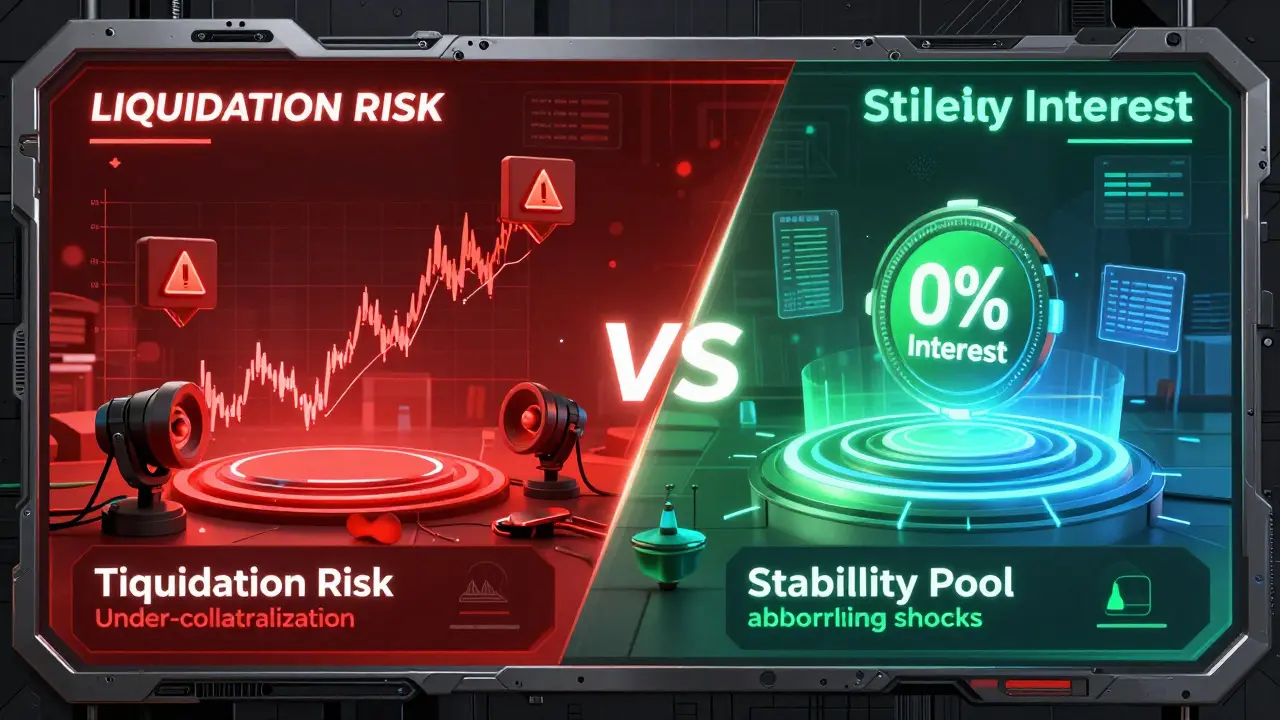
- The Stability Pool: This is unique to systems like Orby. Users can deposit their existing USC into this pool. Why would they do that? To earn rewards. When other borrowers get liquidated (because their collateral crashed), the Stability Pool absorbs those losses and earns the seized collateral as profit. Depositors share in these liquidation profits and protocol revenue.
- The Reward Vault: This part involves the ORB token. Holders of ORB or esORB (escrowed ORB) can stake them here to earn a share of the protocol’s fees. This links the governance/utility token directly to the health and profitability of the stablecoin system.
This structure creates a flywheel: Borrowers get cheap leverage, Stability Pool depositors get high yields from liquidations, and ORB holders get passive income. Everyone wins if the system stays stable.
USC vs. Other Stablecoins: What’s the Difference?
Not all stablecoins are created equal. In fact, confusing different tokens with the same ticker symbol is one of the biggest risks in crypto right now. Let’s clear up two major points of confusion.
Orby USC vs. Classic USD (USC)
There is another token called USC. It is issued by a company called Brale and runs on the Ethereum Classic blockchain. This is not Orby Network’s token. Classic USD is fiat-backed, meaning Brale holds real dollars and US government bonds in a regulated treasury. Orby’s USC is crypto-backed and decentralized. Do not mix them up. One relies on trust in a US-regulated company; the other relies on code and collateral on Cronos.
Orby USC vs. USDC/USDT
Tether (USDT) and Circle (USDC) are centralized. If you send USDT to a friend, you are trusting Tether Holdings to keep the reserves intact. With Orby USC, you are trusting the math of the overcollateralization ratio and the security of the Cronos blockchain. For privacy-focused users or those wary of censorship (where centralized issuers might freeze accounts), Orby offers a permissionless alternative. However, it lacks the deep liquidity and universal acceptance of USDC.
Is Orby Network Safe? Risks You Must Know
No financial product is risk-free, especially in DeFi. Before you mint your first USC, consider these specific vulnerabilities.
- Liquidation Risk: Since USC is overcollateralized, if the price of your underlying asset (e.g., Ethereum) drops sharply, your position may be liquidated. Unlike a bank loan where you negotiate terms, smart contracts execute instantly. You could lose a portion of your collateral to cover the debt.
- Smart Contract Risk: Orby Network runs on code. If there is a bug in the contract logic, hackers could drain the vaults. As of mid-2026, public information regarding third-party security audits for Orby is limited. Always check for recent audit reports before depositing large sums.
- Oracle Manipulation: The system needs to know the current price of your collateral. It uses data feeds (oracles). If these feeds are manipulated or fail during extreme market volatility, the system might miscalculate liquidations, leading to instability.
- Liquidity Depth: With a market cap under $20 million, USC is not suitable for moving millions of dollars at once. Large trades could slip the price away from the $1.00 peg temporarily.

Who Should Use Orby Network?
Orby isn’t for everyone. If you just want to buy coffee with crypto, stick to USDC. But Orby shines for specific types of users:
- Yield Farmers on Cronos: If you are providing liquidity on Cronos DEXs, you often need stablecoins. Minting USC lets you access stable capital without selling your long-term crypto holdings.
- Hedge Traders: Want to bet against the market? You can short crypto by borrowing USC, buying the asset, and waiting for prices to drop. Without interest eating into your profits, this strategy becomes more viable for short-term plays.
- DeFi Natives: Users who prefer non-custodial solutions and want exposure to the Cronos ecosystem’s growth may find the integrated reward mechanisms attractive.
Getting Started with Orby
If you decide to proceed, the process is straightforward but requires some technical know-how.
- Set Up a Wallet: You need an EVM-compatible wallet like MetaMask or Trust Wallet. Configure it to recognize the Cronos network.
- Fund Your Wallet: Buy CRO (for gas fees) and the collateral asset you wish to use (e.g., ETH or CRO) on an exchange, then transfer it to your Cronos wallet address.
- Connect to Orby: Visit the official Orby Network website. Connect your wallet. Double-check the URL to avoid phishing sites.
- Deposit Collateral: Navigate to the Vault section. Select your asset and approve the transaction. Monitor the collateralization ratio closely.
- Mint USC: Once approved, you can mint USC up to your limit. You can then use these tokens elsewhere or deposit them into the Stability Pool to earn yield.
Remember, DeFi is self-custody. There is no customer support hotline if you make a mistake. Start with small amounts to test the waters.
Is Orby Network USC the same as the USC on Ethereum Classic?
No. They are completely different projects. Orby Network's USC is a decentralized, crypto-collateralized stablecoin on the Cronos blockchain. The USC on Ethereum Classic is a fiat-backed stablecoin issued by Brale. Never confuse the two when trading or storing assets.
Does Orby charge interest on USC loans?
No. Orby Network operates on an interest-free borrowing model. You do not pay ongoing interest on your USC debt. However, you face liquidation risk if your collateral value drops below the required threshold.
What happens if I get liquidated?
If your collateralization ratio falls below the protocol's minimum, your position is liquidated. Your collateral is sold to repay your USC debt. The excess proceeds (if any) may go to the Stability Pool or be returned to you, depending on the specific penalty parameters set by the protocol.
Can I earn yield by holding USC?
Yes. You can deposit USC into the Stability Pool to earn a share of liquidation profits and protocol revenue. Alternatively, you can deploy USC in other Cronos-based DeFi protocols to capture external yield opportunities.
Is Orby Network audited?
Publicly available information regarding formal third-party security audits for Orby Network is limited. As with any DeFi protocol, you should conduct your own due diligence, inspect smart contract addresses, and look for community-discussed audit reports before depositing significant funds.