
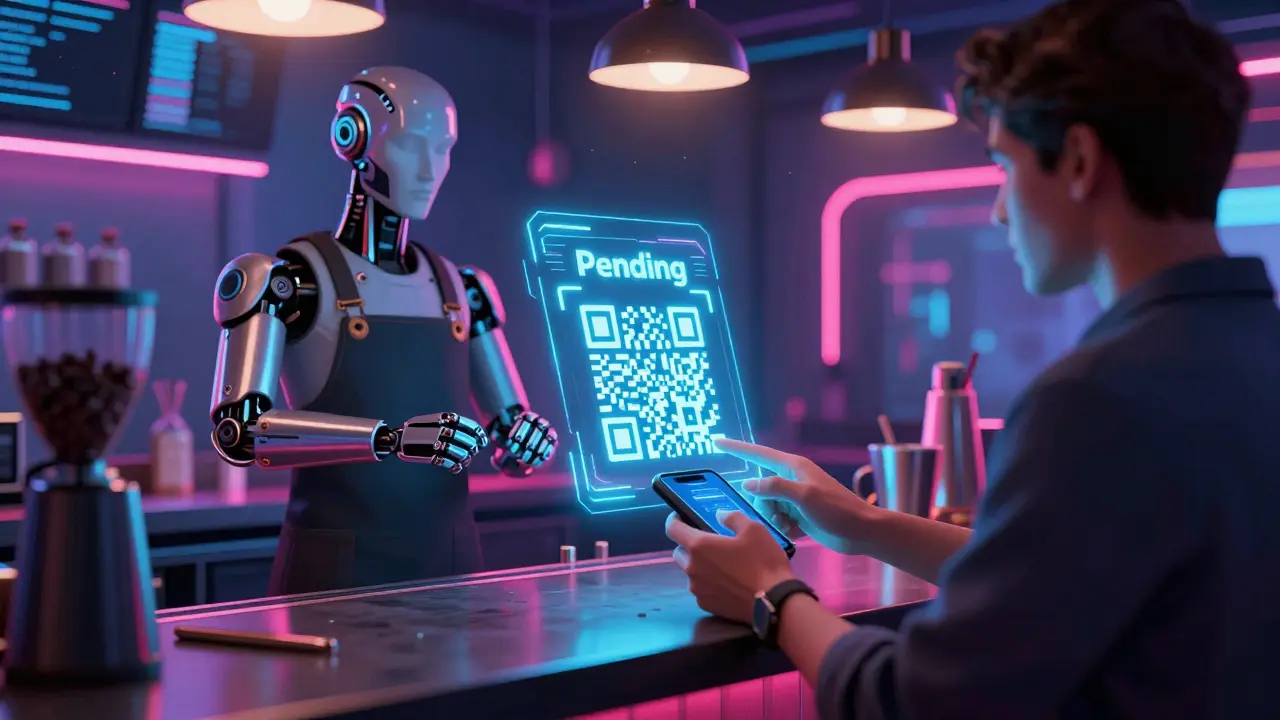
Imagine buying a coffee with crypto. You scan the QR code, hit send, and the barista sees the payment on their screen instantly. They hand you your latte, and you walk away happy. But what if that payment never actually hits the blockchain? What if, seconds after you left, the sender used a trick to cancel that payment and move the money elsewhere? This is the reality of zero-confirmation transactions. It's a high-stakes gamble where speed is traded for security, and if you're the one receiving the money, you might be gambling with your own funds.
The Quick Rundown on Zero-Conf Risks
- Double-Spending: The biggest threat; an attacker spends the same coins twice.
- Mempool Volatility: Transactions can be dropped if fees are too low.
- Miner Discretion: Miners might ignore your transaction for more profitable ones.
- No Immutability: Until a block is mined, the transaction isn't permanent.
What Exactly is a Zero-Confirmation Transaction?
In the world of blockchain, a Zero-Confirmation Transaction is a payment that has been broadcast to the network but hasn't yet been bundled into a block by a miner . Think of it like a check you've written but the bank hasn't cleared yet. You've sent the request, and the network knows about it, but the money hasn't officially moved from point A to point B.
These transactions live in the Mempool, which is essentially a digital waiting room (memory pool) for unconfirmed transactions. Because Bitcoin takes an average of 10 minutes to mine a block, waiting for a confirmation is often too slow for real-world shopping. To fix this, some merchants accept "zero-conf" payments, trusting that the transaction will eventually be confirmed.
The Nightmare Scenario: The Double-Spending Attack
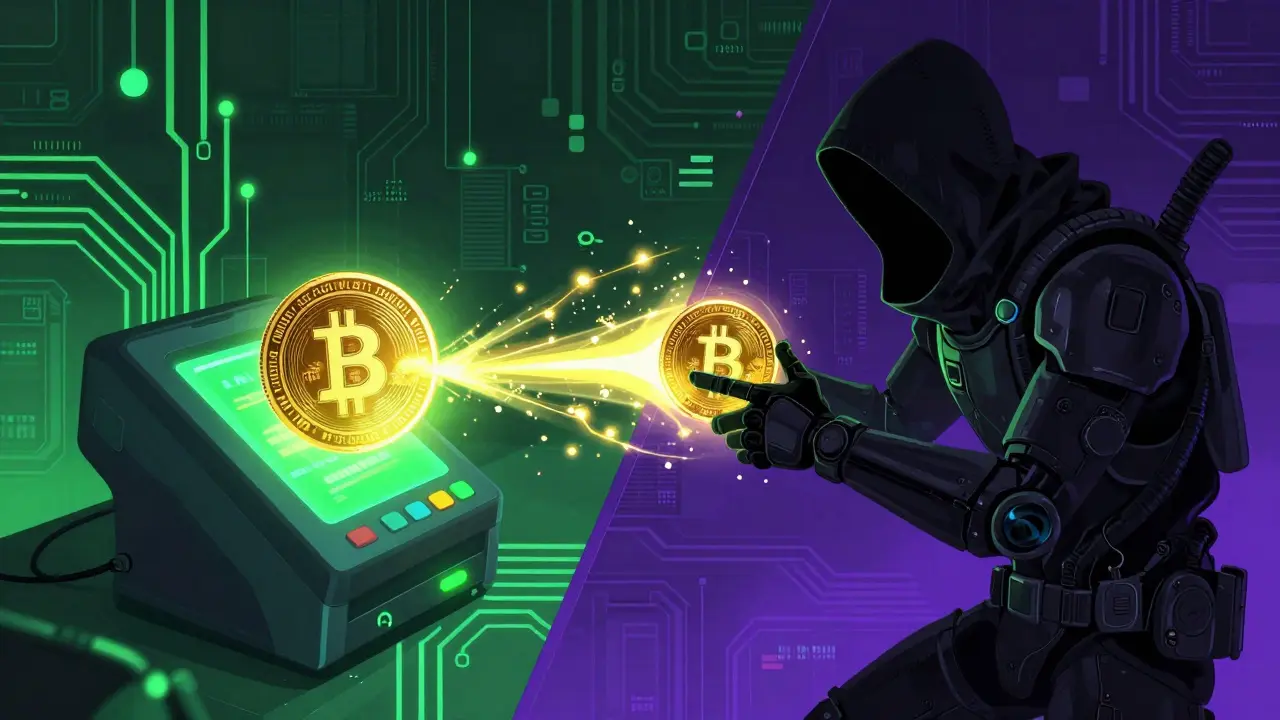
The most dangerous risk here is the double-spend. This isn't a glitch; it's a deliberate exploit. Here is how a malicious actor pulls it off: they send you a transaction for 0.1 BTC to buy a product. You see it in the mempool and ship the item. Simultaneously, the attacker broadcasts a second transaction using those same 0.1 BTC, but they send them back to their own wallet and attach a much higher transaction fee.
Miners are profit-driven. They look at the mempool and pick the transactions with the highest fees first. The second transaction-the one that steals the money back-gets picked up and written into the blockchain. Once that happens, your original transaction becomes invalid and is discarded. You're left with no product and no money.
Beyond the Attack: Technical Failures and Miner Behavior
It's not always a malicious hacker; sometimes the network just fails you. If a merchant accepts a zero-conf payment with a very low fee during a period of high Network Congestion, that transaction might sit in the mempool for hours. Eventually, nodes may decide the transaction is too old or the fee is too low and simply drop it from the pool. In this case, the money never leaves the sender's wallet, and the merchant loses out without even knowing it happened.
There is also the element of miner dishonesty. While rare in large networks, some miners might deliberately ignore certain transactions to manipulate market outcomes or favor specific parties. When you rely on zero-conf, you are essentially trusting that the Consensus Mechanism will act in your favor quickly.
Balancing Risk and Reward: When is it Okay?
Is zero-conf always a bad idea? Not necessarily. It all comes down to the value of the transaction. If you're selling a digital sticker for $0.50, the cost of orchestrating a double-spend attack is far higher than the reward. The attacker would spend more on fees and effort than they'd gain from the theft.
| Transaction Value | Risk Level | Recommendation | Typical Use Case |
|---|---|---|---|
| Micro (< $10) | Low | Accept Zero-Conf | Coffee, digital tips |
| Moderate ($10 - $500) | Medium | Wait for 1-3 Confirmations | Clothing, small electronics |
| High (> $500) | Critical | Wait for 6+ Confirmations | Luxury goods, B2B payments |

How to Protect Yourself Without Sacrificing All Your Speed
If you're a business owner who wants to offer crypto payments, you don't have to just cross your fingers. There are a few ways to lower the danger. First, use a payment processor that monitors the mempool for conflicting transactions. If they see two different transactions trying to spend the same coins, they can flag the payment as fraudulent before you ship the goods.
Second, you can implement a tiered confirmation system. For a $2 item, accept zero-conf. For a $100 item, require at least one block confirmation. For a $1,000 item, wait for six. This ensures your risk is always proportional to the potential loss.
Lastly, look into Layer-2 Solutions like the Lightning Network. These technologies allow for instant payments that are mathematically secure without needing to wait for a miner to confirm a block on the main chain. They solve the "speed vs. security" trade-off by moving the transaction off the main blockchain entirely until the final settlement.
Does every cryptocurrency have zero-conf risks?
Yes, any blockchain that has a delay between broadcasting a transaction and its inclusion in a block is susceptible to zero-conf risks. Even networks with faster block times (like Solana or Polygon) have versions of this problem, though the window of opportunity for an attacker is much smaller than it is on Bitcoin.
Can a zero-conf transaction be reversed?
Technically, it's not "reversed" because it was never truly finalized. Since it hasn't been written into a block, the sender can potentially create a conflicting transaction with a higher fee. If the higher-fee transaction is mined first, the original zero-conf transaction is simply ignored by the network and disappears.
How do I know if a transaction is zero-conf?
If you look up a transaction on a blockchain explorer and it says "Unconfirmed" or "0 Confirmations," it is a zero-conf transaction. It is visible to everyone, but it hasn't been locked into the ledger yet.
Why would a merchant ever accept zero-conf?
User experience. Customers don't want to stand at a checkout counter for 10 to 60 minutes waiting for a blockchain confirmation. By accepting zero-conf, the merchant provides an instant checkout experience, which is essential for mass adoption in retail.
Are higher fees a guarantee against zero-conf failure?
They significantly increase the odds of a transaction being picked up by a miner quickly, but they aren't a 100% guarantee. Network spikes can still cause delays, and extreme congestion can leave even decent-fee transactions pending for a while.
What Should You Do Next?
If you are a casual user, the best move is to always check your wallet for the "Confirmed" status before considering a payment complete. If you are a merchant, stop accepting zero-conf for anything over a small, negligible amount. If you need instant payments for a business, stop relying on the base layer of the blockchain and start integrating Layer-2 protocols. They provide the speed of zero-conf with the security of a locked vault.
Robert Smith
April 28, 2026 AT 18:06Lightning Network is the way ⚡️🚀
Emily A
April 29, 2026 AT 04:51The analysis provided here is fundamentally basic. One must realize that the risk of a double-spend is not merely about the value of the transaction, but the reputation of the sender and the specific node topology they are utilizing. It is quite naive to suggest that a $10 transaction is inherently low risk without considering the provenance of the funds. Furthermore, the mention of Solana's risks is underspecified; the consensus mechanism there operates on a fundamentally different time-to-finality scale than Bitcoin's PoW, making the comparison almost apples-to-oranges.
Iestyn Lloyd
April 29, 2026 AT 15:51Fairly accurate summary of the risks. For those in the UK or EU, we're seeing a lot more integration with L2s which effectively mitigates these issues for the end user.
Ryan Nakielny
April 30, 2026 AT 07:22Oh wow, a guide on how to get scammed by a coffee shop. Truly groundbreaking stuff here. I'm sure the 'high-stakes gamble' of a $5 latte will keep us all up at night 🙄
Rushell Perry
May 1, 2026 AT 14:25lightning network is definitely the best bet for small stuff keep it simple and secure
Sri Astuti
May 1, 2026 AT 22:59I honestly find it so exhausting that we are still talking about these basic concepts in 2024 and the way the author just assumes everyone knows what a mempool is without giving a deep enough technical dive is just... sigh 🙄. Like, why are we pretending that a simple table of risk levels is actually helpful when the volatility of the market makes these price brackets completely irrelevant within a week anyway? It's just a superficial glance at a complex problem and I can't even deal with how mid this explanation is 💅
debra hoskins
May 2, 2026 AT 12:39The Lightning Network is just another layer of trust-dependency wrapped in a fancy name. It's a precarious house of cards built on the hope that your channel partners aren't total vultures.
its me
May 4, 2026 AT 00:08It's interesting how we focus on the technical 'theft' but ignore the moral decay of a society that prioritizes instant gratification over the integrity of a confirmed ledger. We are essentially trading our souls for a faster latte. I feel we should all reflect on why we feel the need for 'instant' anything in a world that is already moving too fast for the human spirit to keep up with.
Amanda Macy
May 4, 2026 AT 23:16The trade-off between speed and certainty is a reflection of our broader relationship with trust. If we remove the wait, we remove the period of reflection and verification, replacing it with a fragile hope.
Rachel S
May 6, 2026 AT 10:42Oh my goodness, the horror of a double-spend! 😱 It is absolutely imperative that merchants realize the gravity of these technical failures. One simply cannot trust a zero-conf transaction without a robust monitoring system in place! It is truly a nightmare for any serious business owner! 📉
Pramendra Singh
May 8, 2026 AT 10:25I believe that as the technology evolves, we will find a beautiful balance where security is effortless. It is wonderful to see these explanations helping people enter the space safely.
Lynne Teperman
May 9, 2026 AT 13:01just a wild ride of a system honestly. those mempool vibes are just chaotic energy in digital form
Jan Conrad
May 11, 2026 AT 04:20I've spent a lot of time looking into the RBF (Replace-By-Fee) mechanism and it's basically the engine behind these risks. If you're a merchant, you should be checking if the transaction is 'replaceable' in the first place. Some wallets allow you to send non-replaceable transactions which makes the zero-conf gamble much safer because the sender can't just bump the fee to steal it back. It's a small setting that makes a huge difference in the security profile of a payment.
Gabby Puche
May 11, 2026 AT 07:20That RBF tip is super helpful! Thanks for sharing 🌟🙌
Ipsita Seal
May 13, 2026 AT 02:47too long didnt read but sounds like a way to lose money