
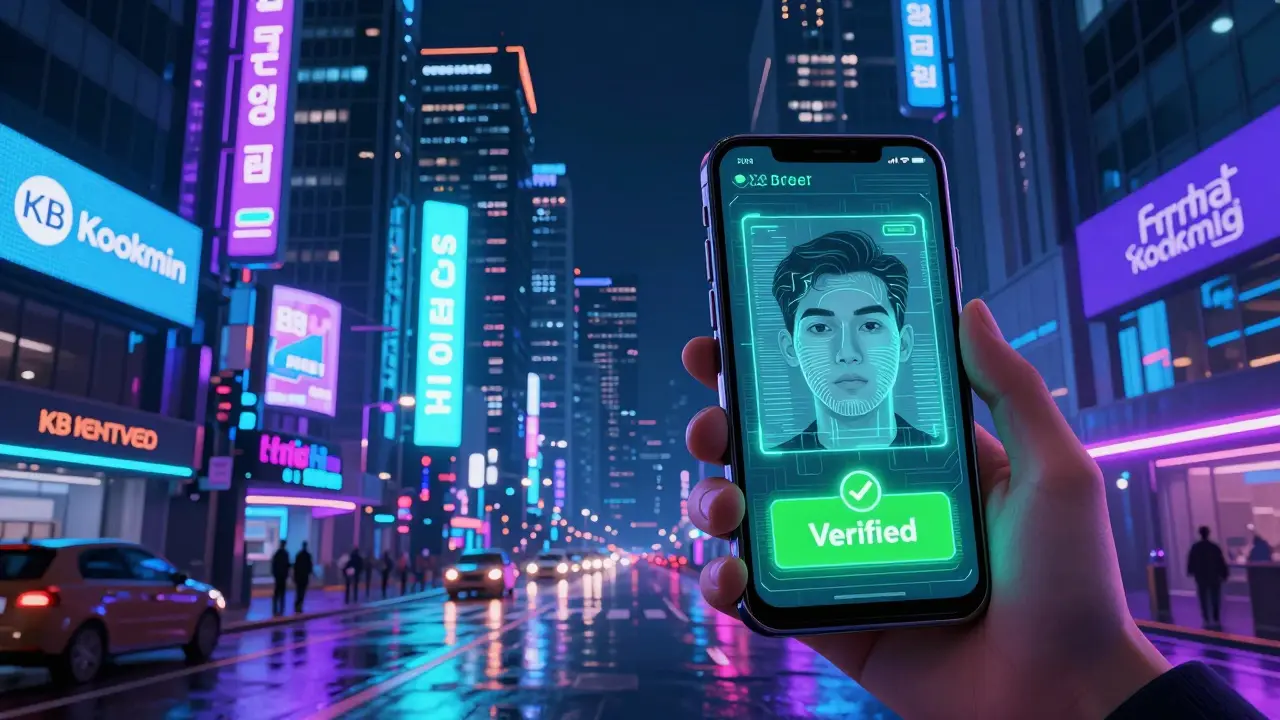
Imagine trying to buy a house without showing ID or linking your bank account. In most places, that’s impossible. But for years, the global cryptocurrency world operated exactly like that-anonymous, unlinked, and wild. South Korea decided this was too risky. Today, if you want to trade Bitcoin or Ethereum in Seoul, you are stepping into one of the most strictly regulated digital asset markets on Earth.
The rules here aren’t just suggestions; they are hard barriers designed to stop money laundering and protect retail investors. For many traders, these Korean crypto trading restrictions feel frustratingly heavy. You can’t use credit cards. You can’t trade anonymously. And you can only use a handful of approved platforms. Yet, despite-or perhaps because of-these tight controls, South Korea remains a global powerhouse in crypto adoption, with millions of active users and billions in daily volume.
If you are looking to navigate this market, understanding the 'why' and 'how' behind these rules is essential. This isn’t just about compliance; it’s about survival in a market where the government watches every transaction closely.
The Regulatory Backbone: Who Actually Controls the Market?
To understand the restrictions, you first need to know who is enforcing them. The primary body overseeing virtual assets in South Korea is the Financial Services Commission (FSC), which sets the policy direction. However, the day-to-day policing is handled by the Korea Financial Intelligence Unit (KoFIU). These two entities work together under the Special Financial Information Act, a law that came into full effect in March 2021.
This act changed everything. Before 2021, the landscape was murky. Now, any entity handling virtual assets must register as a Virtual Asset Service Provider (VASP). If you operate an exchange, a wallet service, or even a payment gateway for crypto, you fall under this umbrella. The KoFIU doesn’t just watch; it actively reports suspicious transactions to financial authorities. This means anonymity is effectively dead in the Korean crypto ecosystem.
The goal here is clear: integrate crypto into the traditional financial system’s safety nets. By forcing exchanges to report data to the KoFIU, the government ensures that illicit funds cannot easily move through digital channels. For the average trader, this translates to strict identity checks and transparent transaction histories. It’s not a free-for-all; it’s a monitored environment.
The Real-Name Verification System: No More Ghost Accounts
The most immediate restriction you will face is the real-name verification requirement. Implemented fully in January 2018, this rule mandates that your cryptocurrency account must be linked directly to a bank account under your exact name. This is known as the 'real-name bank account transfer system.'
Here is how it works in practice:
- Identity Proof: You must provide government-issued identification. This usually involves uploading photos of your ID card and undergoing facial recognition scans.
- Bank Linkage: Your crypto exchange account must connect to a domestic bank account. Major partners include KB Kookmin Bank, Shinhan Bank, and NH Nonghyup Bank.
- Name Matching: The name on your ID, your bank account, and your exchange profile must match perfectly. No exceptions.
This system eliminates anonymous trading entirely. You cannot deposit cash at an ATM and buy Bitcoin. You cannot use a friend’s bank account. Every movement of fiat currency (KRW) into crypto is tracked. While this protects against fraud, it also means the government has a clear audit trail of your holdings. For privacy-focused individuals, this is a significant hurdle. For security-conscious investors, it’s a relief knowing that bad actors have fewer tools to hide.
Licensed Exchanges Only: The Big Four Dominance
You might wonder if you can just use international platforms like Binance or Coinbase from your laptop in Seoul. Technically, you can access some sites, but funding them is nearly impossible due to banking blocks. Moreover, using unlicensed platforms carries legal and financial risks. The FSC requires all domestic exchanges to obtain specific licenses, creating a high barrier to entry.
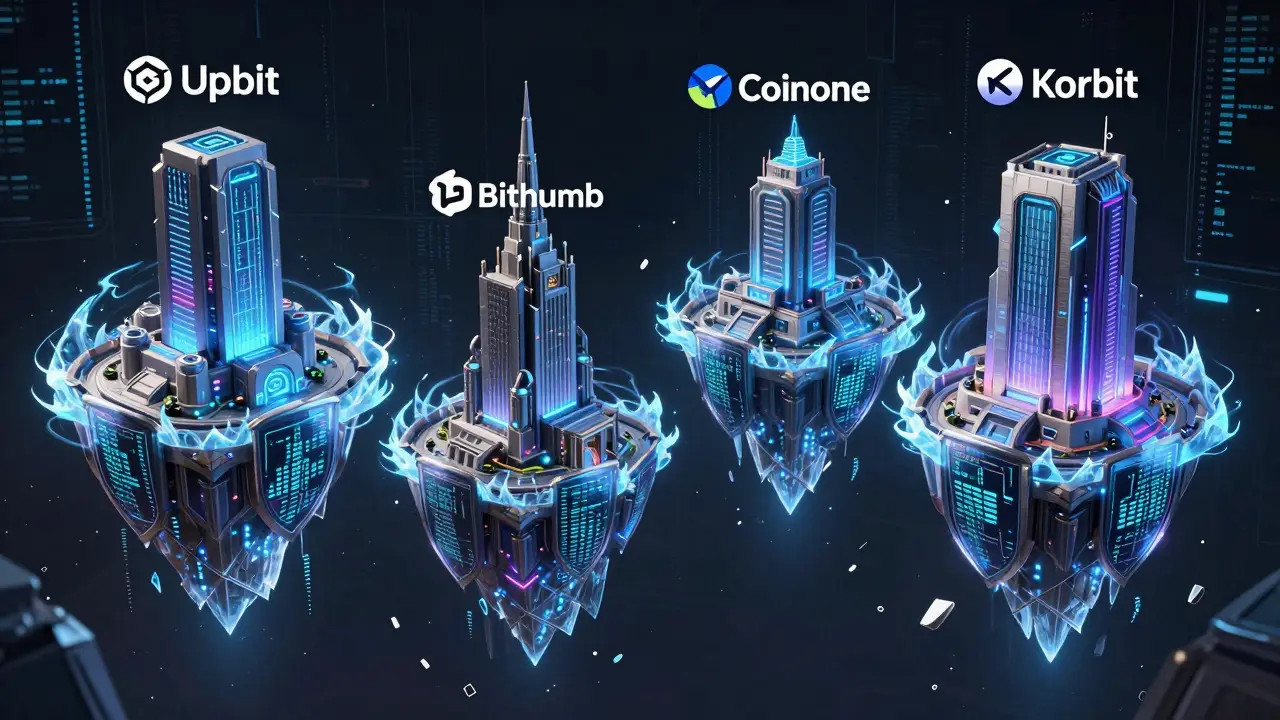
As of late 2024 and into 2026, only four major exchanges hold full regulatory approval and dominate the market:
| Exchange Name | Operator | Key Feature | Market Position |
|---|---|---|---|
| Upbit | Dunamu | Highest trading volume, wide altcoin selection | Market Leader (~50%+ share) |
| Bithumb | Bithumb Global | User-friendly interface, strong institutional ties | Top Tier Competitor |
| Coinone | Coinone Corp | Early adopter, stable platform | Established Player |
| Korbit | Korbit Inc. | Focus on security and community | Niche Provider |
These four platforms handle over 95% of domestic trading volume. Why so few? Because getting licensed is expensive and difficult. Exchanges must secure ISMS-P certification (Information Security Management System), partner with banks, and carry substantial cyber insurance. Since 2021, over 200 smaller, unlicensed exchanges have been forced to shut down. This consolidation means less competition, but arguably higher security. When you trade on Upbit or Bithumb, you are using platforms that have survived rigorous government scrutiny.
Security Standards: Cold Storage and Insurance
One of the reasons the Korean model is often cited as a 'gold standard' is its focus on custodial security. Unlike some jurisdictions where exchanges keep user funds in hot wallets (connected to the internet), Korean regulations impose strict storage requirements.
Licensed exchanges must keep at least 70% of customer cryptocurrency holdings in cold storage-offline wallets that are immune to online hacking attempts. Additionally, they are required to maintain cyber insurance coverage of at least 1 billion KRW (approximately $750,000 USD) per exchange. This insurance acts as a backstop in case of catastrophic breaches.
The results speak for themselves. Since the implementation of these strict frameworks, there have been no major security breaches reported among the four licensed platforms. Contrast this with the global average, where high-profile hacks resulted in billions of dollars in losses between 2023 and 2024. For Korean traders, the peace of mind comes at the cost of convenience-you don’t get instant withdrawals 24/7 in the same way you might on decentralized platforms, but your funds are significantly safer from theft.
Taxation Changes: The 2025 Shift
For years, cryptocurrency profits in South Korea were technically taxable, but enforcement was lax. That ended with new legislation passed in August 2024, extending the implementation timeline to January 2025. As we move through 2026, this tax regime is now fully active and critical to understand.
Here is the breakdown:
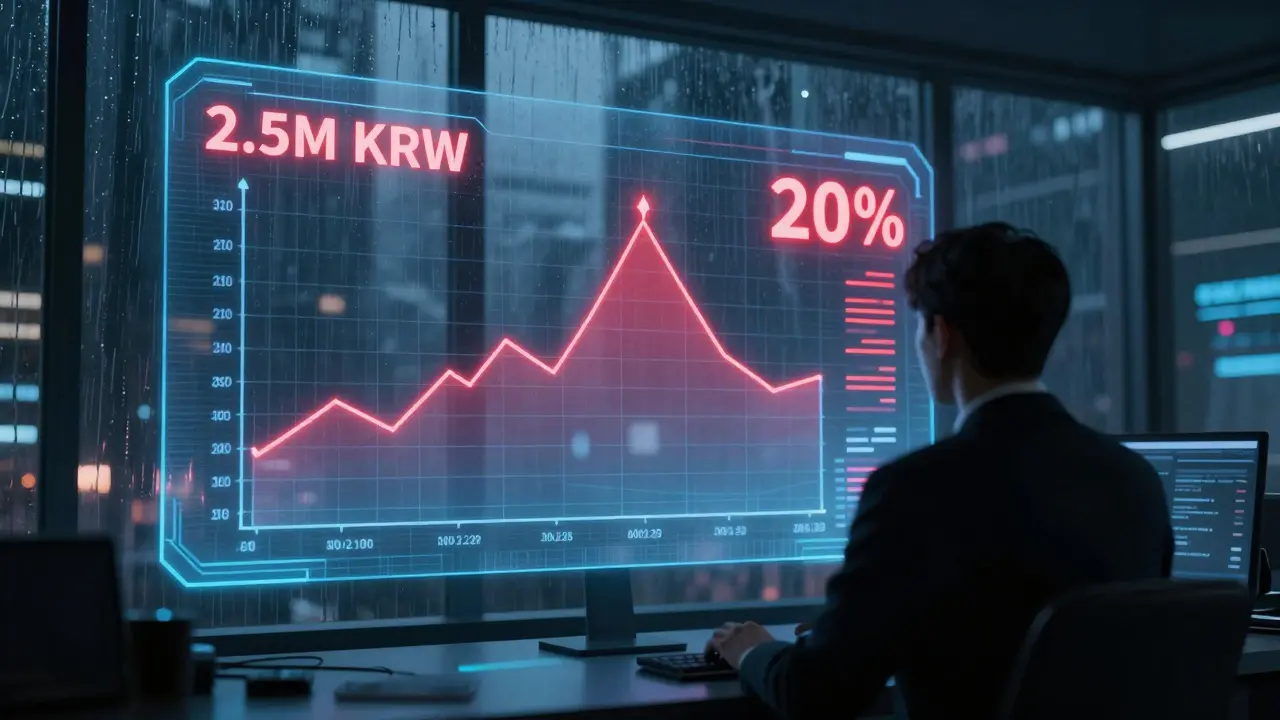
- Threshold: Capital gains tax applies only if your annual crypto profits exceed 2.5 million KRW (approx. $1,800 USD).
- Rate: Profits above this threshold are taxed at a flat rate of 20%.
- Reporting: Traders must report their gains during the annual tax season. Exchanges provide transaction history reports to assist with this.
This change has shifted behavior. Many casual traders who previously ignored tax implications are now keeping meticulous records. The low threshold means that even small-time speculators need to be aware of their liabilities. However, the exemption for small profits protects everyday investors from excessive bureaucratic burden. It strikes a balance: serious traders pay their share, while hobbyists remain largely untouched.
Limitations and Frustrations: What You Can't Do
No system is perfect. While the Korean framework offers security, it imposes notable limitations that frustrate advanced users.
Limited Altcoin Selection: International exchanges like Binance list hundreds, sometimes thousands, of cryptocurrencies. Korean exchanges typically list between 200 and 300 coins. Promising new projects often struggle to meet the listing criteria, meaning Korean traders miss out on early-stage opportunities. If a coin isn’t listed on Upbit or Bithumb, accessing it legally and easily is difficult.
Blocked DeFi Access: Decentralized Finance (DeFi) protocols, which allow peer-to-peer lending and borrowing without intermediaries, are largely inaccessible. Banks block transfers to known DeFi addresses, and IP blocking restricts access to certain dApps. This keeps the innovation happening in DeFi out of reach for most Korean retail investors.
No Credit Card Purchases: You cannot buy crypto with a credit card. All purchases must be made via bank transfer. This prevents debt-fueled speculation but adds friction to the buying process. You must wait for the bank transfer to clear before you can trade.
Future Outlook: Stablecoins and CBDCs
The regulatory landscape continues to evolve. In September 2024, the FSC announced updated rules for stablecoins like USDT and USDC. These tokens must now have full reserve backing and undergo monthly audits. This aims to prevent the kind of collapse seen with TerraUSD, ensuring that stablecoins used in Korea are safe stores of value.
Furthermore, the Bank of Korea is piloting a Central Bank Digital Currency (CBDC) starting in Q1 2025. While this won’t replace private cryptocurrencies, it signals the government’s intent to digitize the entire financial infrastructure. Experts predict that Korean standards will increasingly influence global compliance, particularly in Asia-Pacific markets.
For traders, the message is clear: adaptability is key. The days of wild west trading are over. Success in the Korean crypto market requires patience, compliance, and a willingness to work within a structured, secure, and transparent system.
Can I use Binance in South Korea?
While you may be able to access the website, using Binance is highly discouraged and practically difficult. Korean banks block transfers to unlicensed exchanges, and the platform does not comply with local KYC and AML laws. Using it exposes you to frozen funds and potential legal issues. Stick to licensed platforms like Upbit or Bithumb for safe trading.
How much tax do I pay on crypto profits in Korea?
Starting from the 2025 tax year, you pay a 20% capital gains tax on profits exceeding 2.5 million KRW annually. If your total profit is below this threshold, you pay no tax. You must report these gains during your annual income tax filing.
Why are there so few crypto exchanges in Korea?
The licensing process is stringent and expensive. Exchanges must obtain ISMS-P certification, partner with domestic banks, and carry significant cyber insurance. This high barrier to entry has eliminated over 200 smaller players since 2021, leaving only four major licensed operators.
Is my crypto safe on Korean exchanges?
Yes, generally very safe. Regulations require exchanges to store at least 70% of assets in cold storage and maintain cyber insurance of at least 1 billion KRW. There have been no major hacks on licensed Korean exchanges since the current framework began.
Can I buy crypto with a credit card in Korea?
No. To prevent debt-fueled speculation, Korean regulations prohibit purchasing cryptocurrency with credit cards. All transactions must be funded through real-name bank transfers.
Kwon Bill
June 13, 2026 AT 21:30As someone who has lived in Seoul for a decade, this article nails the reality on the ground. The 'Big Four' dominance isn't just regulatory; it's cultural trust. We don't trust random offshore entities with our life savings after the Coinrail and Bithumb hacks of the past. Upbit is basically infrastructure now.
Andrea Burd
June 13, 2026 AT 21:41its so boring how korea tries to control everything. people should be free to trade however they want without some government overlord watching every single transaction. typical asian bureaucracy ruining innovation.
Mekz Wheoki
June 14, 2026 AT 22:03You clearly have no idea what you are talking about. This isn't 'bureaucracy', it's financial hygiene. The US market crashed because of unregulated speculation. Korea built a fortress. You're jealous because your favorite scam coins can't get listed there.
Akeem Whittaker
June 15, 2026 AT 05:33Let’s look at the bigger picture here. While the restrictions feel heavy, the result is a stable ecosystem where retail investors aren't getting wiped out by exchange insolvencies daily. It’s a different philosophy than the wild west approach we see elsewhere. We should probably learn from their compliance frameworks rather than dismissing them outright.
Skm Shubham
June 16, 2026 AT 13:01The real issue is the lack of liquidity for altcoins. If you are a serious trader, you need depth. Upbit provides volume but only for BTC and ETH. Everything else is an order book ghost town compared to Binance. The regulations kill the long tail of crypto innovation.
Kumaran sowkarpet
June 16, 2026 AT 15:45I agree with the point about altcoins. In India, we also struggle with listing approvals. But honestly, safety is better than gambling on rug pulls. The 70% cold storage rule is a game changer for peace of mind. :)
Rob Aronson
June 17, 2026 AT 19:42From a risk management perspective, the ISMS-P certification requirement is non-negotiable for institutional adoption. Without that baseline security protocol, VASPs cannot integrate with traditional banking rails effectively. The cyber insurance mandate further mitigates counterparty risk for end-users. 🛡️📊
Danna Charris
June 19, 2026 AT 06:59It is quite sophisticated. Most retail traders do not understand the value of audit trails. They want anonymity until they get hacked, then they cry for regulation. Korea got ahead of the curve.
John Doe
June 20, 2026 AT 20:53I can’t even begin to process the emotional toll of having to link my bank account to my crypto wallet. It feels like a violation of privacy on a fundamental level. Imagine if every time you bought coffee, the government knew exactly what you bought and when. That is the slippery slope we are sliding down right now. It is terrifying to think about the data hoarding happening behind those secure walls.
Josh Dodson
June 21, 2026 AT 22:10hey dont worry too much about it man. its actually pretty easy once you set it up. just upload your id and you are good to go. the system works well enough and you get to sleep better at night knowing your funds are safe. its a win win really.
Fede Faith
June 23, 2026 AT 03:44The tax threshold of 2.5 million KRW is actually quite generous for small holders. It protects the average person from administrative nightmares while ensuring high-volume traders contribute. I’ve seen friends in other countries pay taxes on tiny gains due to poor legislation. This structure is smart policy design.
Suman Patil
June 24, 2026 AT 01:28Exactly! The synergy between the FSC and KoFIU creates a robust feedback loop for market integrity. When you combine strict KYC with real-time monitoring, you eliminate the bad actors who usually plague emerging markets. It’s a holistic approach to financial inclusion and security. Let’s embrace this model globally! 🚀
Mauricio Contreras Loredo
June 24, 2026 AT 22:59Sure, it's 'secure'. Just like your house is secure until the bank forecloses on it because you couldn't make a payment. These rules are designed to keep you poor and compliant, not rich and free. Laughable.
sreeja boora
June 25, 2026 AT 05:46The implementation of the Special Financial Information Act demonstrates a commitment to national economic stability. It is imperative that all citizens adhere to these protocols to prevent capital flight and illicit activities. Deviation from these standards undermines the collective financial health of the nation.
Manish Prajapat
June 26, 2026 AT 13:01We must consider the philosophical implication of state-controlled digital assets versus decentralized freedom. However, the practical reality is that trust is the most valuable currency. By forcing transparency, Korea has created a market where trust is algorithmically enforced. Perhaps this is the necessary evolution before true decentralization can be safely adopted by the masses. The balance between liberty and security is delicate.