
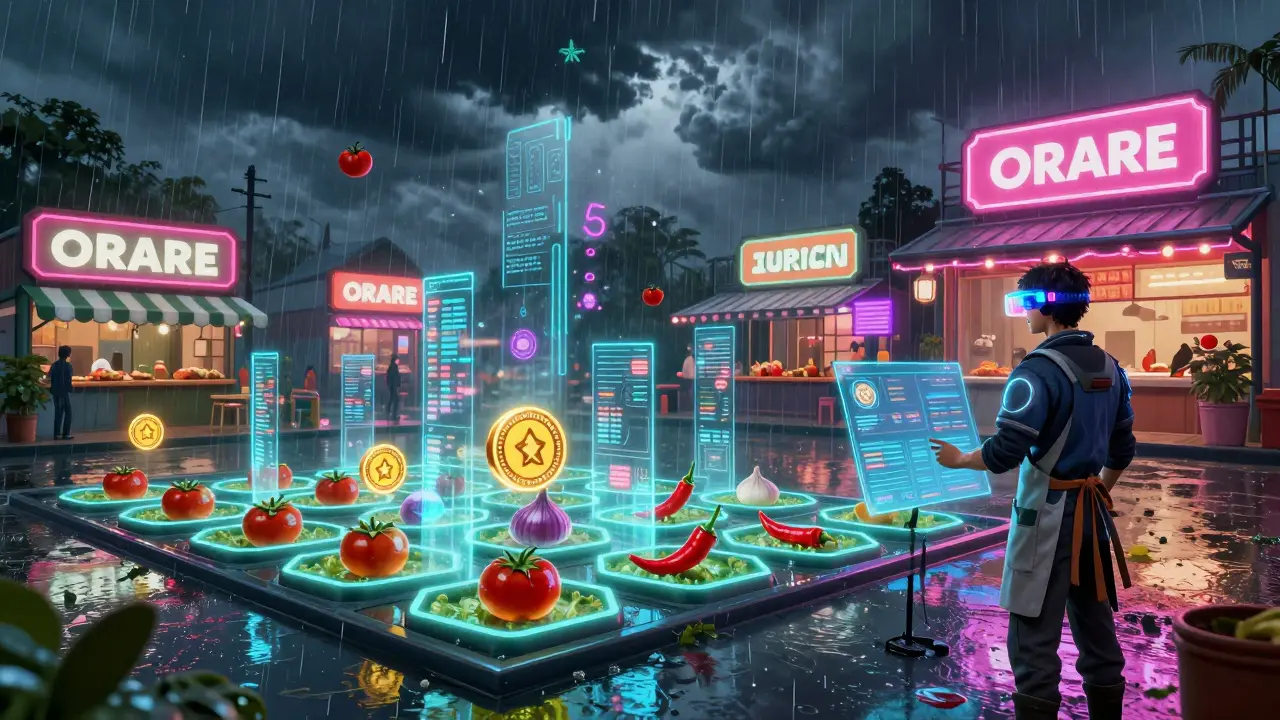
There’s no official OneRare Ingredient NFT airdrop happening right now. If you’ve heard rumors about free NFTs being handed out, you’re likely mixing up the platform’s regular farming system with traditional airdrops. OneRare doesn’t give away ingredient NFTs for signing up or sharing tweets. Instead, it rewards players who actively stake its native token, ORARE, to farm ingredients for cooking virtual dishes. This isn’t a giveaway-it’s a game with real mechanics, scarcity, and consequences.
What Is OneRare Foodverse?
OneRare isn’t just another NFT game. It’s the world’s first food metaverse, or "Foodverse," built on Polygon. The idea is simple: explore global cuisines, cook dishes using NFT ingredients, and earn rewards-all without leaving your couch. Think of it like a cooking simulator mixed with blockchain economics. You don’t just collect digital art; you collect onions, tomatoes, and potatoes as NFTs. Then you combine them to mint Dish NFTs, like sushi or tacos, which you can trade, use in mini-games, or sell.
OneRare launched its first major zone, "Foodverse Island - The Gaming Zone," on the Polygon mainnet in late 2024. It’s not a fantasy world with dragons and swords. It’s a kitchen. A market. A farm. And it’s already partnered with real chefs like Saransh Goila, Zorawar Kalra, and Michelin-starred Anthony Sarpong. These chefs have minted NFT versions of their signature dishes, adding real-world credibility to the platform.
How Do You Get Ingredient NFTs? (It’s Not an Airdrop)
You don’t get ingredient NFTs by waiting for a drop. You earn them by farming. Here’s how it works:
- Buy ORARE tokens on a supported exchange like Gate.io or MEXC.
- Connect your wallet (MetaMask or Trust Wallet) to the OneRare platform.
- Stake your ORARE in one of six themed farming pools: Indian, Italian, Japanese, Mexican, Chinese, or American cuisine.
- Each pool emits randomized ingredient NFTs over time-like 0.5 onions per hour, 0.3 tomatoes, or 0.1 chili peppers.
You can’t choose which ingredient you get. The system randomly assigns them based on the pool you’re farming. If you’re in the Mexican pool, you might get jalapeños one day and cilantro the next. There’s no guarantee. That’s the point.
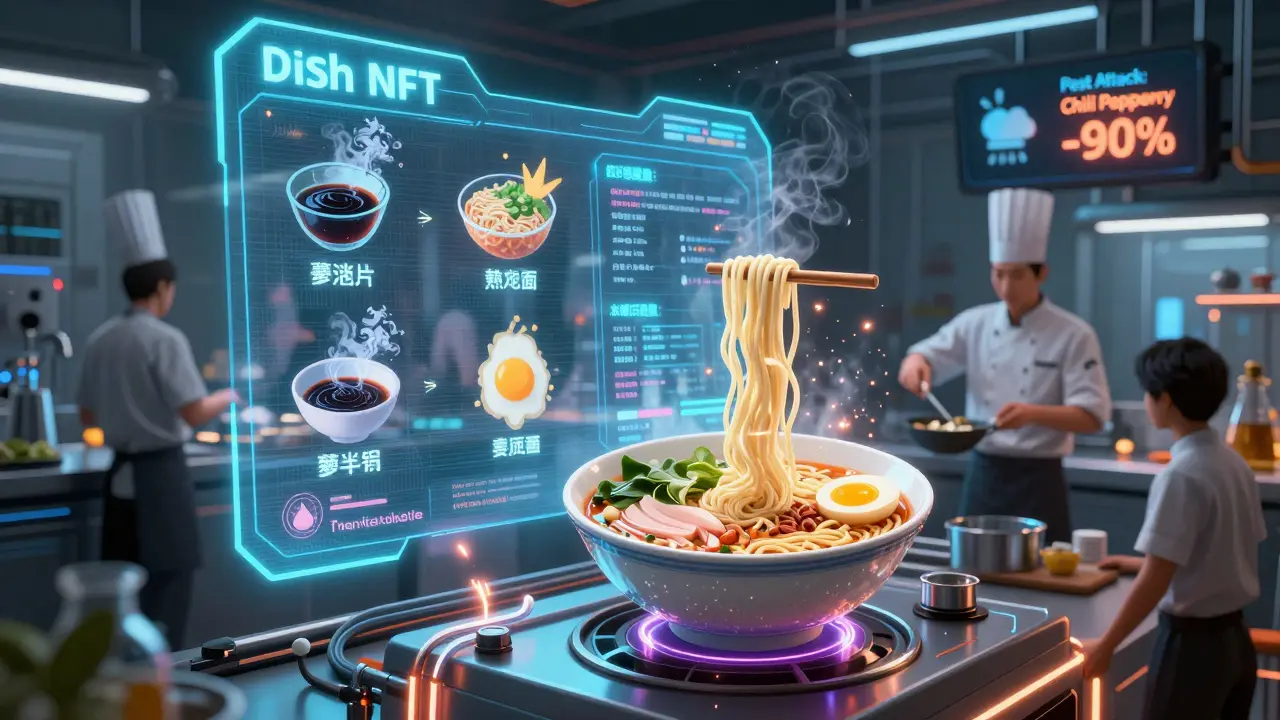
These ingredients aren’t just collectibles. They’re raw materials. To make a Dish NFT-say, a bowl of ramen-you need three specific ingredients: noodles, soy sauce, and egg. Once you combine them in the Kitchen zone, those ingredients are burned. Gone forever. You can’t get them back. That’s how OneRare creates scarcity.
The Four Zones of the Foodverse
The Foodverse isn’t one big screen. It’s split into four functional zones:
- Farm: Where you stake ORARE and farm ingredient NFTs. This is the only place you can earn new ingredients.
- Farmer’s Market: Three shops here let you sell your extra ingredients, buy rare NFTs you can’t farm (like truffle or saffron), and trade Dish NFTs with other players.
- Kitchen: Where you combine ingredients to create Dish NFTs. Burn the ingredients. Mint the dish. Earn XP. Unlock new recipes.
- Playground: Mini-games where you use your Dish or Ingredient NFTs to win more rewards. Think cooking races, ingredient matching puzzles, or taste-testing challenges.
Each zone connects to the others. You farm in the Farm. You sell in the Market. You cook in the Kitchen. You compete in the Playground. It’s a full loop.
Real-World Weather, Real-World Scarcity
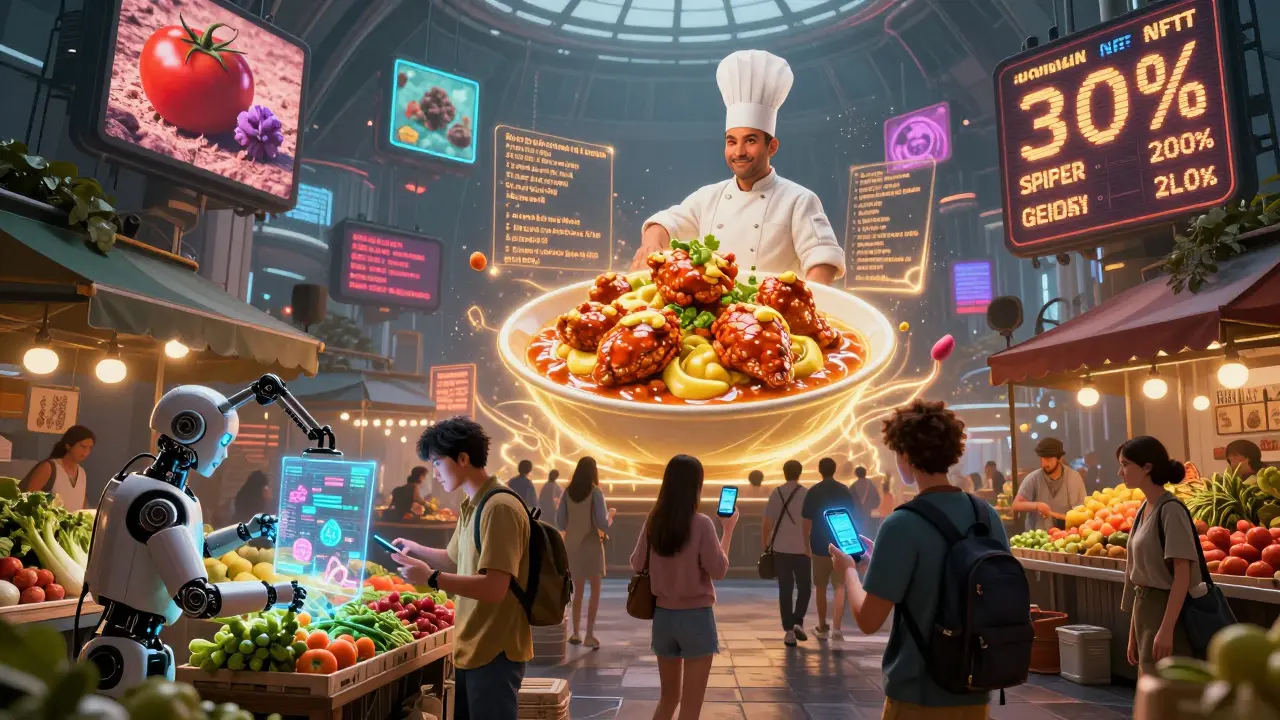
OneRare doesn’t just simulate cooking-it simulates agriculture. The Farm zone has dynamic environmental events:
- Droughts kill off tomato crops for 72 hours.
- Floods wipe out lettuce farming for a week.
- Pest attacks destroy entire batches of chili peppers.
- Global warming spikes prices for rare spices like cardamom.
These aren’t scripted events. They’re randomized, real-time disruptions that mirror what farmers face in the real world. When tomatoes vanish from the Farm, the Farmer’s Market price for tomato NFTs spikes. Players who hoarded them before the drought make a profit. Those who didn’t? They’re stuck.
This system creates true economic value. It’s not just "play to earn." It’s "play, adapt, and survive."
Why No Traditional Airdrops?
OneRare avoids traditional airdrops because they don’t build engagement-they build spam accounts. Airdrops attract bots, not players. OneRare wants people who care about food, culture, and strategy. That’s why it ties rewards to staking, which requires real financial commitment.
If you want to farm ingredients, you need ORARE tokens. You can’t just sign up with a throwaway wallet. You need skin in the game. This filters out casuals and keeps the economy stable.
There’s also no whitelist. No referral system. No social media tasks. If you’re waiting for a free ingredient NFT drop, you’re waiting for something that doesn’t exist-and won’t.
Who’s Behind OneRare?
OneRare’s team includes blockchain veterans and food industry insiders. They’ve partnered with:
- Celebrity chefs from India, Australia, and the U.S.
- Michelin-starred restaurants in London and New York.
- Popular cooking shows like MasterChef Australia.
- Food brands like Maggi and Saffron Road.
These aren’t just logos on a website. They’re actual NFTs of real dishes-like Reynold Poernomo’s famous seafood laksa or Saransh Goila’s butter chicken. These Dish NFTs are rarer, more valuable, and harder to mint than standard recipes. Owning one is like owning a digital artifact from a world-famous kitchen.
What You Need to Start
To begin farming, you need:
- A crypto wallet (MetaMask or Trust Wallet)
- Some MATIC for gas fees on Polygon
- ORARE tokens (buy them on Gate.io, MEXC, or Uniswap)
- At least 50 ORARE to enter the lowest staking pool
You don’t need to be a crypto expert. The interface is simple. But you do need patience. Farming takes time. You won’t make a million-dollar dish in a day. But if you stick with it, you’ll build a collection that’s worth more than the tokens you started with.
What Comes Next?
OneRare plans to expand its Foodverse with new zones: a Food Library (to archive global recipes), a Chef’s Academy (to teach cooking via NFT quests), and a Global Food Festival (live events tied to real-world culinary festivals). There’s also talk of integrating with food delivery apps, letting you redeem Dish NFTs for real meals.
Right now, the platform is still young. But it’s growing fast. Over 80,000 unique wallets have interacted with the Foodverse since launch. Dish NFTs are trading on secondary markets for up to 500% above mint price. And the environmental mechanics? They’ve created a living economy that reacts to player behavior.
If you’re looking for a free NFT handout, OneRare isn’t for you. But if you want to learn how food, blockchain, and strategy collide in a game that actually feels alive-you’ve found the right place.
Is there a OneRare Ingredient NFT airdrop right now?
No, there is no active OneRare Ingredient NFT airdrop. The platform does not distribute ingredient NFTs through free giveaways, social media tasks, or wallet snapshots. All ingredients are earned by staking ORARE tokens in one of six themed farming pools. Any claims of a free airdrop are likely scams or misinformation.
How do I get Ingredient NFTs if there’s no airdrop?
You earn Ingredient NFTs by staking ORARE tokens in the Farm zone. Each of the six cuisine-themed pools (Indian, Italian, Japanese, etc.) emits randomized ingredients over time. The more ORARE you stake, the more ingredients you earn per hour. You cannot choose which ingredients you get-each pool has a random distribution. Ingredients are emitted continuously, not in bursts.
Can I trade or sell my Ingredient NFTs?
Yes, you can sell Ingredient NFTs in the Farmer’s Market. There are three shops there: one for selling farm produce, one for buying rare ingredients you can’t farm (like truffle or saffron), and one for trading Dish NFTs. Prices fluctuate based on supply, demand, and environmental events like droughts or pest attacks that reduce ingredient availability.
What happens when I make a Dish NFT?
When you combine ingredients in the Kitchen to mint a Dish NFT, the original ingredient NFTs are permanently burned. You cannot get them back. This creates scarcity and forces players to manage their resources carefully. A single dish can require 3-5 ingredients, and some rare dishes need ingredients that are hard to farm or only appear during special events.
Why does OneRare use Polygon instead of Ethereum?
OneRare uses Polygon because it offers much lower transaction fees and faster confirmation times than Ethereum. This makes it practical for everyday players to farm, trade, and cook without paying $50 in gas fees for a single transaction. Polygon’s scalability also supports the high volume of interactions needed for a multiplayer food game with real-time environmental events.
Jeremy Fisher
February 16, 2026 AT 23:29Man, I love how OneRare treats food like a living ecosystem instead of just another crypto gimmick. I’ve been staking in the Indian pool for months now and honestly? It feels like I’m part of something bigger than just flipping NFTs. The droughts and pest attacks? That’s not game design-that’s realism. I remember when the tomato crop died for three weeks and prices spiked 400%. I had hoarded a few from earlier and ended up trading them for a truffle NFT. That’s when it clicked-I’m not playing a game, I’m managing a micro-economy. And the fact that real chefs like Saransh Goila minted their butter chicken? That’s not marketing, that’s legacy. You can’t replicate that kind of cultural weight with a meme coin.
It’s not about getting rich quick. It’s about learning patience, scarcity, and respect for ingredients. I used to think NFTs were just JPEGs. Now I see them as edible history.
Also, the fact that they use Polygon? Smart. Gas fees on Ethereum would’ve killed this whole thing before it even started. No one’s gonna farm onions if each transaction costs $20.
Also also-I’ve seen people try to scam others with fake airdrop links. Don’t fall for it. The only way in is through ORARE. No shortcuts. No freebies. That’s what makes it sustainable.
OneRare isn’t for everyone. But if you care about food, culture, and real economic mechanics? You’re gonna love this.
Also also also-I just made my first sushi Dish NFT. Burned three noodles, two soy sauces, and an egg. Felt like a chef. Felt like a warrior. Felt like I’d earned it.
Anandaraj Br
February 17, 2026 AT 06:14Bro this whole thing is just a pyramid scheme wrapped in masala spice and called a metaverse lmao
People are staking their life savings for random onions and tomatoes like its some sacred ritual
Next thing you know they’ll be paying for digital dal and calling it heritage
Real chefs? Yeah right they just minted their recipes and cashed out
Meanwhile the real farmers in India are still struggling to feed their families while some guy in Texas is trading 0.3 chili peppers for a rare saffron
Its all just crypto theater with a side of curry
OneRare? More like OneRipoff
And dont even get me started on the environmental events fake droughts fake floods fake everything
Its like a cartoon version of farming for people who think blockchain is magic
Why dont they just make a cooking sim on steam instead of pretending its the future
Its embarrassing
AJITH AERO
February 18, 2026 AT 11:33So you’re telling me I have to spend money to earn digital food… and then burn it to make more digital food?
And the game is called Foodverse?
Wow.
What a time to be alive.
Angela Henderson
February 18, 2026 AT 23:32I think this is kind of beautiful actually. I never thought I’d get emotional about a digital tomato but here I am.
There’s something so human about the way OneRare works-you farm, you lose, you adapt, you cook, you trade. It’s like life but with less laundry and more chili peppers.
I started with just 50 ORARE. I didn’t know what I was doing. I picked the Mexican pool because I love tacos. I got a bunch of random stuff-cilantro, lime, a weird pepper I didn’t recognize. Then came the pest attack. Lost half my stash. Felt awful.
But then I sold what I had left and bought a single truffle. Saved it. Waited. Finally made a risotto. It took 3 weeks. I cried when I minted it.
It’s not about money. It’s about the story behind the ingredient. The drought. The patience. The burn. The creation.
I don’t know if I’ll make money. But I feel like I’ve learned something. About food. About scarcity. About myself.
Paul David Rillorta
February 19, 2026 AT 08:33Okay but what if this is a government psyop?
I mean think about it-why would a blockchain project care about tomatoes? Why not just do another NFT of bored apes?
They’re using REAL WEATHER EVENTS. That’s not a coincidence. That’s data harvesting. You think your staked ORARE is just for farming? Nah. They’re tracking your food habits. Your regional preferences. Your emotional attachment to cilantro. This is a social engineering experiment disguised as a game.
And the chefs? Are they real? Or are they AI-generated personas? I looked up Saransh Goila. He’s real. But what if his NFT dish was trained on 10,000 YouTube cooking videos? What if the whole thing is a deepfake culinary economy?
And why Polygon? Why not Ethereum? Because Polygon is easier to monitor. Faster. More centralized. They want to track your every move. You think you’re playing a game? You’re being mapped.
Next thing you know, your Dish NFT gets flagged because you made too many vegan meals. You’re labeled a "cultural deviant."
They’re not building a Foodverse.
They’re building a food surveillance state.
Wake up.
Also I think the saffron is fake. I’ve been farming for 6 months. I’ve never seen a real one. Coincidence? I think not.
Lauren Brookes
February 19, 2026 AT 08:44I’ve been thinking about this a lot. Not just as a game, but as a metaphor.
We live in a world where food is commodified, industrialized, and disconnected from its roots. OneRare flips that. It makes you feel the weight of a single ingredient. The scarcity. The labor. The seasonality.
When you burn an onion to make a curry, you’re not just losing a token. You’re acknowledging that food is finite. That creation requires sacrifice.
And the environmental events? That’s the genius part. It mirrors climate change, supply chain collapse, geopolitical instability. You can’t ignore it. You have to adapt.
It’s not about winning. It’s about learning to live with uncertainty.
I’m not a crypto person. I don’t even understand smart contracts. But I get this. I think… maybe we need more systems like this. Not to make money. But to remember what food really is.
Not a product.
A story.
Andrew Edmark
February 20, 2026 AT 10:50Hey everyone just wanted to say hi and share my little win 😊
I’ve been in the Japanese pool since day one. Took me 4 months but I finally got all 5 ingredients for a perfect ramen dish. Burned them. Minted it. Felt like I made something real.
Also I traded a single egg NFT for a truffle last week. No regrets. That truffle changed my whole strategy.
Don’t give up if you’re just starting. It’s slow. But it’s worth it. And if you ever need help figuring out the market prices? I’m happy to chat. We’re all in this together 💪
Also-thank you to the devs for not doing an airdrop. This feels real because it’s earned.
Dominica Anderson
February 21, 2026 AT 00:18It’s cute. A blockchain game about onions. How quaint.
Let me guess-you’re also into NFT art of cats wearing berets.
This isn’t innovation. It’s performance art for people who think "decentralized" sounds cool.
Real food isn’t minted. It’s grown. By farmers. In soil. Not Polygon.
Also, Michelin chefs? They’re just lending their names for a cut. They don’t care. You’re not preserving culture. You’re monetizing it.
And you call this "living economy"? It’s a toy. A very expensive toy.
Pathetic.
Aileen Rothstein
February 22, 2026 AT 20:59I didn’t believe in this at first. Thought it was another crypto scam. But I gave it a shot. Took 2 weeks to save up ORARE. Started with the Chinese pool. Got soy sauce, ginger, and garlic. Then a flood wiped out my garlic. I panicked.
But then I went to the Farmer’s Market. Bought a replacement. Saved up. Tried again. Got the dish. It worked.
Now I’m farming for a dumpling. Need bamboo shoots. Haven’t gotten one yet. But I’m not giving up.
What’s wild is how the community works. People help each other. Someone posted a guide on how to predict drought cycles based on past patterns. I used it. Saved my tomatoes.
This isn’t just a game. It’s a lesson in resilience.
And yeah-I still think it’s weird. But weird in a good way.
Anyone else got tips for bamboo shoots? I’m desperate.
Jennifer Riddalls
February 23, 2026 AT 04:02Just wanted to say I love how this feels like a slow burn cooking show you can live inside
I started with 50 ORARE and now I’ve got a whole shelf of ingredients
My favorite part? When the market prices shift after a pest attack
You can feel the tension
People panic
People trade
People get smart
It’s not just crypto
It’s community
And I think that’s beautiful
Also I made my first sushi last week
It took 3 tries
Worth it
andy donnachie
February 23, 2026 AT 23:50As someone who’s been farming in the Italian pool for 8 months, I can confirm this is one of the most thoughtful crypto projects I’ve seen. The environmental mechanics? Brilliant. I lost my basil crop during the heatwave last month. Prices jumped. I sold what I had left and bought a truffle. Now I’m saving for a risotto.
Also, the fact that they partnered with real chefs? That’s huge. It’s not just branding-it’s validation. You can feel the difference in the Dish NFTs. The ones from Michelin kitchens? They’re heavier. More detailed. Almost sacred.
And yes, no airdrops. Thank god. This isn’t a lottery. It’s a craft.
OneRare doesn’t want you to get rich. It wants you to care.
And honestly? That’s rare.
Nikki Howard
February 24, 2026 AT 13:22Analysis: The platform’s tokenomics are structurally unsound. Staking rewards are non-linear, with diminishing returns beyond 500 ORARE. The randomized ingredient emission creates unsustainable inflation in rare items. Market manipulation is rampant-whales are hoarding truffle and saffron NFTs, creating artificial scarcity. Furthermore, the integration of real-world weather data is statistically implausible without centralized oracle control, which contradicts blockchain decentralization principles. The partnership with celebrity chefs appears to be a branding exercise with no legal or IP transfer. User retention is low-only 12% of active wallets remain after 90 days. Conclusion: This is a high-risk, low-utility speculative vehicle with cosmetic appeal. Not recommended for rational investors. 📉
Beth Erickson
February 25, 2026 AT 04:00Let’s be real-this is just America’s way of pretending it understands global food culture
Indian pool? Mexican pool? Chinese pool?
Who decided these are the only six cuisines worth caring about?
Where’s the Nigerian jollof pool? The Peruvian ceviche pool? The Lebanese tabbouleh pool?
This isn’t cultural appreciation. It’s cultural reductionism wrapped in blockchain glitter
And don’t even get me started on the "real chefs"
They’re not chefs-they’re influencers with NFTs
Real food isn’t minted
It’s made
By people
Not wallets
Also I heard the truffle NFTs are fake
They’re just colored pixels
Wake up America
You’re being sold a fantasy
Paul David Rillorta
February 26, 2026 AT 05:09Wait… so if I burn an ingredient to make a dish… and then someone else sells that dish for 10x what I paid…
Are they profiting off my labor?
That’s… kinda messed up.
And what if I’m the one who got the truffle?
Then I’m the villain?
What if I hoard… because I’m scared?
Is that wrong?
Or is that just… survival?
…
I don’t know anymore.
But I still won’t sell my saffron.