
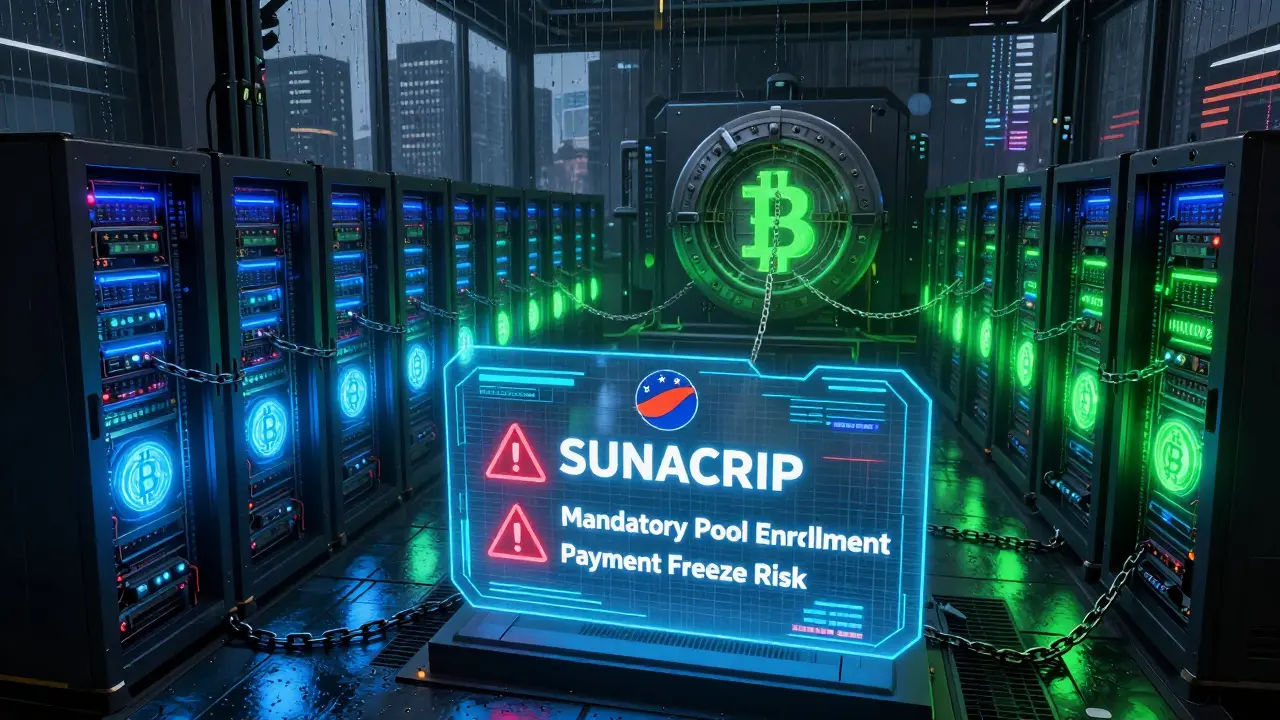
Imagine setting up a powerful Bitcoin mining rig, only to find out that the government demands you send every satoshi earned directly into their pool. That is not a dystopian fiction; it is the reality of Venezuela state-licensed crypto mining. If you are looking to mine cryptocurrency in Venezuela, you are not just entering a market-you are stepping into one of the most centralized and heavily controlled regulatory frameworks on Earth.
The landscape here is volatile. Regulations shift with political winds, agencies get suspended due to corruption scandals, and enforcement can be arbitrary. For any serious operator, understanding the exact requirements laid down by the National Superintendency of Crypto Assets and Related Activities (SUNACRIP) is not optional-it is survival. This guide breaks down what you need to know to operate legally, the heavy costs involved, and why many experts advise extreme caution.
The Regulatory Authority: Who Is Watching?
To navigate these waters, you first need to know who holds the paddle. The primary regulator is SUNACRIP, which stands for the National Superintendency of Crypto Assets and Related Activities. Established originally in 2018, this agency replaced its predecessor, SUPCACVEN, via a presidential decree in 2019. Its mandate covers everything from mining operations to exchanges and general crypto activities under the Constituent Decree on the Integral System of Cryptoassets (SIC).
However, trust in this institution has been shaky. In March 2023, SUNACRIP’s operations were suspended amid corruption probes involving the country’s oil industry and high-ranking officials in the crypto ministry. Reports indicated misappropriation of over $3 million, raising serious questions about the integrity of the oversight body. By March 2024, the agency was undergoing reorganization, with the introduction of CAVEMCRIP to give the private sector a nominal role in regulation. While the framework exists on paper, the operational stability remains a major concern for investors.
Licensing Requirements: Getting the Green Light
You cannot simply plug in a miner and start hashing. Every entity engaging in cryptocurrency mining must obtain an official license and be listed on a specific government register maintained by SUNACRIP. Here is what the process entails:
- Business Registration: You must establish a formal business entity registered with Venezuelan commercial authorities before even applying for a crypto license.
- Detailed Application: Your application requires comprehensive business plans, technical specifications of your mining equipment, and financial projections. Expect this initial process to take between 3 to 6 months.
- Equipment Import Supervision: If you are importing mining hardware, you need special licenses. Imports are supervised directly by Venezuelan authorities, leading to reports of bureaucratic delays and arbitrary fee increases.
- Data Center Licensing: Manufacturers of mining equipment and operators of mining data centers face separate, specialized licensing requirements.
Once licensed, you must enroll in the Integral Miners Registry (RIM), a mandatory database where all legal miners are recorded. Failure to appear on this list means you are operating illegally, exposing you to severe penalties.
The National Digital Mining Pool: No Independence Allowed
This is the most critical-and controversial-aspect of Venezuela’s regime. Unlike in most countries where miners choose their own pools or solo-mine, Venezuela mandates that all licensed miners join the National Digital Mining Pool, a government-controlled system that centralizes all mining rewards distribution.
Here is how it works in practice:
- Mandatory Enrollment: Legal operation is conditional on joining this pool. Mining outside of it is strictly prohibited.
- Centralized Control: The government monitors all mining rewards, tracks individual contributions, and controls the payout mechanism.
- Payment Risks: Authorities maintain the power to freeze or delay miners’ payments at any moment. Community feedback from Reddit and local forums highlights significant delays, with some miners reporting payment freezes lasting several months without explanation.
- Tax Collection: This structure allows the state to implement direct taxation on crypto mining income seamlessly, as they control the flow of funds.
Cryptocurrency professionals widely criticize this model. It contradicts the core principles of decentralization and financial sovereignty. Essentially, you are doing the work, but the state holds the purse strings. If the government decides to withhold payouts, your recourse is limited within a system where the regulator also acts as the counterparty.
Taxation and Financial Obligations
Profitability in Venezuela is heavily impacted by a complex tax regime enforced by the SENIAT, the National Integrated Service of Customs and Tax Administration. Currently, there is no specific crypto tax law, so SENIAT applies the existing Income Tax Law, treating cryptocurrency as assets rather than currency.
Key taxes include:
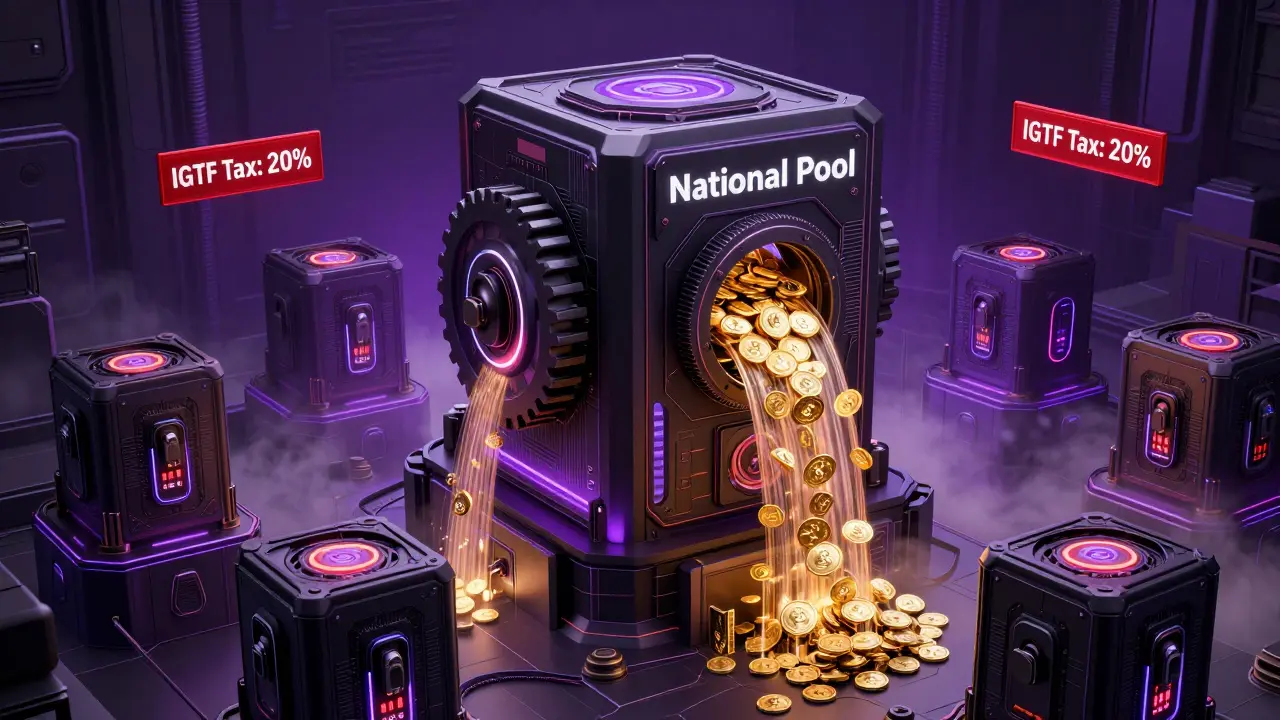
- Large Financial Transactions Tax (IGTF): Charges up to 20% on crypto transactions not conducted in bolivars or the state-issued Petro cryptocurrency. This significantly erodes margins if you are converting earnings.
- Income Tax (ISLR): Levied on profits from selling cryptocurrency or earnings from mining activities. Since the government controls the pool, they have visibility into your gross earnings.
- Value-Added Tax (VAT): May apply to exchange fees at 16%, though it does not typically apply directly to crypto trades themselves.
Looking ahead, SENIAT is expected to intensify crackdowns using exchange KYC data and blockchain tracking to identify unreported activities. With the Central Bank of Venezuela (BCV) occasionally intervening in monetary policy, the financial landscape remains unpredictable.
Compliance Burdens: Record Keeping and AML
Beyond taxes, the administrative burden is substantial. Licensed miners must maintain complete mining-related records for a mandatory 10-year period. This includes detailed logs of mining activities, equipment usage, and financial transactions.
For small-scale operations, this requirement is often described as excessively burdensome. You need sophisticated accounting systems capable of tracking every hash rate fluctuation and transaction. Additionally, compliance with Anti-Money Laundering (AML) and Know Your Customer (KYC) obligations is required. However, public documentation on enforcement procedures is sparse, leaving operators to guess at best practices.
Risks and Realities: Why Caution Is Warranted
While the legal framework offers a path to operate openly, the risks are multifaceted:
| Risk Category | Description | Impact Level |
|---|---|---|
| Regulatory Volatility | Frequent changes in laws, suspension of regulators (e.g., 2023), and bans (e.g., 2024). | High |
| Payment Freezes | Government can delay or withhold payouts from the National Pool. | High |
| Infrastructure | Electricity shortages and grid instability despite low theoretical costs. | Medium-High |
| Reputational | ICC investigations and US sanctions on officials create international banking hurdles. | High |
| Bureaucracy | Long licensing times (3-6 months) and arbitrary import fees. | Medium |
International observers point to the government’s control over mining rewards as a mechanism for potential exploitation. The International Criminal Court’s investigation into Venezuelan security forces, combined with US bounties on President Maduro and other officials, adds a layer of reputational risk that can complicate international partnerships or exit strategies.
Future Outlook: Uncertainty Prevails
As of mid-2026, the future of Venezuela’s crypto mining regulations remains highly uncertain. The March 2024 reorganization of SUNACRIP was an attempt to restore credibility, but operational effectiveness is yet to be proven. Industry analysts predict that meaningful stability will require broader political changes.
The integration of private sector input through CAVEMCRIP may lead to more practical approaches, but the extent of this influence is unclear. Until then, the environment is defined by high risk and limited active enforcement. For international companies, the current conditions suggest that the potential rewards rarely outweigh the operational and legal dangers.
Is crypto mining legal in Venezuela?
Yes, but only under strict state supervision. You must obtain a license from SUNACRIP, register in the Integral Miners Registry (RIM), and join the mandatory National Digital Mining Pool. Unlicensed mining is illegal and subject to equipment confiscation.
What is the National Digital Mining Pool?
It is a government-controlled system where all licensed miners must connect. The state manages the distribution of mining rewards and collects taxes directly. Miners do not receive payouts independently; the government controls the flow of funds and can freeze payments.
How long do I need to keep mining records?
Licensed miners are required to maintain complete records of their mining activities, equipment, and financial transactions for a mandatory period of 10 years. This is enforced by SUNACRIP.
What taxes apply to crypto mining in Venezuela?
Miners face the Large Financial Transactions Tax (IGTF) of up to 20% on non-bolivar/Petro transactions, Income Tax (ISLR) on profits, and potentially VAT on exchange fees. SENIAT enforces these taxes, treating crypto as an asset.
Can I import mining equipment freely?
No. Importing mining hardware requires special licenses and is supervised by Venezuelan authorities. Operators report significant bureaucratic delays and arbitrary fee increases during this process.
Has SUNACRIP been reliable?
Reliability has been questionable. The agency was suspended in March 2023 due to corruption probes involving millions of dollars. Although it underwent reorganization in 2024, trust in its operational integrity remains low among international observers.
Terry Hyland
June 15, 2026 AT 16:24its basically slavery with a fancy name. they take your work and give you nothing back. this is why i say the whole crypto thing is just a scam for rich people to steal from the poor. its evil.
Monica Pathammavong
June 17, 2026 AT 06:13actually u need to understand that sunacrip was suspended in march 2023 not before so ur timeline is wrong also the igtf is 20 percent which is huge but seniat applies it differently depending on if u use bolivar or petro which most people dont because its worthless lol
Tim Lefebvre
June 17, 2026 AT 08:34hey guys just wanted to add that if u do try this make sure u have a lawyer who knows the local laws because the bureaucracy is insane like seriously 3 to 6 months for just the initial application is crazy long and then u gotta deal with import licenses for hardware which always get delayed by officials asking for extra fees that arent written down anywhere so keep cash handy and good luck
Manish Prajapat
June 18, 2026 AT 14:10The philosophical implication of state-controlled mining pools challenges the very essence of decentralized autonomy. When the entity regulating the market also controls the distribution of value, the concept of free enterprise becomes merely theoretical. It creates a dependency loop where survival is contingent upon political favor rather than economic merit.
John Doe
June 18, 2026 AT 17:37I can only imagine the sheer stress of investing life savings into hardware only to have the government freeze your account for months without explanation. It feels incredibly predatory to force miners into a pool where they have zero recourse. The human cost of this regulatory instability must be devastating for families trying to survive.
Eric Scheinberg
June 20, 2026 AT 06:20It is imperative to recognize that the legal framework described herein represents a significant deviation from standard international financial practices. Operators must conduct thorough due diligence regarding the stability of SUNACRIP and the potential for arbitrary enforcement actions by SENIAT before committing capital to such ventures.
pankaj chawla
June 22, 2026 AT 01:05We should look at this as a case study in failed governance models. The assertion that private sector input through CAVEMCRIP will solve systemic corruption is naive. Assertive action is needed to expose these mechanisms rather than participating in them. The risks outlined in the table are not just high; they are existential for any business model.
Jessica Lane
June 23, 2026 AT 14:30One must consider the broader implications for global supply chains when key players operate under such restrictive regimes. How does one maintain ethical standards when forced to participate in a system designed to extract wealth? It raises profound questions about corporate responsibility and the moral obligations of international investors.
Charles Pawlikowski
June 23, 2026 AT 22:04typical third world country behavior stealing from their own people while the west looks away. we should never let these people near our borders or our money systems. its disgusting how they think they can just take everything. shame on everyone involved 😡🇺🇸
Andrea Burd
June 25, 2026 AT 07:48i mean if u cant handle the heat stay out of the kitchen right? seems like a lot of whining from people who didnt read the fine print. maybe they should have done better research before jumping in. typical amateur hour.
Akeem Whittaker
June 25, 2026 AT 17:58Let us examine the structural flaws here. The mandatory enrollment in the National Digital Mining Pool effectively nullifies the competitive advantage of efficient hardware. If payouts are controlled by the state, efficiency matters less than political alignment. This is not a market; it is a extraction mechanism disguised as regulation.
Mekz Wheoki
June 27, 2026 AT 01:31Ah yes, another brilliant move by the Venezuelan government to innovate. Who needs decentralization when you can have centralized theft? I suppose the 'National Digital Mining Pool' is just a fancy term for 'government piggy bank.' Truly inspiring leadership we see here.
Skm Shubham
June 28, 2026 AT 09:03The data presented clearly indicates a high-risk environment unsuitable for prudent investment. The suspension of SUNACRIP in 2023 and subsequent reorganization highlights the fragility of the institutional framework. Any operator entering this space does so with eyes wide open to the potential for total loss of capital due to regulatory capture.
Rob Aronson
June 28, 2026 AT 18:40From a compliance perspective, the requirement to maintain records for 10 years is standard AML practice globally, but the lack of clear enforcement guidelines creates ambiguity. The IGTF tax structure is particularly complex given the dual currency reality. Operators need robust blockchain analytics tools to track flows accurately 📊⛓️
Kwon Bill
June 30, 2026 AT 07:06In many emerging markets, regulatory frameworks evolve rapidly. However, Venezuela's approach represents an extreme form of state interventionism. The integration of KYC data by SENIAT suggests a tightening of surveillance capabilities. For international firms, the reputational risk associated with ICC investigations cannot be overstated.