
Imagine trying to win a race against professional sprinters while wearing regular sneakers. That’s essentially what you’re doing if you try to mine Bitcoin with a standard laptop or gaming PC today. The game changed forever in 2013 when specialized hardware known as Application-Specific Integrated Circuit (ASIC) miners entered the scene. These machines aren't just computers; they are single-purpose engines built solely to solve one specific mathematical puzzle faster and more efficiently than anything else on the market.
If you’ve ever wondered why your home computer can’t compete with the massive warehouses humming in Texas or Kazakhstan, this guide breaks down exactly what ASIC miners are, how they work, and whether they make sense for you. We’ll skip the overly technical jargon where possible and focus on what actually matters: efficiency, cost, and the reality of mining in 2026.
The Core Concept: Why Specialized Hardware Wins
To understand ASICs, you first need to grasp the concept of specialization. Your laptop is a generalist. It handles emails, streams Netflix, runs spreadsheets, and maybe plays a game. This versatility comes at a cost: inefficiency. When it tries to mine cryptocurrency, it spends energy managing all those other tasks and using complex architecture that isn't optimized for pure calculation.
An ASIC miner is the opposite. It does one thing and does it extremely well. Think of it like a pizza oven versus a regular kitchen stove. You can bake a pizza in a stove, but it takes longer and uses more gas. A pizza oven hits high temperatures instantly and bakes dozens of pizzas an hour. Similarly, an ASIC is hardwired to execute a specific cryptographic algorithm, such as SHA-256 for Bitcoin or Scrypt for Litecoin. It cannot run Windows, browse the web, or play video games. Its only job is to guess numbers until it finds the right hash value.
This singular focus allows ASICs to achieve hash rates-measured in terahashes per second (TH/s)-that are millions of times higher than even the most powerful GPUs. But the real advantage isn't just speed; it's energy efficiency. An ASIC might use 30 joules per terahash, whereas a GPU rig might use hundreds. In mining, electricity is your biggest expense, so efficiency dictates profitability.
A Brief History: From Laptops to Warehouses
Cryptocurrency mining wasn't always industrial. In 2009, when Satoshi Nakamoto launched Bitcoin, you could mine blocks on a basic CPU. By 2010, enthusiasts moved to FPGAs (Field-Programmable Gate Arrays), which were slightly more efficient. Then came GPUs, allowing gamers to mine Ethereum and other altcoins effectively.
The watershed moment arrived in 2013. Canaan Creative released the Avalon, the first commercial ASIC miner. Almost simultaneously, Jihan Wu founded Bitmain, launching the Antminer series. These devices rendered CPUs and GPUs obsolete for Bitcoin mining almost overnight. The network difficulty skyrocketed because everyone rushed to buy these new super-computers. Today, mining Bitcoin without an ASIC is financially impossible. The same pattern has repeated for other coins like Litecoin and Dogecoin, though some newer projects attempt to remain ASIC-resistant to keep mining decentralized.
How ASIC Miners Actually Work
Under the hood, an ASIC miner looks like a sturdy metal box containing fans, a power supply unit (PSU), and a control board connected to multiple hashing boards. These hashing boards contain the actual ASIC chips-the silicon brains of the operation.
- Input: The miner receives transaction data from a mining pool or directly from the blockchain network.
- Processing: The ASIC chips combine this data with a nonce (a random number) and run it through the specific algorithm (e.g., SHA-256).
- Output: If the resulting hash meets the network's difficulty target, the miner broadcasts the solution.
- Reward: The network verifies the solution, and the miner earns newly minted coins plus transaction fees.
This process happens trillions of times per second. Because the circuitry is fixed, there is no overhead for operating systems or multitasking. Every transistor is dedicated to moving bits around to find that lucky number.
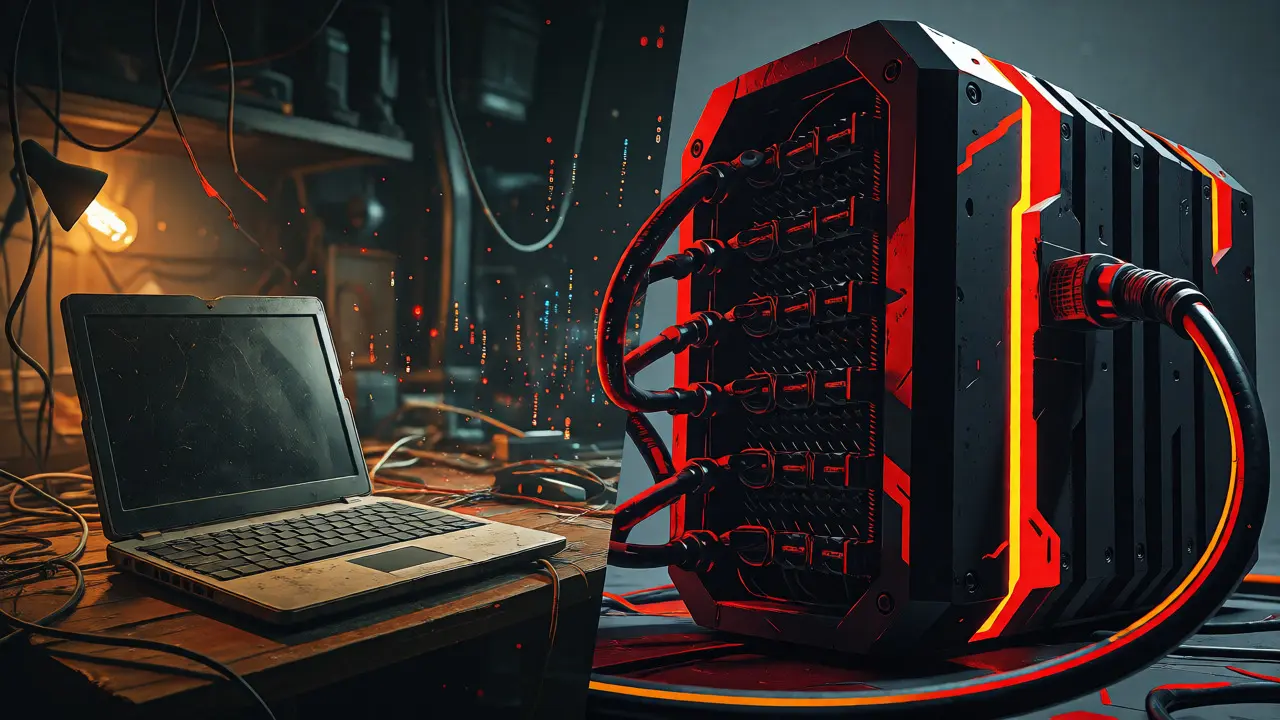
Comparing Mining Hardware: ASIC vs. GPU vs. CPU
Choosing the right hardware depends entirely on which cryptocurrency you want to mine and your budget. Here is how the three main types stack up against each other in practical terms.
| Feature | ASIC Miner | GPU Rig | CPU |
|---|---|---|---|
| Primary Use Case | Mining specific coins (BTC, LTC) | Flexible mining (ETH, Altcoins) | Testing, minor altcoins |
| Efficiency | Extremely High | Moderate | Very Low |
| Versatility | None (Single Algorithm) | High (Multiple Algorithms) | Very High (General Computing) |
| Initial Cost | High ($1,000 - $10,000+) | Medium ($500 - $5,000) | Low (Already owned) |
| Resale Value | Drops quickly with new models | Holds value better (gaming use) | Negligible for mining |
| Noise/Heat | Very Loud & Hot | Loud & Hot | Quiet & Cool |
Notice the trade-off: ASICs win on performance but lose on flexibility. If Bitcoin drops in price or the algorithm changes, your ASIC becomes a very expensive paperweight. A GPU, however, can switch to mining a different coin or be sold to a gamer.
Key Considerations Before Buying
Buying an ASIC is not like buying a toaster. It requires infrastructure planning. Here are the critical factors you must evaluate before spending money.
Electricity Costs
This is the make-or-break factor. If your residential electricity rate is above $0.15 per kWh, you will likely struggle to turn a profit with older ASIC models. Modern units like the Bitmain Antminer S19 XP or newer iterations offer better efficiency, but they still consume significant power. Always calculate your break-even point using online mining calculators before purchasing.
Heat and Noise Management
ASICs generate immense heat. A single unit can produce enough heat to warm a small room in winter. They also sound like jet engines taking off, often exceeding 75 decibels. Most hobbyists cannot keep them in living spaces. You need a garage, basement, or dedicated shed with proper ventilation. Some miners invest in immersion cooling tanks, submerging the hardware in non-conductive fluid to reduce noise and improve longevity, but this adds complexity and cost.
Network Difficulty and Halving Events
Bitcoin adjusts its mining difficulty every two weeks based on total network power. As more people join with powerful ASICs, it gets harder to earn rewards. Additionally, the Bitcoin halving event cuts block rewards in half approximately every four years. In 2024, the reward dropped to 3.125 BTC per block. This means your hardware needs to be increasingly efficient to remain profitable after each halving.
Obsolescence Risk
Technology moves fast. A top-tier ASIC today might become unprofitable in 18-24 months as manufacturers release more efficient chips. Unlike GPUs, which retain some value for gaming, old ASICs often end up in e-waste bins because their power consumption outweighs their earning potential. Plan for a short lifecycle and aggressive reinvestment.
Popular Manufacturers and Models
The ASIC market is dominated by a few key players. Knowing who makes what helps you avoid low-quality knockoffs.
- Bitmain: The undisputed leader. Their Antminer series (S-series for Bitcoin, L-series for Litecoin) sets the industry standard. They offer robust support but have faced scrutiny over centralization concerns.
- Canaan Creative: Makers of the Avalon line. Historically significant as the first ASIC producer, they remain a strong competitor with competitive efficiency ratings.
- MicroBT: Known for the WhatsMiner series. Often praised for reliability and build quality, sometimes offering better durability than competitors.
- Ebang: Another notable manufacturer producing Ebit series miners, focusing on high-performance SHA-256 devices.
When choosing a model, look at the "efficiency" metric (Joules per Terahash). Lower is better. Also, check recent user reviews for failure rates, as firmware bugs or capacitor issues can plague certain batches.
Is ASIC Mining Still Worth It for Individuals?
For most individuals, solo mining with one ASIC is a gamble. The variance is too high; you might wait months for a block reward. Joining a mining pool is essential. Pools aggregate the hash power of many miners, distributing rewards proportionally based on contribution. This provides steady, albeit smaller, payouts.
However, the barrier to entry is rising. Industrial farms with access to cheap renewable energy dominate the landscape. For a hobbyist in Hobart, Australia, or elsewhere, the decision usually comes down to passion versus profit. If you enjoy the tinkering, the tech, and supporting the network decentralization, it’s rewarding. If you expect quick ROI without considering electricity hikes and hardware depreciation, you might be disappointed.
Some miners hedge their bets by renting out hash power or participating in cloud mining contracts, though these come with their own risks, including scams and opaque fee structures. Direct ownership gives you control, but it demands active management.
Future Outlook: Sustainability and Evolution
The future of ASIC mining hinges on sustainability. Critics point to the environmental impact of Proof-of-Work consensus mechanisms. In response, manufacturers are pushing for lower energy consumption per hash. We are seeing a trend toward miners powered by stranded energy sources-like flare gas from oil fields or excess hydroelectric power-that would otherwise go unused.
While some cryptocurrencies have shifted to Proof-of-Stake (eliminating the need for miners), Bitcoin remains Proof-of-Work. As long as major networks rely on computational security, ASICs will continue to evolve. Expect next-generation chips to utilize advanced lithography processes (like 3nm or 2nm nodes) to squeeze out further efficiency gains. The race isn't just about speed anymore; it's about doing more work with less energy.
Can I mine Bitcoin with a GPU?
Technically, yes, but it is not profitable. GPUs are far less efficient than ASICs for the SHA-256 algorithm used by Bitcoin. The electricity cost will exceed the value of the mined Bitcoin. GPUs are better suited for algorithms like Ethash or RandomX, which are designed to be ASIC-resistant.
How much does an ASIC miner cost?
Prices vary widely based on age and efficiency. New, high-end models like the latest Antminers can cost between $3,000 and $10,000+. Used older models might sell for under $1,000, but their lower efficiency often makes them unprofitable unless electricity is extremely cheap.
Do ASIC miners require internet?
Yes, an active internet connection is required to communicate with the blockchain network or mining pool. However, bandwidth requirements are low. A stable connection with low latency is more important than high speed. Ethernet cables are preferred over Wi-Fi for stability.
What happens if my ASIC stops working?
Common issues include fan failures, overheating, or power supply problems. Many components are replaceable, but repairs require technical skill. Warranty periods are typically 1-2 years from reputable manufacturers. Always back up your configuration settings so you can restore operations quickly after a reboot or repair.
Is ASIC mining centralized?
Critics argue yes, because a few large manufacturers (mostly in China) produce most ASICs, and large mining pools control significant hash power. However, geographic distribution of miners helps mitigate this risk. Decentralization efforts focus on ensuring no single entity controls more than 51% of the network.