
There’s a lot of confusion out there about something called Original Bitcoin (BC). If you saw a post, ad, or YouTube video claiming this is the "real" Bitcoin - the one Satoshi Nakamoto created - you’re not alone in being misled. The truth? Original Bitcoin (BC) isn’t Bitcoin at all. It’s a meme coin built on Solana, and it has almost nothing to do with the original Bitcoin network that launched in 2009.
Bitcoin (BTC) vs. Original Bitcoin (BC): The Core Difference
Bitcoin, with the ticker BTC, is the first and most established cryptocurrency. It runs on its own blockchain, uses proof-of-work mining, and has a fixed supply of 21 million coins. Since 2009, it’s never been hacked. Its network is secured by over 15,000 public nodes around the world. Transactions take about 10 minutes to confirm, and fees vary but usually stay under $2.
Now, look at Original Bitcoin (BC). It’s not on the Bitcoin blockchain. It doesn’t use proof-of-work. It’s an SPL token on the Solana blockchain. That means it’s a digital token, like many others on Solana - Dogecoin, Shiba Inu, or Pepe. The only thing it shares with Bitcoin is the name. And even that’s misleading.
The creators of BC claim it’s "restoring Bitcoin’s original vision." But Bitcoin’s original vision, as written in the whitepaper and proven by its design, was about decentralization through mining, censorship resistance, and scarcity. BC doesn’t do any of that. It’s fast, cheap, and easy to trade - but it’s also completely dependent on Solana’s network, which has had six major outages since 2022. Bitcoin has never gone down.
How Original Bitcoin (BC) Actually Works
Original Bitcoin (BC) operates on Solana’s Mainnet Beta. That means it uses Solana’s proof-of-history consensus, which allows for near-instant transactions - around 400 milliseconds - and fees under $0.01. That’s why some people like it. If you’re trading small amounts often, BC is cheaper than sending BTC.
The total supply is 1 billion BC tokens. No pre-mine. No team allocation. The minting authority was burned in March 2024, meaning no more coins can be created. That’s a good sign for transparency. But here’s the catch: burning mint authority doesn’t make it valuable. It just means the supply is fixed.
BC is traded almost entirely on Raydium, a decentralized exchange on Solana. Daily volume? Around 15,000 transactions. Compare that to Bitcoin, which sees over 300,000 daily transactions. BC has about 4,200 active wallets. Bitcoin has over 100 million unique users.
There’s no merchant acceptance. No ATM networks. No institutional backing. No enterprise adoption. BC is purely a speculative asset. If you want to buy coffee with it, you can’t. If you want to hold it as digital gold, you’re betting on hype, not utility.
Why People Are Buying It (And Why They’re Losing Money)
Most people who buy BC aren’t looking for long-term value. They’re chasing pumps. Reddit threads like r/CryptoCurrency are full of stories like this: "Made $128 in 45 minutes flipping BC during Thanksgiving." Sounds great - until you hear the other side.
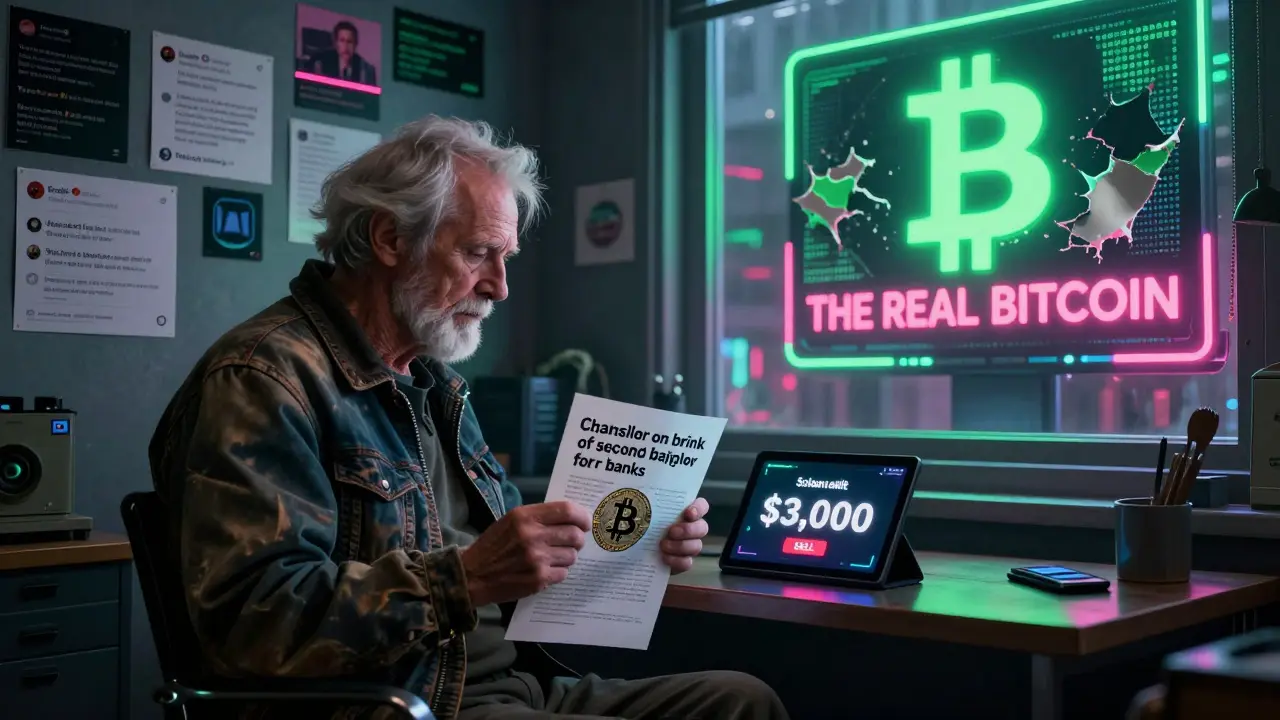
One user, u/BitcoinPurist99, reported his 72-year-old uncle lost $3,000 because he thought BC was the real Bitcoin. He bought it after seeing "Original Bitcoin" on a meme page. That’s not an isolated case. Trustpilot reviews for BC-related sites average just 2.1 out of 5 stars. Common complaints? "Zero utility," "Discord full of shillers," "no customer support."
It’s a classic meme coin playbook: create a name that sounds official, use Bitcoin’s brand recognition, flood social media with influencers, then cash out when the hype peaks. The SEC has already started targeting Solana-based meme tokens as potential securities. If regulators crack down, BC could vanish overnight.

Is Original Bitcoin (BC) a Scam?
It’s not illegal. It’s not technically a scam - unless you’re being lied to. The project doesn’t claim to be Bitcoin. Its website says: "This is not an ordinary cryptocurrency. It’s a memetic coin project based on the original vision of Bitcoin."
But here’s the problem: most people don’t read the fine print. They see "Original Bitcoin" and think: "This is the real thing."
That’s the danger. The name is intentionally confusing. It’s designed to trick retail investors who don’t understand blockchain differences. Crypto analyst Wendy O called it "predatory." Dr. Garrick Hileman from Blockchain.com says it misunderstands Bitcoin’s entire threat model. Bitcoin isn’t about speed - it’s about security through decentralization. BC trades speed for risk.
Bitcoin’s network has processed over $1.1 trillion in transactions since 2009 without a single successful 51% attack. BC runs on a chain that went offline for 19 hours in 2022. If Solana goes down, BC goes down with it. Bitcoin? It keeps running.
What You Should Do If You Own BC
If you bought BC and you’re holding it hoping it becomes the next Bitcoin - stop. It won’t. The technology is different. The community is different. The security model is different. There’s no path from a Solana meme coin to becoming a global monetary system.
If you bought BC as a short-term trade, that’s fine - but treat it like gambling. Set a loss limit. Set a profit target. Get out when you hit it. Don’t let FOMO pull you in deeper.
If you’re unsure whether you’re holding BC or BTC - check your wallet. BTC lives on Bitcoin addresses that start with 1, 3, or bc1. BC lives in a Solana wallet like Phantom or Solflare, and its token symbol is BC. If you’re not sure where your coins are, don’t assume. Look it up.
What’s the Real Original Bitcoin?
The original Bitcoin is the one mined on January 3, 2009. The one with the Genesis Block that included the headline: "The Times 03/Jan/2009 Chancellor on brink of second bailout for banks." That’s Bitcoin. That’s BTC. That’s the network that’s survived wars, crashes, bans, and hype cycles.
Everything else - BC, BTC2, Bitcoin Cash, Bitcoin SV - is a fork, a copy, a spin-off, or a meme. Bitcoin Cash and Bitcoin SV are actual forks of the Bitcoin blockchain. They have their own rules, their own communities, and their own market caps. BC? It’s not even a fork. It’s a token on a different chain with a misleading name.
There’s no such thing as "Original Bitcoin (BC)." There’s only Bitcoin - BTC - and a meme coin trying to ride its coattails.
Final Thought: Don’t Let Names Trick You
Crypto is full of names designed to confuse. "Bitcoin Cash" isn’t Bitcoin. "Ethereum Classic" isn’t Ethereum. And "Original Bitcoin (BC)" isn’t Bitcoin. Period.
If you want the real thing - the one with the 15-year track record, the global network, the institutional adoption, the $578 billion market cap - you’re looking for BTC. Everything else is noise.
Don’t invest in a name. Invest in a network. And if you’re not sure what you’re buying - don’t buy it.